Do Pensioners Pay Rent on Council Houses? Full Guide to Rent Costs, Housing Benefits and Eligibility Rules
Yes, pensioners generally have to pay rent on council houses in the UK, even after reaching State Pension age. However, those with a low income may qualify for Housing Benefit, which can cover some or all of their eligible rent.
Receiving the State Pension does not automatically make council housing free.
The amount a pensioner must pay depends on their council rent, income, savings, household circumstances and benefit entitlement.
In 2026, pensioners receiving Pension Credit Guarantee Credit may qualify for maximum eligible Housing Benefit, meaning they could have little or no rent left to pay. However, certain deductions and charges may still apply.
How Much Rent Do Pensioners Have to Pay on Council Houses?
There is no fixed weekly or monthly rent that all pensioners must pay for council housing.
Each local authority sets rents according to its housing arrangements, property characteristics and applicable rent regulations.
Pensioners do not automatically receive a cheaper tenancy because of their age. Instead, financial assistance through Housing Benefit can reduce the amount they personally need to contribute.
For example, a pensioner whose council house rent is £120 per week could receive Housing Benefit covering the full eligible amount if they qualify.
Another pensioner with a higher income might receive only £80 towards the same rent, leaving £40 to pay.
The following examples illustrate how rent contributions may differ.
Weekly Council Rent Housing Benefit Pensioner Pays
£100 £100 £0
£120 £90 £30
£140 £100 £40
£150 £0 £150
These are illustrative examples, not official benefit calculations or national average council rents.
Council tenants receiving Housing Benefit usually have the award credited directly to their rent account. Any remaining balance must be paid according to their tenancy agreement.
Who Qualifies for Housing Benefit to Cover Council House Rent?
Housing Benefit remains available to eligible pensioners despite the wider transition to Universal Credit.
The main requirements are reaching the qualifying age, having eligible rental costs and meeting the relevant income, capital and household conditions.
State Pension Age and Eligibility Rules
A single person who has reached State Pension age can normally make a new Housing Benefit claim.
The State Pension age is gradually increasing from 66 to 67 between April 2026 and April 2028. The exact qualifying age therefore depends on the applicant’s date of birth.
Applicants generally need to meet these conditions:
- State Pension Age: Have reached the relevant qualifying age
- Eligible Accommodation: Live in a qualifying rented property
- Income Assessment: Have income low enough to qualify for assistance
- Savings Assessment: Meet the applicable capital rules
- Residency Requirements: Satisfy the relevant residence and immigration conditions
Income and Savings Limits
For pension-age Housing Benefit, savings of £10,000 or less are normally disregarded.
Savings above this amount can affect the assessment.
Savings Amount Housing Benefit Treatment
£10,000 or Less Normally Disregarded
£10,001 to £16,000 Tariff Income May Be Applied
More Than £16,000 Normally Ineligible Unless Receiving Guarantee Credit
For every £500, or part of £500, above £10,000, the council normally treats the claimant as having an additional £1 of weekly income.
For example, savings of £12,000 would normally create £4 per week in assumed income when calculating entitlement.
Pensioners receiving Pension Credit Guarantee Credit are generally exempt from the £16,000 Housing Benefit capital limit.
Rules for Mixed-Age Couples
Different rules apply when one partner has reached State Pension age and the other has not.
Since 15 May 2019, most mixed-age couples making a new benefit claim must claim Universal Credit rather than pension-age Housing Benefit.
Exceptions can apply where an existing qualifying claim was established before that date or where the couple lives in certain supported or temporary accommodation.
This distinction remains important because Housing Benefit continues for qualifying pension-age households even after the wider Universal Credit rollout.
How Is Housing Benefit Calculated for Pensioners?
Housing Benefit is calculated using the household’s eligible rent, assessable income, savings and applicable deductions.
The council considers several factors:
- State Pension Income: The pension payments received
- Private Pension Income: Occupational and personal pension payments
- Savings and Investments: Capital assessed under pension-age rules
- Household Circumstances: Partners, other adults and qualifying dependants
- Eligible Housing Costs: Rent and certain allowable service charges
Eligible service charges may include communal facilities or lift maintenance. Personal heating and water charges are generally excluded.
How Pension Credit Affects Rent Payments?
Pension Credit can substantially improve a pensioner’s financial position and eligibility for rent assistance.
For the 2026/27 financial year, the standard minimum Guarantee Credit amounts are:
Household Type Weekly Minimum Guarantee
Single Pensioner £238.00
Pensioner Couple £363.25
These amounts represent the standard weekly income levels used for Guarantee Credit. Additional amounts may apply for eligible caring responsibilities, severe disabilities or other qualifying circumstances.
Pensioners receiving Guarantee Credit generally qualify for maximum eligible Housing Benefit, although deductions relating to other adults or ineligible rental charges may still leave an amount payable.
Those unsure whether they qualify can check how to qualify for Pension Credit, including the income, savings and household requirements.
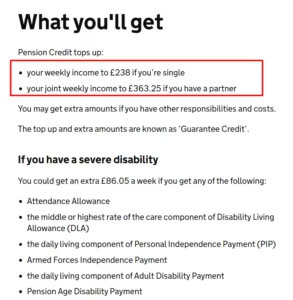
GOV.UK confirms the 2026/27 Pension Credit minimum income guarantees of £238 for single pensioners and £363.25 for couples.
Full and Partial Housing Benefit
Full Housing Benefit may be available where a pensioner has a sufficiently low assessed income and no deductions reducing their award.
Partial Housing Benefit is more likely when assessable income exceeds the applicable amount used in the calculation.
Pensioners can also receive reduced Housing Benefit when a non-dependant adult lives in the property and the relevant deduction rules apply.
However, non-dependant deductions may not apply in certain situations, including where the claimant receives Attendance Allowance or another qualifying disability benefit.
Examples of Council House Rent Calculations
Consider two simplified situations.
Example 1: Pensioner Receiving Guarantee Credit
A pensioner has eligible weekly rent of £125 and receives Pension Credit Guarantee Credit. If no deductions apply, Housing Benefit could cover the entire £125.
Example 2: Pensioner With Additional Pension Income
Another pensioner pays £125 weekly rent but qualifies for only £85 in Housing Benefit following an income assessment.
They would need to contribute the remaining £40 each week.
The actual calculation can differ according to household circumstances, income disregards and other applicable rules.
Do Pensioners Have to Pay Bedroom Tax on Council Houses?
Pensioners claiming pension-age Housing Benefit are generally exempt from the bedroom tax, officially known as the removal of the spare room subsidy.
This means an eligible pension-age claimant will not normally have their Housing Benefit reduced simply because their council house contains spare bedrooms.
For working-age social housing claimants, the standard reductions can be:
- One Spare Bedroom: 14% reduction in eligible rent
- Two or More Spare Bedrooms: 25% reduction in eligible rent
These reductions do not normally apply to pension-age Housing Benefit claims.
However, mixed-age couples receiving Universal Credit may still be subject to the social housing bedroom rules until the relevant pension-age conditions are met.
Pensioners should also remember that exemption from bedroom tax does not guarantee full rent coverage, because other income-related deductions may still apply.
How Can Pensioners Apply for Housing Benefit?
Eligible pensioners can apply for Housing Benefit through their local council or as part of a Pension Credit application.
The process generally involves:
- Check Eligibility: Confirm State Pension age and the relevant income requirements.
- Contact the Local Council: Find the Housing Benefit application service.
- Complete the Application: Provide accurate household, income and rent details.
- Submit Supporting Evidence: Supply the required documents.
- Receive a Decision: Check the award notice and any contribution required.
Pensioners who apply for Pension Credit can also request Housing Benefit during that application. The Pension Service will forward the relevant details to their council.
Documents Required for an Application
Councils commonly request:
- Identity Documents: Passport, driving licence or other accepted identification
- National Insurance Number: Details needed to verify the claim
- Income Evidence: State Pension and private pension statements
- Savings Evidence: Bank statements and investment details
- Tenancy Information: Rent agreement or council rent statement
- Partner’s Details: Income and savings information where applicable
Additional evidence may be required depending on the household’s circumstances.
How Long Does Housing Benefit Take to Process?
Councils are generally expected to make decisions within 14 days once the necessary claim requirements and supporting information have been satisfied, or as soon as reasonably practicable afterwards.
Actual processing times can be longer where evidence is missing or further checks are required.
Pension-age claimants may also qualify for up to three months of backdated Housing Benefit, provided they met the relevant conditions during that period.
Once an award begins, council tenants should check how Housing Benefit is credited to their rent account.
The timing of Housing Benefit payments in arrears is particularly important when managing outstanding rent balances.
What Additional Financial Support Can Pensioners Get in 2026?
Pensioners struggling with council house rent may qualify for support beyond their regular Housing Benefit award.
The available assistance depends on where they live, their financial circumstances and the schemes administered locally.
Housing Payments and Emergency Rent Support
In England, Discretionary Housing Payments were replaced on 1 April 2026 by Housing Payments under the Crisis and Resilience Fund.
These payments can provide additional assistance towards eligible housing costs where regular benefits are insufficient.
Depending on the circumstances, assistance may be considered for:
- Rent Shortfalls: Additional help where Housing Benefit does not cover eligible housing costs
- Rent Deposits: Support when moving to suitable accommodation
- Rent in Advance: Assistance with qualifying upfront rental costs
- Exceptional Housing Needs: Other eligible costs allowed under the scheme
Housing Payments are discretionary, meaning local authorities assess individual applications and decide whether support should be awarded.
Wales continues to operate Discretionary Housing Payments, while Scotland has its own devolved arrangements.
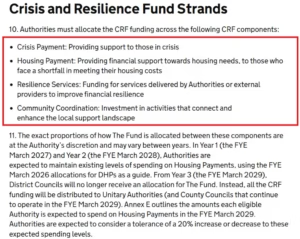
DWP guidance confirms that Crisis and Resilience Fund Housing Payments replaced Discretionary Housing Payments in England from 1 April 2026.
Council Tax Reduction and Local Council Assistance
Council Tax Reduction is separate from Housing Benefit and can reduce the Council Tax bills of eligible low-income pensioners.
Depending on their circumstances, some pensioners can receive a reduction of up to 100%.
Receiving a pension or other benefit does not automatically remove Council Tax liability. Eligibility must be checked under the relevant local scheme.
Understanding Council Tax payments while receiving benefits can help pensioners identify support they may otherwise miss.
Local authorities may also offer crisis support, debt advice and help with essential household costs.
What Happens if a Pensioner Cannot Afford Council House Rent?
Pensioners who cannot afford their council rent should contact their housing provider immediately rather than allowing unpaid balances to accumulate.
Rent arrears can result in formal recovery action, although eviction is not automatic simply because a payment has been missed.
Rent Arrears and Possible Eviction
If rent remains unpaid, the council may contact the tenant, issue arrears notices and begin further recovery procedures.
Continued non-payment can ultimately result in legal action and potential eviction, subject to the applicable tenancy and possession rules.
Pensioners facing arrears should check whether their Housing Benefit has been calculated correctly and whether any eligible support has been missed.
Payment Arrangements and Financial Assistance
Several steps can help pensioners manage rent arrears:
- Contact the Housing Officer: Explain the financial difficulty and request assistance
- Arrange Affordable Repayments: Discuss a manageable arrears payment plan
- Review Benefit Entitlement: Check Housing Benefit and Pension Credit eligibility
- Apply for Emergency Housing Support: Request available assistance from the relevant council
- Seek Independent Advice: Contact Citizens Advice, Shelter or Age UK
Taking action early may help prevent arrears from escalating into a more serious housing problem.
What Changes Can Affect a Pensioner’s Housing Benefit?
Housing Benefit entitlement can change when a pensioner’s financial or household circumstances change.
Common reasons include:
- Increase in Pension Income: Higher occupational or private pension payments
- Changes in Savings: Receiving an inheritance or additional capital
- Partner Changes: Marriage, separation or changes in a partner’s circumstances
- Household Changes: An adult family member moving in or out
- Moving Home: Changes in rent, eligible charges or local council
- Disability-Related Changes: Receiving or losing benefits affecting applicable deductions
Pensioners should report relevant changes promptly to their local council and, where applicable, the Pension Service.
Failing to report changes can lead to overpayments, repayments or incorrect benefit awards.
Conclusion
Pensioners normally remain responsible for paying council house rent, but Housing Benefit can significantly reduce their financial burden.
Those receiving Pension Credit Guarantee Credit may qualify for maximum eligible rent assistance, while other pensioners can receive partial support depending on income, savings and household circumstances.
The key is to check eligibility, understand the available housing assistance and report changes promptly.
Pensioners experiencing financial hardship should contact their local council to explore Housing Benefit, Council Tax Reduction and emergency housing support before rent arrears become unmanageable.
Frequently Asked Questions
Do Pensioners Get Free Rent in Council Houses?
Not automatically. Pensioners must normally pay council rent, but qualifying Housing Benefit may cover all their eligible rent.
Can Pensioners Get Full Housing Benefit if They Only Receive a State Pension?
Yes, potentially. Entitlement depends on their income, savings, eligible rent and household circumstances, rather than State Pension receipt alone.
How Much Savings Can a Pensioner Have Before Losing Housing Benefit?
Savings above £16,000 normally prevent entitlement unless the pensioner receives Pension Credit Guarantee Credit. Savings above £10,000 can affect the benefit calculation.
Do Pensioners Have to Pay Rent if They Receive Pension Credit?
They remain liable for rent, but Guarantee Credit generally provides maximum eligible Housing Benefit, subject to deductions and excluded charges.
Do Pensioners Pay Bedroom Tax on Council Houses?
Pension-age Housing Benefit claimants are normally exempt. Different rules may apply to mixed-age couples receiving Universal Credit.
Can a Pensioner Claim Housing Benefit if Their Partner Is Under State Pension Age?
Most mixed-age couples cannot make a new pension-age Housing Benefit claim, although protected existing claims and certain accommodation exceptions may apply.
Can Pensioners Get Help With Council House Rent Arrears?
Yes. Councils may offer repayment arrangements, benefit reviews and emergency housing assistance, depending on the pensioner’s circumstances.