Informing DWP of Change of Circumstances: A Step-by-Step Process
Have your circumstances recently changed? If you’re receiving benefits from the Department for Work and Pensions (DWP), it’s important to report any changes as soon as possible.
Failing to update your details could result in overpayments, benefit reductions, or even penalties.
Changes such as moving house, starting a new job, or changes in your health or family situation can affect your entitlement to benefits like Universal Credit, Pension Credit, Personal Independence Payment (PIP), and more.
The DWP requires you to inform them promptly to ensure your payments remain accurate and fair.
In this guide, we’ll walk you through the step-by-step process of informing DWP of a change of circumstances, the different ways to report updates, and what happens after you notify them.
Whether you’re updating details online, by phone, or by post, this article will help you navigate the process smoothly.
Why Is It Important to Inform DWP of a Change of Circumstances?

If you receive benefits from the Department for Work and Pensions (DWP), keeping them informed about any changes in your circumstances is crucial.
The benefits system is designed to provide financial support based on your current situation, and any changes in your life could impact the amount you are entitled to.
Failing to report a change promptly can lead to several negative consequences, including:
Ensuring You Receive the Correct Benefit Amount
Benefits such as Universal Credit, Pension Credit, Personal Independence Payment (PIP), and Carer’s Allowance are calculated based on factors like income, living arrangements, health conditions, and household composition.
If your situation changes and you don’t report it, you might receive too much or too little money.
- If you’re underpaid, you may struggle financially until the DWP corrects the issue.
- If you’re overpaid, the DWP will require you to repay the extra money, which could cause financial stress.
Avoiding Overpayments and Debt
Receiving more benefits than you are entitled to due to unreported changes means you will need to repay the excess money.
This can be a significant financial burden, especially if you have already spent the money before realizing the mistake.
For example, if your income increases but you continue receiving the same amount of Universal Credit, the DWP may later demand that you repay the excess amount.
Preventing Benefit Sanctions
If the DWP discovers that you deliberately withheld information about a change, you could face benefit sanctions. Sanctions may include:
- Reductions in your payments for a set period.
- Complete suspension of benefits if the failure to report was intentional.
For example, if you start a new job but don’t inform the DWP, and they find out later, they may reduce your benefits or stop them altogether.
Avoiding Penalties and Legal Action
In serious cases, failing to report changes can be considered benefit fraud. If the DWP believes you intentionally provided false or misleading information, you could face:
- A £50 penalty for failing to report a change or giving incorrect details.
- A criminal investigation, which could result in a fine or even a court case.
Benefit fraud is taken very seriously, and individuals found guilty could face severe consequences, including losing future benefit entitlements.
Ensuring a Smooth Benefit Process
Keeping your benefit records up to date prevents disruptions in payments.
If the DWP identifies a discrepancy in your claim, they may pause payments while investigating, leaving you without financial support until the issue is resolved.
Maintaining Compliance with Benefit Rules
By reporting changes promptly, you remain in good standing with the DWP and avoid unnecessary complications.
The benefits system is based on trust, and claimants are responsible for keeping their details accurate.
To summarise, informing the DWP of any changes ensures:
- You receive the correct benefit amount
- You avoid debt and overpayment issues
- You prevent sanctions and penalties
- Your payments remain uninterrupted
- You stay compliant with benefit regulations
What Counts as a Change of Circumstances for DWP?

Not every change in life affects your benefits, but many do. The DWP requires you to report certain changes because they directly impact the amount you receive.
Below are some of the key changes you must inform the DWP about:
Changes in Personal Details
- Changing your name or gender
- Changing your National Insurance number
- Updating bank account details
Even minor changes in personal details should be reported to keep your records accurate and avoid payment issues.
Changes in Employment or Income
- Starting a new job (full-time or part-time)
- Losing your job or being made redundant
- Changes in working hours (for example, moving from part-time to full-time work)
- Receiving pay increases or decreases
- Self-employment income going up or down
Your earnings affect benefits like Universal Credit, Jobseeker’s Allowance (JSA), and Employment and Support Allowance (ESA), so it’s essential to update the DWP if your financial situation changes.
Changes in Education or Training
- Starting or stopping college, university, or an apprenticeship
- Taking on part-time or full-time education
Certain benefits, such as Child Benefit and Universal Credit, may be impacted by changes in education or training.
Changes in Housing or Living Arrangements
- Moving to a new address
- Changes in rent or mortgage payments
- Moving into supported or sheltered accommodation
- Being admitted to hospital or a care home
- Someone moving in or out of your home (partner, child, lodger, etc.)
Housing-related benefits, such as Housing Benefit and Council Tax Support, depend on your living situation.
Changes in Your Household
- Getting married, divorced, or entering a civil partnership
- The death of a partner or someone you live with
- Having a baby or adopting a child
- Starting or stopping caring for someone
Many benefits, including Pension Credit, Universal Credit, and Carer’s Allowance, are based on household circumstances, so any changes should be reported immediately.
Changes in Health or Disability
- A new diagnosis of a medical condition
- A worsening or improvement in your health
- Starting or stopping medical treatment
- Changes in your ability to work due to a disability
If you receive disability benefits such as PIP, Attendance Allowance, or DLA, any change in your medical condition may affect your entitlement.
Changes in Finances
- Changes to your pension, savings, or investments
- Receiving inheritance, compensation, or a lump sum
- Changes in other money you receive (e.g., student loans, sick pay, or charitable grants)
For means-tested benefits like Universal Credit or Income Support, financial changes can impact your payments.
Changes in Immigration Status
If you’re not a British citizen, you must report any changes in your immigration status, such as:
- Receiving Indefinite Leave to Remain (ILR)
- Changes to visa status
Your immigration status affects your eligibility for certain UK benefits.
Going Abroad
- Leaving the UK for any period (e.g., holiday or temporary stay)
- Moving permanently abroad
Many benefits stop if you leave the UK for too long, so it’s essential to check how travel may affect your payments.
How Can You Inform DWP of a Change of Circumstances?

The Department for Work and Pensions (DWP) provides multiple ways for claimants to report changes in their circumstances.
The method you use depends on which benefits you receive. If you claim more than one benefit, you may need to notify different departments separately.
Failing to report a change correctly and on time can lead to overpayments, benefit reductions, penalties, or even benefit fraud investigations. Therefore, it is important to use the right method to report your changes.
Below are the different ways you can inform the DWP about a change in your circumstances.
Reporting Changes Online
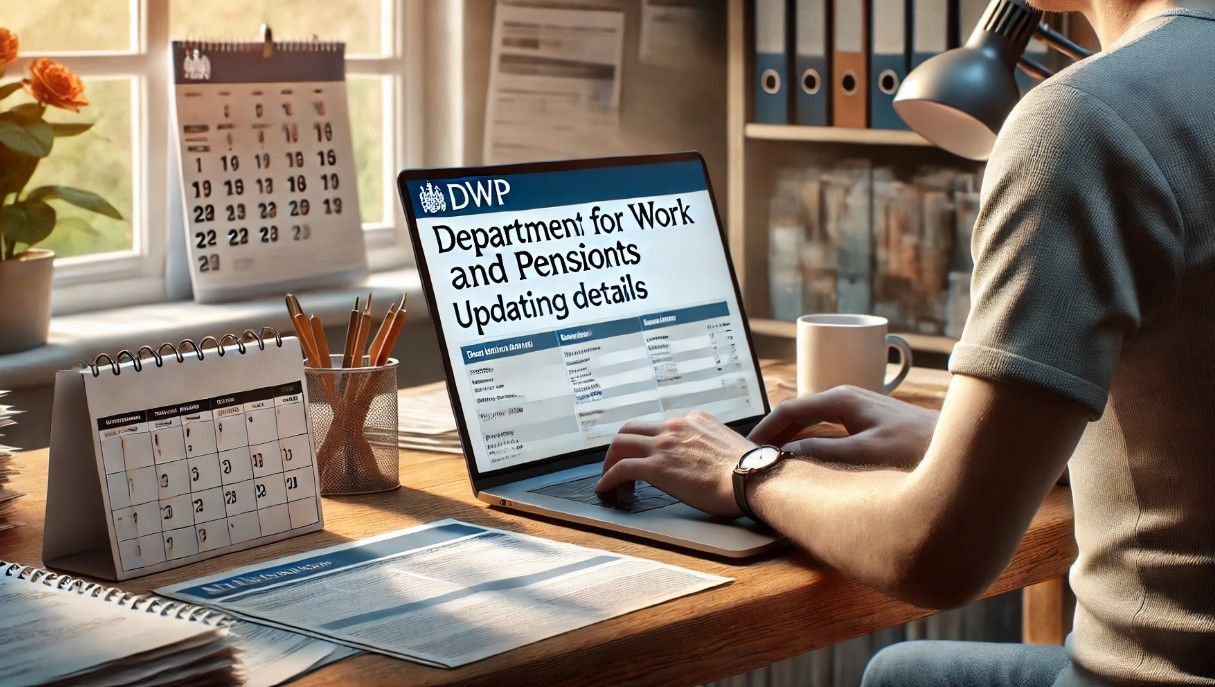
For Universal Credit claimants, the easiest and fastest way to report a change is through the Universal Credit online account.
How to Report a Change Online for Universal Credit?
- Log in to your Universal Credit online account.
- Click on the “Report a Change” section.
- Select the type of change you need to report.
- Provide the required details and submit your update.
If you cannot access your online account, you can call the Universal Credit helpline to report a change.
Universal Credit Helpline
- Telephone: 0800 328 5644
- Textphone: 0800 328 1344
- Relay UK (for hearing/speech impaired): 18001 then 0800 328 5644
- British Sign Language (BSL) Video Relay Service: Available on a computer or mobile device.
- Welsh Language Helpline: 0800 328 1744
- Opening hours: Monday to Friday, 8 AM – 6 PM
If you live in Northern Ireland, you need to contact the Universal Credit Service Centre instead.
Reporting Changes by Phone
If you cannot report changes online, you can call the DWP helpline for your specific benefit. Different benefits have different contact numbers.
Here are the contact details for major benefits:
New Style Employment and Support Allowance (ESA)
- If you receive New Style ESA, you can report changes online or by phone.
Jobcentre Plus New Claims Helpline for ESA:
- Telephone: 0800 055 6688
- Textphone: 0800 328 1344
- Relay UK: 18001 then 0800 055 6688
- Welsh language: 0800 328 1744
- Opening hours: Monday to Friday, 8 AM – 5 PM
New Style Jobseeker’s Allowance (JSA)
Jobcentre Plus New Claims Helpline for JSA:
- Telephone: 0800 055 6688
- Textphone: 0800 023 4888
- Relay UK: 18001 then 0800 055 6688
- Welsh language: 0800 012 1888
- Opening hours: Monday to Friday, 8 AM – 5 PM
For existing claims related to ESA or JSA, you should contact:
Jobcentre Plus:
- Telephone: 0800 169 0310
- Textphone: 0800 169 0314
- Relay UK: 18001 then 0800 169 0310
- Welsh language: 0800 328 1744
- Opening hours: Monday to Friday, 8 AM – 5 PM
Pension Credit
Pension Service Helpline:
- Telephone: 0800 731 0469
- Textphone: 0800 169 0133
- Relay UK: 18001 then 0800 731 0469
- BSL Video Relay Service: Available on a computer or mobile device.
- Opening hours: Monday to Friday, 8 AM – 6 PM (except public holidays)
If you cannot call, you can report changes by post using the address found in your Pension Credit letters.
Attendance Allowance
Attendance Allowance Helpline:
- Telephone: 0800 731 0122
- Textphone: 0800 731 0317
- Relay UK: 18001 then 0800 731 0122
- Opening hours: Monday to Friday, 8 AM – 6 PM
Disability Benefits (PIP & DLA)
Personal Independence Payment (PIP) Helpline:
- Telephone: 0800 121 4433
- Textphone: 0800 121 4493
- Relay UK: 18001 then 0800 121 4433
- Opening hours: Monday to Friday, 9 AM – 5 PM
Disability Living Allowance (DLA) Helpline:
- For those born after 8 April 1948: 0800 121 4600
- For those born on or before 8 April 1948: 0800 731 0122
Carer’s Allowance
Carer’s Allowance Helpline:
- Telephone: 0800 731 0297
- Textphone: 0800 731 0317
- Relay UK: 18001 then 0800 731 0297
- Opening hours: Monday to Friday, 8 AM – 6 PM
Housing Benefit
- Contact your local council to report changes to Housing Benefit.
Child Benefit
You can report changes:
- Online: Child Benefit Change Form
- By Phone: 0300 200 3100
- By Post: HM Revenue and Customs – Child Benefit Office, PO Box 1, Newcastle upon Tyne, NE88 1AA
Reporting Changes by Post
If you cannot report changes online or by phone, you can write to the DWP. The postal address is usually listed on the letters you receive from the DWP.
Some key addresses include:
PIP and Disability Living Allowance (DLA):
- Freepost DWP PIP 1
- Freepost DWP DLA Child
- Freepost DWP Attendance Allowance
Carer’s Allowance:
- Freepost DWP Carers Allowance Unit
If you’ve received a paper form, you can use the pre-paid envelope included with it.
Visiting a Jobcentre Plus Office
- If you are unsure how to report a change, you can visit your nearest Jobcentre Plus for in-person assistance.
Key Takeaways:
- Online reporting (for Universal Credit and some other benefits) is the fastest way to update your details.
- Phone reporting is available for all major benefits, with dedicated helplines.
- Postal reporting is possible but takes longer to process.
- Local council offices handle Housing Benefit changes.
- Jobcentre Plus offices provide in-person support for certain benefits.
If you are unsure whether a change affects your benefits, it is best to contact the DWP as soon as possible to avoid overpayments, sanctions, or fraud investigations.
For further details, visit Gov.uk or call the relevant helpline.
When Should You Report a Change of Circumstances to DWP?

You should report any changes as soon as possible ideally immediately or within one month. Delaying or failing to report a change can lead to overpayments, benefit reductions, or penalties.
What Happens If You Report Late?
- Your benefit payments may be incorrect, leading to overpayments that you will have to repay.
- The DWP may apply a £50 penalty for failing to report a change.
- If the delay appears intentional, you could face benefit sanctions or even an investigation for benefit fraud.
Changes That Must Be Reported Immediately
Certain changes must be reported without delay, including:
- Moving house (to update Housing Benefit, Universal Credit, or Pension Credit).
- Changes in employment or income (starting/stopping a job or salary changes).
- Health condition changes (for PIP, ESA, or Attendance Allowance).
- Changes in household members (if someone moves in or out of your home).
- Going abroad for more than 4 weeks (which may stop some benefits).
- Changes in savings, pensions, or other financial assets.
If you are unsure whether a change affects your benefits, contact the DWP helpline for advice.
What Happens After You Report a Change to DWP?

Once you report a change, the DWP will assess how it impacts your benefits. Here’s what you can expect:
DWP Reviews Your Information
- The DWP will verify the details you provided and check how the change affects your benefit entitlements.
Additional Evidence May Be Requested
Depending on the change, you may be asked to submit:
- Payslips or employment contracts (for changes in work or income).
- Medical evidence (for changes in health conditions affecting PIP or ESA).
- Proof of address (if you have moved).
Confirmation and Decision
- You will receive a letter or notification confirming the update.
- The Universal Credit online account will also reflect any changes.
- If your payments are increased or decreased, the letter will explain why.
Adjustments to Your Benefit Payments
- If your income has increased, your benefit payments may decrease.
- If your circumstances worsen, you may qualify for additional support.
- If you were overpaid, you may be required to repay the extra money.
Possible Interviews or Further Checks
- In some cases, the DWP may conduct interviews or compliance checks to ensure that the information provided is accurate.
Appeal Process (If Needed)
If you disagree with the DWP’s decision after reporting a change, you can:
- Request a Mandatory Reconsideration (DWP will review your case again).
- Appeal to an independent tribunal if you still disagree.
Conclusion
Keeping the Department for Work and Pensions (DWP) updated with changes in your circumstances is essential to ensure you receive the correct benefits and avoid overpayments, penalties, or fraud investigations.
Whether it’s a change in income, employment, housing, health, or household composition, reporting it as soon as possible will help prevent disruptions to your payments.
If you need further information on reporting changes, benefit eligibility, or updates related to Universal Credit, visit Universal Credit News for the latest updates, expert insights, and guidance on navigating the benefits system in the UK.
Frequently Asked Questions (FAQs)
What is the easiest way to inform DWP of a change of circumstances?
The quickest way is through your Universal Credit online account or the Gov.uk website. Alternatively, you can call the relevant DWP helpline for your benefit.
What happens if I don’t report a change to DWP?
Failing to report changes can lead to overpayments, benefit reductions, or even a £50 penalty. In serious cases, it may be considered benefit fraud.
Can I report multiple changes at once?
Yes, you can report multiple changes at the same time through your Universal Credit account, by phone, or by sending a written update to the DWP.
How long do I have to report a change of circumstances?
Changes should be reported immediately or within one month to avoid financial penalties and ensure your benefits remain accurate.
Will my benefits stop if I report a change?
Not necessarily. The DWP will review your claim and may increase, decrease, or continue your payments depending on your new circumstances.
How do I report a change if I don’t have online access?
You can report changes by calling the DWP helpline, sending a letter by post, or visiting a Jobcentre Plus office for assistance.