Universal Credit Owe Me Money – When Will I Get It?
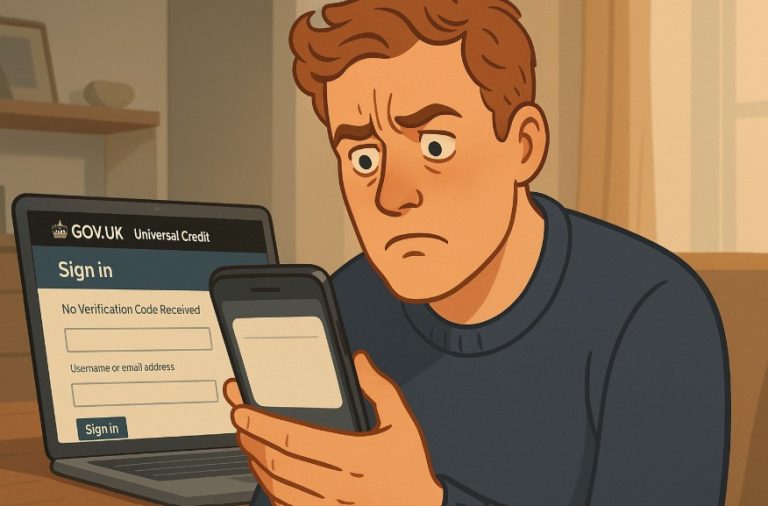
When Universal Credit owes you money, it can cause stress, especially if you’re unsure when the payment will arrive. The timeline depends on why you’re owed money, whether it’s a result of a change in your circumstances, a miscalculation, or a system delay.
Understanding how and when these payments are processed can help you stay informed and take the right actions.
This article breaks down everything from receiving a DWP letter to dealing with deductions and appeals, offering clarity on what steps to take next.
Why Might the DWP or Universal Credit Owe You Money?
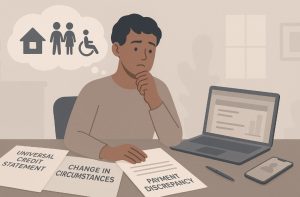
There are several reasons why the Department for Work and Pensions (DWP) or Universal Credit might owe you money. These situations typically arise due to errors, reassessments, or late updates to your personal circumstances.
- Change in circumstances such as increased rent, lower income, or becoming a carer
- Missed entitlements that were not included in earlier calculations
- Delayed updates to your claim or incorrect information entered into the system
- Technical or administrative errors made during processing
In most cases, underpayments are automatically corrected once identified. However, it’s still crucial to keep your Universal Credit journal updated and regularly check for errors or missed changes that could affect your payments.
How Long Does It Take to Receive Money If DWP Owes You?
The time it takes to receive an owed payment varies depending on the reason behind it. If it’s a change in circumstances, it usually takes until the next assessment period once verification is completed.
If the issue occurred late in the assessment cycle, the underpayment may be added to a future payment. In cases involving errors or administrative delays, resolution could take several weeks. If a formal appeal or Mandatory Reconsideration is involved, the process might take longer.
You should allow up to 10 working days after confirmation for funds to arrive but continue to monitor your online account for updates.
What Should You Do If You Receive a Letter from DWP Saying They Owe You Money?
If you receive a letter from the DWP confirming that you are owed money, you should not ignore it. The letter typically outlines the reason and the expected payment process. It is important to verify the information and take steps to track the payment.
Steps to take after receiving the letter:
- Log in to your Universal Credit online account
- Review your payment breakdowns and journal updates
- Check for messages from your work coach or case manager
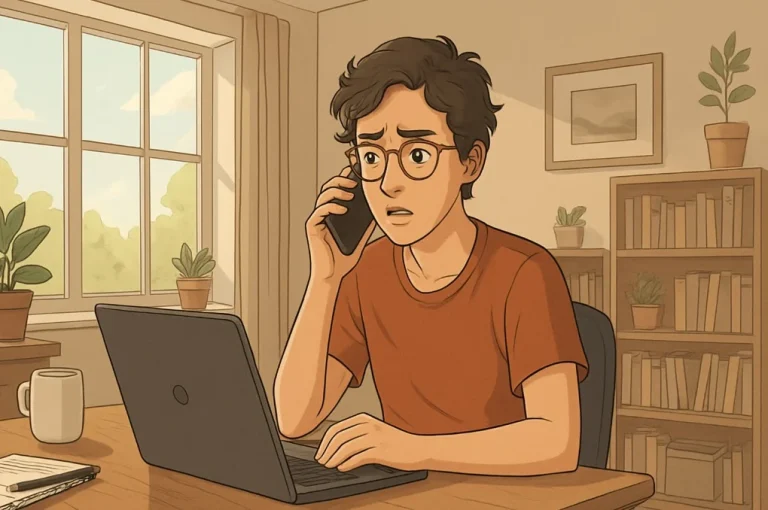
- Contact the Universal Credit helpline if no updates are showing
- Make a note of the date you received the letter for future reference
Even though the letter confirms that you’re owed money, payments are only made after processing and verification. Continue monitoring your account closely until you see the owed amount credited.
Is the DWP Letter a Confirmation or a Notification?
A letter from the DWP saying they owe you money is usually a confirmation, meaning they’ve identified an underpayment.
However, it doesn’t always guarantee an immediate payout. There may still be internal processing to carry out before the funds are released.
The letter often outlines:
- The reason for the underpayment
- An approximate timeline for when you’ll receive the money
- Any adjustments made to your current or future payments
It’s crucial to treat the letter seriously, even if it’s vague. Always follow up via your online journal or the Universal Credit helpline if you’re unsure about the status or timeframe.
How Can You Check the Status of the Payment?
Monitoring your payment status is essential after receiving a notification from the DWP.
You can check the payment status by:
- Logging in to your Universal Credit online account
- Going to the ‘Payments’ section to view upcoming or recent payments
- Reviewing messages or notifications for updates
- Checking your journal for any entries from your work coach
- Contacting the Universal Credit helpline or your work coach for clarification
If the system doesn’t reflect your payment yet, it may still be under review or awaiting approval. Continue checking daily and keep records of your communication and journal entries.
What Happens When a Universal Credit Payment Is Late or Missing?
A missed or delayed Universal Credit payment can cause understandable concern, especially if you rely on it for essentials. Here’s how to manage the situation effectively:
Understanding Late Payments
Late payments may occur due to:
- Pending verification of reported changes
- Banking issues or public holidays delaying transactions
- Backlogs in processing due to workload
Taking Action
If your payment is missing:
- Leave a journal message asking your work coach to check the delay
- Ensure all required documents and updates have been submitted
- Call the Universal Credit helpline for immediate assistance
Payments are typically made monthly, so any delay should be taken seriously and addressed promptly to avoid hardship.
What Deductions Can Be Taken from Your Universal Credit Payments?
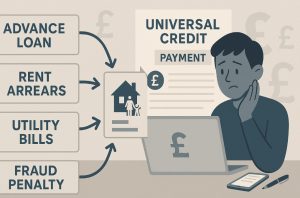
Deductions are common and may reduce your monthly Universal Credit payment. These deductions are taken directly from your Standard Allowance and are used to repay debts or other financial obligations.
Deductions may include:
- Advance loans and Budgeting Advances
- Hardship payments repayment
- Fraud penalties or sanctions
- Benefit debt such as tax credit or housing benefit overpayments
- Third-party deductions for rent arrears, utilities, or child maintenance
| Type of Deduction | Purpose | Typical Rate |
| Advance Loan Repayment | To repay money borrowed early in the claim | Up to 15% of allowance |
| Hardship Payment Recovery | Repayments after sanction ends | Varies |
| Fraud Penalty | For misrepresentation or dishonesty | Up to 100% |
| Third Party Deduction | Rent, energy bills, child maintenance | 5% per third party |
| Overpayment of Benefits | Recovering extra funds paid mistakenly | Up to 15% |
You can view these deductions in your online account under payment breakdowns.
How Are Advance Loans, Hardship Payments, and Overpayments Recovered?
If you’ve borrowed money through Universal Credit or received more than you’re entitled to, the DWP will recover it through automatic deductions.
Advance Loans:
- Must be repaid within 24 months for new claims
- Change of circumstances advances must be repaid within 6 months
- You can request an extension if facing hardship
Hardship Payments:
- Applied if your benefits were reduced due to a sanction or penalty
- Repayment begins once the sanction period ends
- Can be paused if your earnings exceed the Conditionality Earnings Threshold
Overpayments:
- Includes tax credits, housing benefit, or benefit miscalculations
- Up to 15% of your Standard Allowance can be taken each month
- If unaffordable, you may ask for a repayment reduction or deferral
| Type | Recovery Method | Timeframe |
| Advance Loan | Deducted monthly from payments | 6–24 months |
| Hardship Payment | Deducted after sanctions end | Based on earnings |
| Overpayment (General) | Deducted monthly | Until cleared |
| Overpaid Tax Credits | Deducted automatically from UC | Varies by case |
Understanding how these deductions are recovered helps you plan ahead, manage repayments effectively, and avoid unexpected financial strain.
Can You Request to Reduce or Defer Deductions Due to Financial Hardship?

Yes, you can. If deductions are leaving you with too little to live on, you can request a ‘financial hardship decision’ through your Universal Credit journal. This review can reduce the amount being taken from your benefits.
You may qualify for reduced deductions if you are repaying:
- Benefit overpayments
- Tax credit overpayments
- Social Fund loans
If your request is approved, reduced deductions apply from your next assessment period. Once your financial situation improves, deductions will return to the standard rate.
You can also request a temporary deferral of a Universal Credit advance for up to three months in cases of severe hardship.
What’s the Process for Appealing a Dispute or Error in Payment?
If you believe there’s a mistake in your Universal Credit payments or deductions, you have the right to appeal. The process is straightforward but must be followed carefully.
Mandatory Reconsideration
Start by requesting a Mandatory Reconsideration, which is the DWP’s internal review process.
- Submit through your online account or in writing
- Include evidence, such as payslips or tenancy agreements
- Wait for a formal decision letter
Appealing to a Tribunal
If the reconsideration doesn’t resolve the issue:
- File an appeal with the Social Security and Child Support Tribunal
- Provide all previous communication and supporting documents
- Attend a hearing if required, or request a paper decision
Throughout the process, keep a record of all communication and monitor your journal closely for responses or updates. If needed, seek free guidance from local support services or charities that specialise in welfare advice.
Conclusion
Universal Credit can sometimes owe you money for a variety of reasons, but understanding the system helps reduce the stress of waiting.
Whether it’s due to a delayed update, underpayment, or administrative error, knowing how to monitor your account, contact DWP, and appeal can ensure you’re not left in the dark.
Stay proactive, informed, and don’t hesitate to raise issues early to avoid long-term complications with your claim.
Frequently Asked Questions
What is a third party deduction and who receives it?
Third-party deductions are taken from your Universal Credit and paid directly to landlords, utility companies, or other creditors you owe money to.
Can I get a breakdown of why my payment was reduced?
Yes, your online Universal Credit account shows a full payment breakdown, including all deductions and their reasons.
How do I know if I’m eligible for a hardship payment?
You may be eligible if you’re facing serious financial difficulties due to a sanction or penalty applied to your Universal Credit payments.
What happens if my deductions exceed 15% of my standard allowance?
If Last Resort deductions apply, your total deductions can exceed 15% of your allowance to prevent issues like eviction or disconnection.
How are Universal Credit deductions prioritised when multiple debts exist?
Deductions follow a strict priority order, with fraud penalties and sanctions taken first, followed by loans and other debts.
What if I still owe money after my fraud penalty or sanction ends?
Once your penalty or sanction ends, repayments for advance loans or hardship payments will resume until the balance is cleared.
Can I stop deductions for ongoing bills like gas or electricity?
Yes, you can request to stop these deductions by contacting the office that handles your benefits and arranging alternative payments with your supplier.