PIP and Universal Credit: What Are the Reforms, Who Will Be Affected, and What Comes Next?
In recent months, sweeping reforms to Personal Independence Payment (PIP) and Universal Credit (UC) have sparked significant political, public, and media attention.
These proposed changes, which are part of the Universal Credit and Personal Independence Payment Bill, could alter the way financial support is delivered to individuals with disabilities, long-term health conditions, and those unable to work.
The government argues the changes are necessary to reduce the ballooning welfare budget and to encourage more people into employment. But critics warn that hundreds of thousands of vulnerable people stand to lose crucial support. So what exactly is being proposed, how will it work, and who will be impacted?
How Personal Independence Payment (PIP) is Changing?
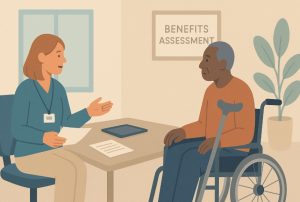
Personal Independence Payment (PIP) is a benefit provided by the UK government to support people with long-term physical or mental health conditions.
Unlike many benefits, PIP is non-means-tested, meaning it is not based on income or employment status and is intended to help cover the additional daily costs associated with living with a disability or serious illness.
Currently, PIP is split into two parts:
- The Daily Living Component, which helps with everyday tasks such as preparing meals, personal hygiene, and communicating.
- The Mobility Component, which supports those who struggle to move around independently.
While the Mobility Component will remain unchanged under the new legislation, the Daily Living Component will become significantly harder to claim.
Under existing rules, claimants can qualify by accumulating eight points across various assessed daily activities for the standard rate, or twelve points for the enhanced rate. However, from November 2026, the assessment will require individuals to score at least four points in a single activity to qualify.
This seemingly small change is expected to have large consequences. For instance, a claimant who currently scores two points each in multiple activities such as needing help brushing their hair or using the toilet, might now fail to qualify entirely, despite having the same level of need. By contrast, someone scoring four or more points on one specific task like needing help washing the upper body could still receive PIP.
As it stands:
- The standard Daily Living Component pays £72.65 per week
- The enhanced rate pays £108.55 per week
The government estimates that around 370,000 existing claimants could lose their entitlement under the new rules, with an additional 430,000 future claimants receiving less support than they would have under the current system.
How Will the PIP Changes Affect the Wider Support System and Household Incomes?
The implications of the proposed reforms extend far beyond the PIP system itself. Many individuals receiving PIP also qualify for additional benefits like Carer’s Allowance and enhanced Universal Credit elements. If PIP eligibility is lost, it can trigger a chain reaction, affecting housing support, care benefits, and the financial stability of entire households.
For example, individuals who currently receive Carer’s Allowance due to caring for someone on PIP may no longer qualify if the person they care for loses their entitlement. It is estimated that 150,000 Carer’s Allowance claimants are at risk of losing this support, which could amount to an £8,000 annual shortfall in some households.
To ease the transition, the government plans to introduce a 13-week run-on period extending the current 4-week grace period. This would give individuals three months to adjust financially and seek alternative support. Nonetheless, critics argue this measure falls short of addressing the longer-term consequences of losing a core disability benefit.
How is Universal Credit Being Reformed?

Universal Credit (UC) is the UK’s flagship welfare benefit, combining six legacy payments into one simplified system. It supports people with low or no income, including those unable to work due to health conditions or disability.
Under current rules, single adults over the age of 25 can receive:
- A basic rate of £400.14 per month
- An additional £416.19 per month if they have a limited capability for work and work-related activity (LCWRA)
However, the reforms proposed by the government introduce a significant reduction in this additional support for new claimants. Starting in 2026–27, the health top-up for new UC claimants will be cut in half, dropping from £97 a week to just £50 a week, and then frozen until 2030. Existing claimants will not escape the impact either their health-related top-up will remain frozen for the same period, eroding its value in real terms.
Although the basic rate of UC is scheduled to rise to £106 a week by 2030, this increase is not expected to offset the substantial loss in support for many disabled and unwell individuals.
Who Will Be Financially Impacted by the PIP and Universal Credit Changes?
The government’s own impact assessment lays bare the scale of the changes. According to official projections:
- Around 3.2 million families will face a net loss
- 370,000 existing PIP claimants are likely to lose eligibility
- 430,000 future PIP recipients will receive lower payments
- 2.25 million Universal Credit claimants will lose an average of £500 per year
- 730,000 future UC health claimants will lose around £3,000 annually
Perhaps most concerning is the projected increase in poverty. The reforms could push 250,000 more people, including 50,000 children, into relative poverty after housing costs by 2029/2030.
Despite these alarming figures, the government has defended the changes as part of a broader strategy to encourage employment. Ministers cite a £1 billion investment in employment support, coaching, and health initiatives designed to help people re-enter the workforce.
What is the Political Response to the PIP and Universal Credit Bill?
The motivation behind the reforms is partly economic. In recent years, the welfare budget has expanded significantly. In 2024, the government spent approximately £65 billion per year on health and disability benefits. Without intervention, that figure is projected to rise to £100 billion annually by 2030.
The cost of PIP alone was expected to nearly double to £34 billion per year over the next five years.
By implementing these changes, the government aims to save £5 billion annually by 2030. However, these savings are not without social cost. Welfare experts, charities, and many MPs warn that the burden will fall disproportionately on those least able to absorb financial shocks.
What is the Political Response to the PIP and Universal Credit Bill?

The proposed legislation has stirred considerable backlash in Parliament. More than 120 Labour MPs and 11 MPs from other parties have signed a reasoned amendment aimed at blocking the Bill’s second reading in the House of Commons.
This is not just a policy dispute; it represents a potential crisis of unity within the Labour Party and a serious political challenge for the Prime Minister. Notably, the amendment states that the bill should be rejected due to its estimated impact on poverty, its lack of consultation with disabled individuals, and the absence of proper employment impact assessments.
Senior Labour MPs, including Dame Meg Hillier and Debbie Abrahams, are among those opposing the bill. Abrahams argues that no evidence has been presented to show that the government’s reforms will succeed without causing disproportionate harm.
With opposition mounting and the vote scheduled for 1 July 2025, the fate of the bill remains uncertain.
When Will the Changes Take Place and How Can People Respond?
The government has opened a public consultation on the reforms, giving the public a chance to express concerns and suggest alternatives. The consultation launched on 7 April 2025 and will remain open until 11:59 pm on 30 June 2025.
The timeline for reform is as follows:
| Event | Date |
| Public consultation opens | 7 April 2025 |
| Public consultation closes | 30 June 2025 (11:59 pm) |
| Second reading in Parliament | 1 July 2025 |
| Reforms to begin (if passed) | November 2026 |
The Department for Work and Pensions (DWP) has reassured the public that no immediate changes will be made to current PIP or UC awards before November 2026.
Frequently Asked Questions
Will current PIP claimants be reassessed under the new system?
Yes, the reforms include new assessment criteria, and existing claimants will be reassessed from November 2026. Many may no longer qualify.
Is Universal Credit still means-tested after the reforms?
Yes, Universal Credit will continue to be means-tested, with eligibility and amount based on income and savings.
What happens if I lose my PIP award after reassessment?
You will receive a 13-week transition payment before your support ends, allowing time to seek alternative help or appeal.
Are there any protections for carers under the new changes?
Carers who lose entitlement due to the PIP changes may lose Carer’s Allowance, though the government says it’s reviewing additional support options.
Can I appeal if I’m denied PIP under the new criteria?
Yes. As with the current system, you can request a Mandatory Reconsideration and appeal to a tribunal if needed.
How will the reforms affect young people not in work or training?
With nearly 1 million young people NEET (Not in Education, Employment or Training), critics argue the changes could exacerbate vulnerability among this group.
How can I respond to the consultation?
You can respond online via the GOV.UK website by searching for “Pathways to Work Green Paper”. The deadline is 30 June 2025.
READ NEXT: