
New Style Employment and Support Allowance 2026: Eligibility, Payments and Application Process
If your illness, disability or health condition affects your ability to work, New Style Employment and Support Allowance (ESA) may provide financial support while helping you maintain your National Insurance record.
In 2026, New Style ESA continues to operate as a contribution-based benefit that can be claimed on its own or alongside Universal Credit, depending on your circumstances.
Unlike means-tested benefits, savings and most household income do not directly affect eligibility for New Style ESA. Instead, the focus is largely on your recent National Insurance contributions and your ability to work.
Key highlights:
- You may qualify with limited work capability and enough NI contributions
- Savings and partner income usually do not affect entitlement
- Payments are usually made every two weeks
- You can apply online or by phone with a fit note
- Support length depends on your ESA group
What Is New Style Employment and Support Allowance and How Does It Work?

New Style Employment and Support Allowance is a UK government benefit designed for people whose ability to work is limited because of illness or disability.
It is different from older forms of ESA because it is mainly based on your National Insurance contribution history rather than your savings, household income or your partner’s employment.
Payments are generally made every two weeks and can continue alongside Universal Credit where appropriate.
New Style ESA also allows claimants to continue building Class 1 National Insurance credits, which may support future entitlement to the State Pension and certain contributory benefits.
Payment structure overview:
| Element | New Style ESA |
|---|---|
| Benefit type | Contribution-based |
| Payment frequency | Fortnightly |
| Savings considered | No |
| Partner income considered | Generally No |
| Can be claimed with Universal Credit | Yes |
New Style ESA is intended to provide financial support during periods where work is limited, while still encouraging pathways back into employment where possible.
“Employment support should provide financial stability while recognising that health conditions affect people differently and recovery timelines vary.” — DWP guidance principle
This structure makes New Style ESA particularly relevant for people transitioning out of work because of health challenges.
Who Can Claim New Style Employment and Support Allowance in 2026?
Eligibility for New Style Employment and Support Allowance depends primarily on your health condition and National Insurance record.
You may qualify if:
- You are aged 16 or over
- You are below State Pension age
- You live in Great Britain
- You have limited capability for work because of illness or disability
- You have paid or been credited with sufficient National Insurance contributions
Self-employed workers may also qualify where contribution conditions are met. You generally cannot receive New Style ESA while receiving Statutory Sick Pay, although you can apply up to three months before SSP ends.
Eligibility snapshot:
| Requirement | Typical Rule |
|---|---|
| Age | 16 to State Pension age |
| Health condition | Must affect ability to work |
| Residence | Great Britain |
| National Insurance | Required |
| Receiving SSP | Not payable alongside SSP |
If you are unsure whether you meet contribution conditions, it is often still worth applying because DWP checks your contribution history as part of the process.
The rules remain focused on recent work history rather than household financial circumstances.
What Are the National Insurance Rules for New Style ESA?

National Insurance contributions remain one of the most important eligibility factors for New Style ESA.
For claims made in 2026, the government generally reviews the two complete tax years before the year of your application. The aim is to establish whether you have maintained sufficient contributions through work or recognised credits.
You may qualify through:
- Employment contributions
- Self-employment contributions
- National Insurance credits
National Insurance credits may fill gaps where you were unable to work due to illness, caring responsibilities or periods of receiving other qualifying support.
National Insurance contribution examples:
| Contribution History | Possible Outcome |
|---|---|
| Two qualifying years | Likely eligible |
| One contribution year plus credits | May qualify |
| No recent contributions | Lower likelihood |
If you have spent time working overseas in certain countries with social security agreements, some contribution periods may also count.
Checking your National Insurance record before applying can help identify missing years and make the application process easier to manage. Understanding these rules early may also help avoid unnecessary delays.
Can You Claim New Style ESA Alongside Universal Credit?
Yes, in many situations New Style ESA and Universal Credit can be claimed at the same time.
This arrangement can be particularly useful where ESA provides personal contribution-based support and Universal Credit covers wider household costs such as rent or children.
However, New Style ESA is generally treated as income within Universal Credit calculations, which means your Universal Credit payment may reduce depending on your entitlement.
Situations Where You Can Receive Both Benefits
New Style ESA and Universal Credit may work together if:
- You need support with rent
- You have children
- Your savings meet Universal Credit requirements
- Household costs are higher than ESA alone can support
Universal Credit often provides additional financial elements that New Style ESA does not include.
How ESA Payments Affect Your Universal Credit Amount?
Although both benefits can operate together, the total amount received varies based on personal circumstances.
Comparison table:
| Area | New Style ESA | Universal Credit |
|---|---|---|
| Based on NI record | Yes | No |
| Includes housing costs | No | Yes |
| Includes child elements | No | Yes |
| Savings limits | No | Yes |
“Contribution-based and means-tested benefits serve different purposes but can often complement each other for broader financial support.” — UK welfare policy commentary
Understanding how the two systems interact can help you estimate your potential support more accurately.
How Much Is New Style Employment and Support Allowance and When Is It Paid?
New Style ESA is usually paid every two weeks directly into your chosen bank account. The amount paid depends on your age during the assessment stage and the result of your Work Capability Assessment.
Payments may begin at an assessment rate before changing after DWP decides which support group applies to your circumstances.
Indicative payment structure:
| Claim Stage | Weekly Amount |
|---|---|
| Assessment phase (under 25) | £72.90 |
| Assessment phase (25+) | £92.05 |
| Main phase basic amount | £92.05 |
| Support component (where applicable) | £48.50 |
Payments may be reduced where occupational or personal pension income exceeds relevant thresholds. Because payment rates and policies can change, checking official guidance before applying remains important.
These arrangements aim to provide consistent financial support during periods of reduced work capability.
How Do You Apply for New Style Employment and Support Allowance?
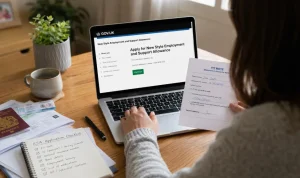
Applying for New Style Employment and Support Allowance (New Style ESA) is usually completed online through the official government service, although telephone applications remain available in certain situations.
For example, you may apply by phone if you cannot access the online system or if you are acting as an appointee on behalf of another person.
Before starting your application, it is worth taking time to gather all the required details and supporting documents. Having everything prepared in advance can reduce delays and make the process more straightforward.
Step 1: Check Your Basic Eligibility
Before applying, confirm that you meet the main eligibility conditions. You generally need to be under State Pension age, have a health condition or disability that limits your ability to work, and meet the National Insurance contribution requirements.
Even if you are uncertain about your contribution history, it may still be worth applying because DWP will review your National Insurance record as part of the assessment process.
Step 2: Prepare Your Documents
Collecting your information before starting can help you complete the application in one session and avoid interruptions.
You will usually need:
| Required Information | Needed |
|---|---|
| National Insurance number | Yes |
| Bank details | Yes |
| GP details | Yes |
| Fit note | Usually |
| Employment income details | If applicable |
| SSP end date | If relevant |
If you have been unable to work for more than seven consecutive days, you will normally be asked to provide a fit note from your healthcare professional.
Step 3: Submit Your Application
Once your details are ready, complete the online application carefully and check your information before submitting. If you cannot apply online, contact the Jobcentre Plus new claims service to apply by phone.
Providing complete and accurate information may help avoid requests for additional evidence later.
Step 4: Wait for DWP Contact
After your application has been submitted, DWP will review the information provided and usually contact you within approximately 10 working days with the next steps.
This may include arranging an appointment, confirming additional evidence requirements or explaining the next stage of the assessment process.
“Providing complete evidence early in the application process can significantly improve the speed of benefit decisions.” — Benefits administration guidance
Preparing thoroughly before applying can make the overall claims process smoother and help reduce avoidable delays.
What Happens After You Submit Your New Style ESA Application?
After your application is received, DWP usually reviews eligibility and arranges next steps. You may be contacted within approximately 10 working days.
Claimant Commitment and Jobcentre Contact
If your claim proceeds, you may attend an appointment with a work coach.
You could be asked to:
- Explain how your condition affects work
- Provide supporting medical evidence
- Agree to report changes in circumstances
- Accept your Claimant Commitment
Your commitment outlines actions connected to maintaining entitlement.
What Happens During the Work Capability Assessment?
The Work Capability Assessment determines how your health condition affects your ability to work.
Assessments may happen:
- By telephone
- By video
- In person
You may complete a questionnaire and provide supporting evidence.
Understanding the Support Group and Work-Related Activity Group
Following assessment, claimants are normally placed into one of two categories.
Group comparison:
| Group | Requirement |
|---|---|
| Work-Related Activity Group | Prepare for future work |
| Support Group | No expectation to prepare for work |
People placed in the Support Group usually face fewer ongoing requirements. This stage has a major impact on future payments and duration of support.
Can You Work or Receive Other Support While Claiming New Style ESA?

Yes, you can work or receive other support while claiming New Style ESA in some situations. Claimants may be allowed to do limited work under permitted work rules, but earnings, hours and work type must meet the required conditions.
You may also receive other support alongside New Style ESA, such as Personal Independence Payment, Universal Credit or National Insurance credits, depending on your circumstances.
However, not every benefit combination is allowed. Any work activity, earnings changes or changes in your health condition should be reported promptly. This can help you stay compliant while maintaining financial stability during reduced work capacity
How Long Can You Get New Style Employment and Support Allowance For?
The length of entitlement depends on which ESA group you enter. If placed in the Work-Related Activity Group, entitlement is generally limited to 365 days.
If placed in the Support Group, there is typically no fixed time limit while conditions continue to be met.
You may also need to:
- Continue providing fit notes where requested
- Report changes in health or work status
- Participate in reviews
Duration overview:
| Group | Typical Duration |
|---|---|
| Work-Related Activity Group | Up to 365 days |
| Support Group | No fixed limit |
Although time limits differ, ongoing eligibility remains subject to review and updated evidence where necessary. Understanding the expected duration can help you plan finances and explore any additional support available.
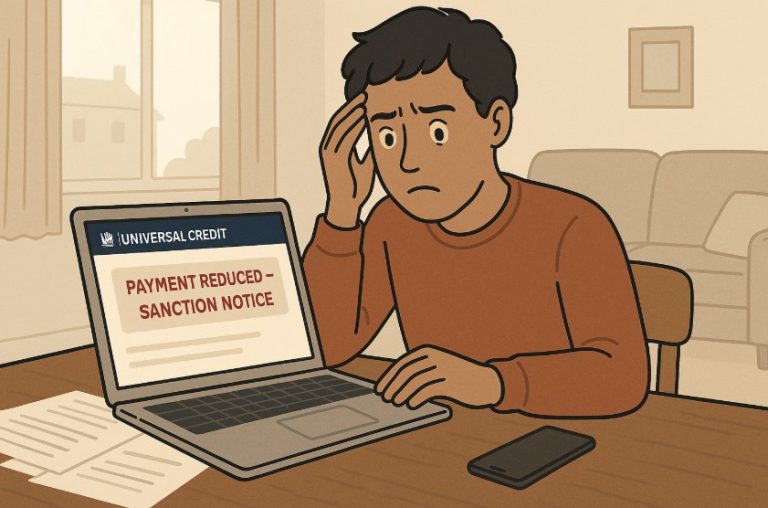
What Should You Do If Your ESA Claim Is Refused, Reduced or Stopped?
A refusal or reduction does not necessarily mean the decision is final. Common reasons include insufficient contribution history, missing evidence, failing assessments or administrative issues.
If this happens, you may request a Mandatory Reconsideration. If the outcome remains unchanged, you may then appeal.
Recommended actions:
- Read the decision letter carefully
- Gather additional evidence
- Request reconsideration within time limits
- Seek advice where needed
Claimants who experience sanctions should also contact relevant services quickly if housing support is affected. Responding promptly can improve the chances of resolving issues efficiently.
Conclusion
New Style Employment and Support Allowance remains an important source of support for people whose illness or disability limits their ability to work.
Because eligibility focuses largely on National Insurance contributions rather than savings or partner income, it can offer valuable flexibility compared with means-tested support alone.
Understanding eligibility rules, preparing documents early and knowing what happens after applying can make the process easier to manage.
If you believe your health condition affects your ability to work, checking your National Insurance record and reviewing current government guidance can help you decide whether New Style ESA is the right next step.
FAQs About New Style Employment and Support Allowance
Can New Style ESA be claimed if you are self-employed?
Yes. Self-employed individuals may qualify if they have paid or been credited with enough National Insurance contributions and meet all other eligibility requirements. The application process is broadly similar to employed applicants.
Does New Style ESA include housing costs or support for children?
No. New Style ESA does not include separate amounts for housing costs or children. Support for these areas is usually provided through Universal Credit if you qualify.
Can occupational or personal pensions reduce ESA payments?
Yes. If you receive more than the relevant pension threshold, your New Style ESA amount may be adjusted. The exact reduction depends on your pension income.
Can New Style ESA help protect your State Pension record?
Yes. Receiving New Style ESA generally includes Class 1 National Insurance credits, which may support future entitlement to the State Pension and certain contributory benefits.
Can you apply for ESA before Statutory Sick Pay ends?
Yes. If you are receiving Statutory Sick Pay, you can normally begin your New Style ESA application up to three months before SSP ends to reduce gaps in support.
What evidence should you prepare before attending an assessment?
Prepare fit notes, healthcare records, contact details for your medical professionals and examples explaining how your condition affects daily activities and work.
Can ESA decisions be challenged through mandatory reconsideration?
Yes. Mandatory reconsideration is usually the first formal step if you disagree with a decision before moving on to the appeal process where appropriate.