
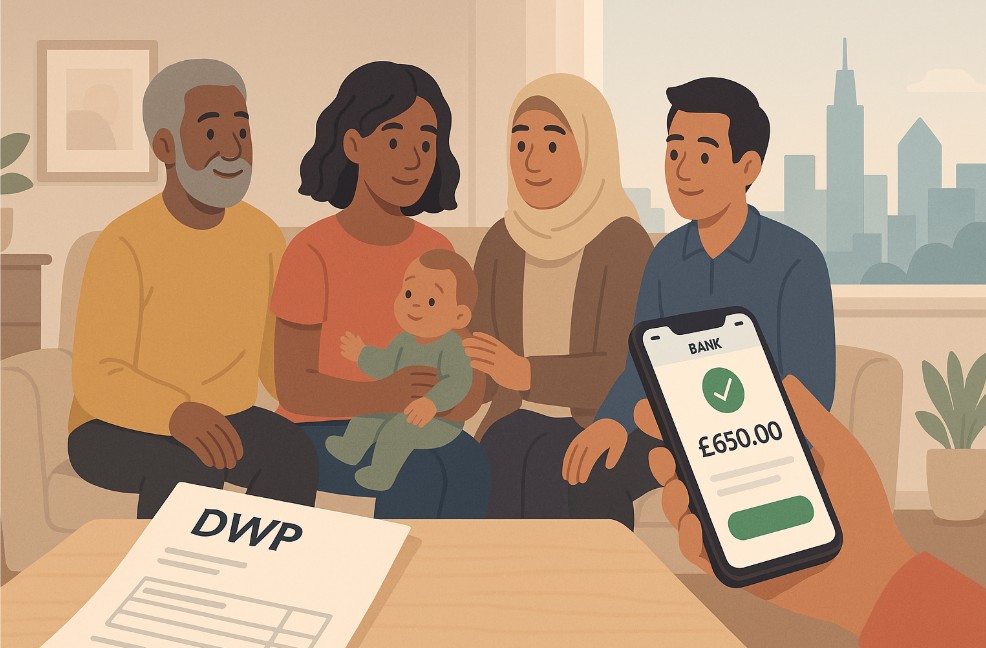
Cost of Living Payment 2025 – When Will It Be Paid?
How are UK households supposed to cope with rising living expenses in 2025? Will there be another cost of living payment, and if so, when exactly will it land in bank accounts?
These are the urgent questions facing millions of people across the United Kingdom, particularly as the financial pressure on low-income families continues to mount.
In response to inflation outpacing wage growth and essential bills increasing year after year, the government is continuing its cost of living support through a series of targeted payments.
These payments are aimed at individuals and households receiving means-tested benefits. This comprehensive guide explores when the payments are expected, who qualifies, how much will be paid, and what additional help is available to support UK residents through the rest of the year.
What Is the Cost of Living Payment and Why Is It Needed in 2025?
The cost of living payment is a financial support scheme introduced by the UK government to provide relief for individuals and families on low incomes, particularly those who rely on certain benefits administered by the Department for Work and Pensions (DWP) and HM Revenue and Customs (HMRC).
These payments were initially introduced to address the economic impact of the COVID-19 pandemic and the subsequent energy crisis but have since become a regular feature of the government’s welfare strategy due to persistent inflation.
According to recent data, around 24 million people in the UK now rely on some combination of DWP-administered benefits.
Despite increases to the national minimum wage, Universal Credit, and the state pension, many still struggle to meet basic living expenses.
The Joseph Rowntree Foundation reported that in the year 2022/23, over 14.3 million people nearly one in five were living in poverty. This context underscores the continued need for cost of living support into 2025.
When Will the Cost of Living Payment Be Paid in 2025?
The government has not released the final schedule for 2025 at the time of writing. However, based on previous announcements and patterns from past years, the first instalment is expected to begin from 19 July 2025.
This date is currently tentative, but it aligns with the summer timeline used for previous cost of living support disbursements.
All payments will be made automatically to eligible individuals. This means there is no need to apply. Recipients will receive the money directly into the same bank account used for their existing benefit payments.
The DWP will typically issue a formal announcement and publish the exact qualifying period shortly before payments begin.
Who Will Receive the 2025 Cost of Living Payment?
Eligibility for the cost of living payment is tied to the receipt of certain means-tested benefits. To qualify, individuals must be receiving at least one of the following during the specified qualifying period:
- Universal Credit
- Income-based Jobseeker’s Allowance (JSA)
- Income-related Employment and Support Allowance (ESA)
- Income Support
- Pension Credit
- Child Tax Credit
- Working Tax Credit
In addition to the main payment, separate instalments are expected for those receiving disability-related benefits such as:
- Personal Independence Payment (PIP)
- Disability Living Allowance (DLA)
- Attendance Allowance
Claimants will receive the payment automatically if they are in receipt of a qualifying benefit during the relevant timeframe. There is no separate application process, and eligibility is determined by benefit status.
How Much Will Be Paid to Each Eligible Group?
Although exact amounts for 2025 have yet to be confirmed, projections based on prior years suggest a continuation of the tiered support model. Payments may be structured as follows:
| Group | Estimated Payment Amount | Expected Period |
| Low-Income Benefit Recipients | £300–£400 | July and October 2025 |
| Disability Benefit Recipients | £150 | June–July 2025 |
| Pensioners | £300 | November–December 2025 |
The DWP will announce the definitive amounts and timelines in a government statement, likely during the Autumn Budget 2024. Payments will be issued separately and labelled clearly on bank statements, usually as “DWP COL” or “HMRC COL”.
Have Any Benefit Rates Increased in 2025?
In April 2025, most working-age benefits were uprated by 1.7%, reflecting inflation data from the previous September. This adjustment applied to Universal Credit, PIP, ESA, Income Support, and similar payments.
For pensioners, the state pension increased by 4.1%, resulting in an annual uplift of approximately £472. This rise adheres to the triple lock policy, which ensures pensions grow in line with the highest of inflation, earnings growth, or 2.5%.
Further changes are on the horizon. From April 2026, those receiving Universal Credit’s standard allowance will see a one-time increase of £7 per week, raising the rate from £91 to £98.
However, the additional health-related element of Universal Credit will be frozen at £97 until at least 2030, and new claimants after April 2026 may receive only £50 per week, a significant reduction.
What Other Benefits Will Be Paid in July 2025?
The month of July 2025 will proceed with standard benefit payments, as there are no scheduled bank holidays to disrupt disbursements. Individuals can expect their regular payments for:
- Universal Credit
- State Pension
- Pension Credit
- Child Benefit
- PIP
- DLA
- Attendance Allowance
- Carer’s Allowance
- ESA
- Income Support
- JSA
State pension payments are typically issued every four weeks, with the day depending on the final two digits of the recipient’s National Insurance number:
| NI Number Ending In | Payment Day |
| 00 to 19 | Monday |
| 20 to 39 | Tuesday |
| 40 to 59 | Wednesday |
| 60 to 79 | Thursday |
| 80 to 99 | Friday |
What Additional Financial Support Is Available for Households in 2025?
Beyond cost of living payments, several other schemes are in place to help individuals and families who may be struggling with essential expenses:
Budgeting Advance Loans
Available to those on Universal Credit, these interest-free loans provide emergency funds. Repayments are automatically deducted from future benefit payments. Maximum loan amounts are:
| Category | Maximum Loan |
| Single person | £348 |
| Couple | £464 |
| With children | £812 |
Starting April 2025, deductions from Universal Credit for loan repayments are capped at 15% of the standard allowance, reduced from 25%.
Discretionary Housing Payment (DHP)
This support is available through local councils to assist with rent shortfalls or deposits. Eligibility is restricted to those receiving Housing Benefit or the housing component of Universal Credit. The amount and criteria vary by council.
Household Support Fund (HSF)
The HSF offers temporary relief to low-income households via food vouchers, utility bill support, and one-off grants of up to £300.
The scheme runs until March 2026 and will be replaced by a new Crisis and Resilience Fund backed by £1 billion in government funding.
Charitable Grants
Numerous UK charities provide small grants based on need. These may be targeted at carers, disabled people, students, bereaved families, or unemployed individuals. Turn2us offers a search tool for available grants.
Energy Supplier Schemes
Energy companies such as British Gas, EDF, Octopus, and E.ON offer support for customers struggling to pay their bills. These include payment plans, discounts, and hardship funds. Customers should contact providers directly for help.
Council Tax Reduction
Residents on benefits or low incomes can apply for council tax discounts of up to 100%. Additional discretionary reductions are available through local councils for households facing extreme financial hardship.
Free Childcare Expansion
As of September 2025, all children under five will qualify for 30 hours of free childcare. Parents must reconfirm eligibility every three months. In addition, tax-free childcare continues to offer a 20% saving on costs, up to £500 per year.
Is the Energy Price Cap Decreasing in 2025?
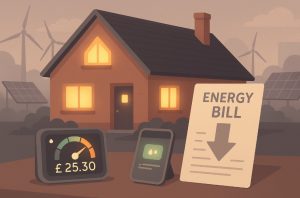
In a rare moment of financial relief, Ofgem’s energy price cap will decrease by 7% from £1,849 to £1,720 between July and September 2025.
This follows a period of three consecutive increases. While welcome, energy costs remain high compared to pre-crisis levels, and further reductions are uncertain.
What Changes Are Coming to Benefits Under Labour?
Following the 2024 general election, Labour’s welfare strategy includes substantial reforms:
- The Universal Credit migration will be completed by January 2026, moving all legacy benefit claimants to the new system.
- Eligibility criteria for PIP will tighten from November 2026.
- Universal Credit deductions will be capped further and eligibility rules for new health-related claims will change significantly from April 2026.
These changes are designed to manage long-term welfare spending but may reduce support for some new claimants.
FAQs About the Cost of Living Payment 2025
Is an application required to receive the 2025 cost of living payment?
No, the payment will be issued automatically to eligible individuals who receive qualifying benefits during the assessment period.
When is the first payment expected in 2025?
It is anticipated to begin from 19 July 2025, although this date is subject to confirmation by the DWP.
What if my benefit claim is under review?
If approved later and backdated to the qualifying period, you may still receive the payment retroactively.
Will there be multiple payments in 2025?
Yes. Similar to previous years, at least two or three instalments are expected across the year for different recipient groups.
Is the payment taxable or does it affect other benefits?
No. The cost of living payment is non-taxable and does not count as income for other benefits.
What support exists for people not eligible for this payment?
Options include budgeting loans, charitable grants, council tax support, and access to the Household Support Fund.
How do I get updates on eligibility and payment dates?
Check gov.uk and monitor communication from the DWP or HMRC for official updates.