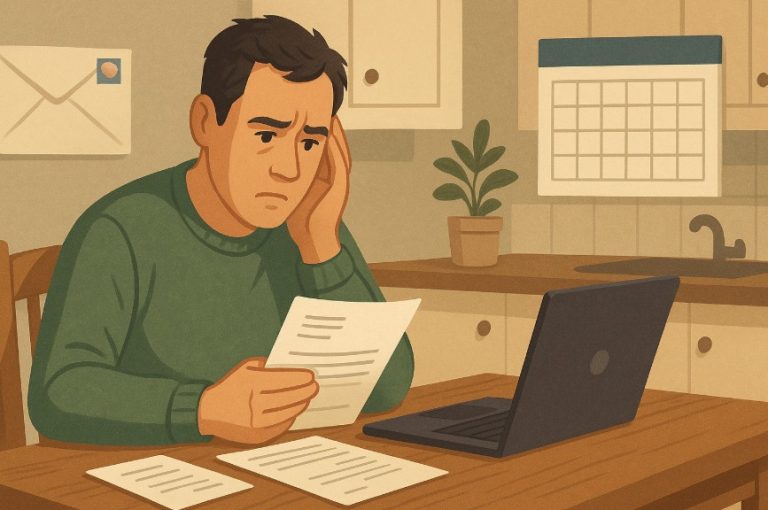

What Triggers a DWP Investigation?
Receiving a message from the Department for Work and Pensions can be worrying, but a DWP review does not automatically mean fraud is suspected.
So, what triggers a DWP investigation?
Common triggers include mismatches between information on a benefit claim and records, undeclared earnings, savings above Universal Credit limits, household changes, unusual financial activity, reports, or issues found during a claim review.
For Universal Credit, checks may also be triggered by HMRC earnings data, changes in capital, housing costs, self-employment income, household details, or the Targeted Case Review programme.
It is important to distinguish between a routine eligibility review, a compliance check and a fraud investigation. Requests for bank statements or journal evidence do not automatically mean fraud is suspected.
What Are the Main Things That Can Trigger a DWP Investigation?
The DWP uses several sources of information when checking whether benefit payments remain correct.
Some triggers are automated. Others arise because information supplied by the claimant does not match other records. A review may also be selected proactively without any allegation having been made.
| Possible trigger | Why it may attract attention |
|---|---|
| Earnings do not match claim information | HMRC earnings information may differ from what is expected |
| Undeclared savings or investments | Capital can affect Universal Credit entitlement |
| Savings crossing £6,000 or £16,000 | These are important UC capital thresholds |
| Someone moves into or out of the home | Household composition can affect entitlement |
| Undeclared partner | UC is normally assessed on the circumstances of a couple |
| Housing information changes | Rent, address or household changes may alter the housing element |
| Self-employed earnings appear inconsistent | Business income can require additional verification |
| Large or unexplained deposits | The DWP may want to establish whether the money is income, capital or disregarded |
| Conflicting UC journal information | DWP staff may ask for clarification where information does not match the claim |
| Data-matching identifies an inconsistency | Government-held information can be compared with benefit records |
| Targeted Case Review | Existing UC claims can be selected for proactive checking |
| Report from another person | Allegations can be considered, although they do not prove wrongdoing |
Many of these situations result in nothing more than a request for evidence. An investigation normally becomes more serious where information suggests entitlement may have been incorrect and the discrepancy cannot easily be explained.
How Do HMRC Earnings Mismatches Trigger Universal Credit Checks?
This is particularly important for Universal Credit because most PAYE earnings are reported electronically by employers to HMRC through Real Time Information, commonly known as RTI.
That information feeds into Universal Credit calculations.
Suppose a claimant’s employer reports £1,900 of earnings while information elsewhere on the claim appears to suggest significantly lower earnings. The difference may require clarification.
This does not automatically indicate fraud.
RTI problems can happen because an employer reports wages late, submits a correction, records a payment twice, uses an incorrect payroll date or pays somebody at an unusual point in their Universal Credit assessment period.
The DWP may therefore ask for payslips, bank statements or information from the employer before deciding whether anything is actually wrong.
Problems are more likely to attract further attention when there is a repeated difference between reported earnings and other information associated with the claim.
Can Savings Trigger a DWP Universal Credit Investigation?
Yes. Capital is one of the most important areas of Universal Credit eligibility.
For most UC claimants, the basic capital rules are:
| Total capital | General Universal Credit effect |
|---|---|
| Up to £6,000 | Normally ignored for the capital calculation |
| More than £6,000 up to £16,000 | UC is normally reduced |
| More than £16,000 | Usually prevents entitlement to UC |
Between £6,000 and £16,000, Universal Credit normally applies assumed or tariff income of £4.35 per month for every £250, or part of £250, above £6,000.
Someone with £7,200 of relevant capital, for example, should therefore not assume their savings are irrelevant simply because they remain below £16,000.
Problems can arise when savings increase but the change is not reported. This might happen after an inheritance, redundancy payment, sale of an asset, compensation payment or money accumulating gradually in several accounts.
Claimants who are unsure about the rules can read more about how savings affect Universal Credit.
There are also specific disregards and transitional rules that can apply in certain circumstances, so simply seeing a large balance does not automatically establish that somebody has been overpaid.
Can the DWP Check Every Transaction in a Bank Account?

This is one of the biggest misconceptions surrounding DWP investigations.
The DWP does not simply have unrestricted live access to everyone’s online banking or automatically watch every purchase a Universal Credit claimant makes.
Eligibility-verification measures can be used to identify specified information that may indicate an entitlement issue.
That is different from automatically receiving a continuous transaction history showing where somebody bought groceries, fuel or clothes.
A flagged indicator is also not proof of benefit fraud.
If information suggests that a claimant may not meet an eligibility condition, the DWP can carry out further checks. During a Universal Credit claim review, claimants may also be asked directly to provide bank statements.
A more detailed investigation can involve closer examination of financial evidence where there is a lawful reason to investigate income, capital or other financial circumstances.
There is therefore an important difference between automated eligibility verification and a formal investigation involving financial records.
More detail on the distinction can be found in the site’s explanation of DWP bank account checks.
What Is a Targeted Case Review?
A significant area for Universal Credit claimants is the Targeted Case Review programme.
This is different from the traditional idea of somebody reporting another person for benefit fraud.
Targeted Case Reviews proactively examine existing Universal Credit claims to check whether the information being used to calculate entitlement remains correct.
A claimant can therefore receive a review request even when nobody has complained about them and there is no established allegation of dishonesty.
The review may involve confirming identity, income, capital, housing circumstances or household information and providing supporting documents.
This distinction matters because receiving a Targeted Case Review should not automatically be interpreted as being accused of fraud.
A review could find that the claim is completely correct. It could also identify an underpayment, an innocent error, an overpayment or information that requires further investigation.
Can Universal Credit Journal Messages Trigger a Review?
A Universal Credit journal entry can lead to further questions where the information provided does not appear to match other parts of the claim.
A vague journal message by itself is not evidence of fraud.
However, problems can occur where messages create uncertainty about something that affects entitlement.
For example, a claimant might write that someone is “staying for a while” without explaining whether that person has actually moved into the property.
Another claimant might say they have “started doing some work” without making clear whether they are employed or self-employed.
DWP staff may then need further information to determine whether the change affects the claim.
The safest approach is to make journal entries factual and specific. Where relevant, claimants should state what changed, the date it changed and any information needed to understand how it affects the household.
Someone reporting a change should not deliberately use vague wording in an attempt to avoid triggering a recalculation. Clear information generally makes it easier for the DWP to assess the claim correctly.
Can Surplus Earnings Cause Questions About a UC Claim?
Universal Credit is assessed monthly, which can create complicated situations when someone has unusually high earnings during one assessment period.
The surplus earnings rules can mean that sufficiently high earnings continue to affect Universal Credit after the assessment period in which the money was originally received.
This can be particularly relevant to people with fluctuating earnings, bonuses or variable self-employed income.
If somebody’s UC claim ends because earnings are temporarily high and they reclaim shortly afterwards, earlier surplus earnings can potentially affect the new calculation.
That can sometimes make payment calculations look unusual even when all earnings have been correctly declared.
The key point for investigation purposes is that fluctuating earnings are not automatically suspicious.
What matters is whether the earnings and circumstances reported by the claimant are consistent with the information available to the DWP.
Can Someone Living With You Trigger a Universal Credit Investigation?
Household composition is another major trigger for checks.
Universal Credit entitlement can change when a claimant starts living with a partner, separates from a partner or another adult moves into or out of the property.
Partner status is particularly important because Universal Credit normally assesses couples jointly.
The DWP may therefore seek clarification where records suggest that another person regularly lives at the address but the claim describes the claimant as single.
There is no single piece of evidence that automatically proves two people are living together as a couple. Household arrangements have to be considered in context.
Similarly, another adult living at the property is not automatically a partner. They could be an adult child, sibling, lodger or another non-dependant.
For Universal Credit housing costs, an adult living in the household can sometimes result in a housing cost contribution, commonly described as a non-dependant deduction.
If an adult joins or leaves the household and the information is not updated, the discrepancy can lead to incorrect housing payments and a later review.
Can Managed Migration Cause DWP Checks?
Managed migration moved claimants from older legacy benefits onto Universal Credit.
Although the main migration exercise has now reached its concluding stage, recently migrated claims can still contain information that needs checking.
For example, information previously recorded for ESA, tax credits or Housing Benefit may not perfectly correspond with information declared when the Universal Credit claim was created.
There may also be questions concerning transitional protection, capital, household composition, earnings or legacy-benefit records.
A mismatch does not automatically mean the claimant deliberately supplied incorrect information.
It can result from different reporting systems, outdated records or circumstances changing around the time the UC claim was made.
Anyone who moved from legacy benefits should keep copies of relevant migration notices, previous benefit decisions and information supplied during the UC application in case clarification is later required.
Does Housing Benefit Fraud Get Investigated by the DWP?
This area often causes confusion.
Universal Credit and Housing Benefit are not always administered by the same organisation.
The DWP administers Universal Credit. Housing Benefit is administered by local authorities, including the remaining situations where working-age Housing Benefit can still be paid, such as certain supported or temporary accommodation cases.
This means a Housing Benefit query may initially come from the claimant’s council rather than the DWP.
Information can still be shared between public bodies where legally permitted, and an issue involving one benefit can potentially have implications for another.
Claimants should therefore check which organisation sent the letter or evidence request before assuming that every benefits investigation is being conducted directly by the DWP.
Can an Anonymous Report Trigger a DWP Investigation?
An allegation from a member of the public can potentially lead to checks, but an anonymous report is not proof that benefit fraud has occurred.
Someone could make an allegation because they believe a claimant has undeclared employment, savings, another property or an undeclared partner.
The information would still need to be assessed.
The DWP does not have to assume that everything reported by another person is true.
A credible allegation may lead to information being compared against records already available to the Department. Further action depends on what those checks show.
Malicious or incorrect reports therefore do not automatically mean someone’s benefits will be stopped.
Is a Universal Credit Claim Review the Same as a Fraud Investigation?
No.
This is probably the most important distinction for claimants to understand.
A Universal Credit claim review is primarily designed to check that entitlement remains correct.
A fraud investigation is concerned with whether someone may have intentionally provided false information, failed to disclose something important or otherwise dishonestly obtained benefits.
A claimant undergoing a routine review may simply be asked for bank statements, identification or evidence about rent and household circumstances.
If those documents explain everything, the review may end without further action.
A formal fraud investigation generally involves a more focused examination of an identified concern.
Practical point: Being asked for evidence is not the same as being accused of fraud. Reviews can identify innocent mistakes, DWP errors, underpayments and overpayments as well as cases requiring further investigation.
What Happens if a Review Becomes an Investigation?
The process depends on the issue and the seriousness of the information identified.
The DWP may initially ask additional questions or request documents. It might compare information with other official records and calculate whether benefit entitlement has been incorrect.
If an overpayment is identified, the claimant may receive a decision explaining the amount and whether it must be repaid.
More serious cases involving suspected deliberate benefit fraud can progress further.
One possible stage is an Interview Under Caution.
This is very different from an ordinary Universal Credit review phone call. It is a formal investigative interview and what is said can potentially be used as evidence.
Anyone receiving such an invitation should treat it seriously and consider obtaining appropriate legal advice before participating.
The site’s detailed guide explains what happens during a DWP Interview Under Caution.
Not every investigation results in an Interview Under Caution, and receiving a normal claim-review message should not be treated as evidence that one is coming.
How Can Honest Claimants Reduce the Risk of DWP Problems?

The best protection is maintaining an accurate claim rather than trying to work out what the DWP can or cannot discover.
Claimants should report relevant changes as soon as possible instead of assuming there is a universal grace period for every type of change.
That includes changes to earnings, employment, self-employment, savings, investments, household members, partners, rent, address and other circumstances that could affect entitlement.
When reporting through the UC journal, information should be clear enough for somebody unfamiliar with the situation to understand what happened.
Keeping evidence is equally important.
Bank statements, payslips, tenancy agreements, letters relating to inheritances or compensation payments, employment documents and screenshots or copies of important journal messages can all help resolve questions quickly.
More information is available in the guide to informing the DWP about a change of circumstances.
What Should Someone Do if the DWP Starts Reviewing Their Claim?
The first step is to establish exactly what type of contact has been received.
A journal request for evidence, Targeted Case Review, ordinary benefit review, compliance check and Interview Under Caution are different processes.
The claimant should read the request carefully, check deadlines and provide accurate information.
Documents should not be altered to make the situation appear more favourable. Where an unusual transaction or circumstance has a legitimate explanation, supporting evidence can be provided.
If the DWP has misunderstood something, the claimant should explain the facts clearly rather than guessing what answer the reviewer wants.
Where the issue involves a substantial alleged overpayment, suspected fraud or an Interview Under Caution, specialist welfare-rights or legal advice may be appropriate.
Does Being Investigated Mean Your Universal Credit Will Stop?
Not necessarily.
A review or investigation does not automatically mean Universal Credit must be stopped.
The outcome depends on what the DWP finds and whether the claimant continues to satisfy the eligibility conditions.
A review could result in no change at all.
It could also result in an increased payment where the claimant was receiving too little, a reduction where circumstances changed, recovery of an overpayment, or closure of the claim where eligibility no longer exists.
Fraud action is a separate issue and generally requires more than simply finding that an incorrect payment occurred.
An error and deliberate dishonesty are not the same thing.
Frequently Asked Questions
What is the most common reason for a DWP investigation?
There is no single trigger. Undeclared income, capital, partner or household changes and discrepancies between claim information and official records are common reasons for further checks.
Can HMRC information trigger a Universal Credit investigation?
Yes. Universal Credit uses HMRC earnings information, so significant discrepancies can lead to questions or evidence requests. A mismatch does not automatically mean fraud.
Can savings trigger a DWP investigation?
Yes. Savings can affect Universal Credit once relevant capital exceeds £6,000, while capital above £16,000 usually prevents entitlement unless a specific exception or disregard applies.
Does a DWP bank check mean fraud is suspected?
No. Eligibility-verification checks and routine claim reviews are not automatically fraud investigations.
Can an anonymous report trigger an investigation?
It can prompt checks, but an allegation alone does not prove anything. The DWP would need to assess the information and any supporting evidence.
Can a Universal Credit journal message cause a review?
A journal entry can lead to clarification where it conflicts with other claim information. Simply writing a vague message is not automatically a fraud trigger.
Is a Targeted Case Review a fraud investigation?
Not necessarily. Targeted Case Reviews proactively check whether existing Universal Credit claims remain accurate and can take place without any fraud allegation.
Can the DWP see everything someone buys?
The DWP does not automatically receive a continuous live feed showing every purchase made by every claimant. More detailed financial records may be examined where evidence is requested during a review or investigation.