
How Much Universal Credit Will I Get if I Earn £1,500 Per Month?
If you earn £1,500 per month, you may still qualify for Universal Credit, but the amount you receive depends on your circumstances.
A single person over 25 with no children and no housing support is unlikely to get any payment because their earnings reduce their award to £0.
However, if you have children, receive help with rent, or have a health condition that limits your ability to work, you could still receive Universal Credit.
Key points to remember:
- Universal Credit reduces by 55p for every £1 you earn above your work allowance
- Some claimants have no work allowance at all
- Having children or limited capability for work can increase entitlement
- Housing costs can make a significant difference
- Your Universal Credit is recalculated every month
Understanding how the system works is the easiest way to estimate what you could receive.
Can You Get Universal Credit If You Earn £1,500 Per Month?

Yes, you can still get Universal Credit if you earn £1,500 a month, but there is no single amount that applies to everyone. Your payment depends on your age, whether you live with a partner, whether you have children, if you pay rent, and whether you have a disability or health condition.
For many single people without children, £1,500 per month is too much to qualify. Yet for families or people receiving additional Universal Credit elements, a payment may still be available.
“Universal Credit is designed to adjust as your earnings change, so some people may still receive support even if they are working.” — Department for Work and Pensions spokesperson
The main reason is that Universal Credit starts with a standard allowance and then deducts part of your earnings. If your maximum award is higher than the deduction, you still receive a payment.
How Is Universal Credit Calculated If You Earn £1,500 a Month?
Universal Credit is calculated in four stages, and understanding each one makes it easier to work out roughly what you could receive.
The Department for Work and Pensions first works out your standard allowance, then adds any extra elements you qualify for.
After that, any work allowance is applied, and finally your earnings are deducted using the 55% taper rate.
The four stages are:
- Your standard allowance is worked out
- Extra elements are added if you qualify
- Your work allowance is applied
- A 55% deduction is taken from earnings above the work allowance
This means two people earning the same £1,500 per month can receive very different Universal Credit payments depending on their circumstances.
What Counts as Earnings for Universal Credit?

Universal Credit usually uses your take-home pay after tax, National Insurance and pension contributions. This is important because many people incorrectly use their gross salary.
For example, if you earn £1,500 before deductions, your take-home pay may be lower, meaning your Universal Credit deduction could be smaller.
Universal Credit Standard Allowance
The standard allowance is the basic amount every claimant receives before earnings are taken into account.
Circumstance Monthly Standard Allowance 2025/26
Single under 25 £316.98
Single aged 25 or over £400.14
Couple both under 25 £497.55
Couple, one or both 25+ £628.10
A single claimant over 25 earning £1,500 per month begins with £400.14. If there is no work allowance, 55% of their earnings are deducted.
£1,500 × 55% = £825
Because £825 is more than the standard allowance, the final payment becomes £0.
For couples, the starting allowance is higher, which means they may still receive some Universal Credit if they also qualify for additional elements such as rent support or children
What Is the Universal Credit Work Allowance?
The work allowance is the amount you can earn before Universal Credit begins to reduce. Not everyone gets one.
Not everyone gets a work allowance. You only qualify if:
- You are responsible for a child
- You have limited capability for work due to illness or disability
There are two different work allowance rates depending on whether you receive help with housing costs:
Situation Monthly Work Allowance
You receive housing support £411
You do not receive housing support £684
The lower work allowance applies if your Universal Credit includes a housing element to help with rent. The higher amount applies if you do not receive any housing support.
Who Does Not Get a Work Allowance?
You do not receive a work allowance if you:
- Are single with no children
- Do not have a health condition or disability affecting work
- Are not responsible for a child
That is why many people earning £1,500 a month find that they receive no Universal Credit. Without a work allowance, the 55% taper is applied to all of their earnings immediately.
Why the Work Allowance Matters?
The work allowance means that some of your wages are ignored before the earnings deduction is applied. This can make a large difference to the amount of Universal Credit you keep.
For example, if you qualify for the higher work allowance of £684:
£1,500 − £684 = £816
£816 × 55% = £448.80
This means only £448.80 is deducted from your Universal Credit instead of the full £825. The difference of more than £376 could be enough to keep your claim open and leave you with a monthly payment.
“The work allowance means claimants with children or health conditions can keep more of their Universal Credit when they start work.” — Turn2us adviser
How Much Universal Credit Will You Get If You Are Single and Earn £1,500?

If you are single and earn £1,500 per month, the amount of Universal Credit you receive depends largely on whether you have any additional support included in your claim.
A single claimant with no children, no housing costs and no health condition is unlikely to receive anything.
However, if you receive help with rent or qualify for a health-related element, you may still receive a payment.
Single, Over 25, No Children
A single person aged 25 or over with no children and no housing support is unlikely to receive any Universal Credit.
This is because they only receive the standard allowance, and their earnings are high enough to reduce the award to zero.
For 2025/26, the standard allowance for a single claimant aged 25 or over is £400.14 per month. Because there is no work allowance in this situation, the full £1,500 of earnings is taken into account.
£1,500 × 55% = £825
The £825 earnings deduction is greater than the £400.14 standard allowance, so the claimant would not receive a Universal Credit payment
Single With Rent Support
If you receive help with rent, your maximum Universal Credit award may be higher because of the housing element. For instance, if your rent element is £500 per month, your total award before deductions could be:
- Standard allowance: £400.14
- Housing element: £500
- Total: £900.14
With no work allowance, the earnings deduction remains £825.
£900.14 − £825 = £75.14
In this situation, you may still receive around £75 a month.
Single With a Health Condition
If you have limited capability for work and work-related activity, you may qualify for an extra element worth around £416.19 per month. You would also receive a work allowance.
This can make a major difference to your final payment.
How Much Universal Credit Will You Get If You Have Children and Earn £1,500?
Families with children are more likely to continue receiving Universal Credit because they qualify for both child elements and a work allowance.
A parent with one child and no housing support could receive:
- Standard allowance: £400.14
- Child element: £339
- Total before deductions: £739.14
Because they qualify for the higher work allowance of £684, only £816 of their earnings are deducted.
£816 × 55% = £448.80
£739.14 − £448.80 = £290.34
This means they may still receive around £290 per month.
Example With Housing Support
If the same claimant also receives £450 per month towards rent, their maximum award increases further.
- Standard allowance: £400.14
- Child element: £339
- Housing element: £450
- Total before deductions: £1,189.14
Because they receive housing support, the lower work allowance of £411 applies.
£1,500 − £411 = £1,089
£1,089 × 55% = £598.95
£1,189.14 − £598.95 = £590.19
So in this case, the claimant may receive approximately £590 each month.
Scenario Maximum Award Before Deduction Earnings Deduction Estimated UC Payment
Single, over 25, no children £400.14 £825 £0
Single parent, one child, no rent help £739.14 £448.80 £290.34
Single parent, one child, with rent support £1,189.14 £598.95 £590.19
This table shows clearly how having children and rent support can increase your entitlement significantly.
Could You Still Get Universal Credit If You Have a Health Condition?

If you have a disability or health condition that limits your ability to work, you may qualify for Limited Capability for Work and Work-Related Activity (LCWRA).
This adds an extra monthly amount to your claim and also gives you access to a work allowance.
LCWRA Additional Element
The LCWRA element is currently worth around £416.19 per month. This can make the difference between receiving no Universal Credit and continuing to qualify.
For example:
- Standard allowance: £400.14
- LCWRA element: £416.19
- Total before deductions: £816.33
With the higher work allowance of £684, the deduction is £448.80.
£816.33 − £448.80 = £367.53
A claimant in this position could still receive roughly £367 each month.
Real Claimant Example:
Martin, a 38-year-old claimant from Manchester, works part-time and earns around £1,500 a month after tax. He has a long-term back condition and receives LCWRA.
He explained:
“I thought earning £1,500 would stop my Universal Credit completely, but because I receive the health element and work allowance, I still get around £350 a month. That support helps me cover bills when my hours change.”
Martin also found that his Universal Credit varied each month depending on overtime and whether he worked extra shifts.
Why Might Two People Earning the Same £1,500 Receive Different Amounts?
Two people can earn exactly the same amount and receive completely different Universal Credit payments.
This is because Universal Credit looks at your whole household rather than only your wages.
The following factors affect your entitlement:
- Your age
- Whether you are single or in a couple
- If you have children
- Whether you pay rent
- Whether you have a disability
- Childcare costs
- Savings over £6,000
- Sanctions or benefit deductions
“No two Universal Credit claims are exactly the same because each household has different costs and responsibilities.” – MoneyHelper benefits specialist
Someone with children and rent costs may receive over £500 per month, while another person with the same earnings may receive nothing.
What Else Can Reduce Your Universal Credit Payment?

Even if you qualify, there are other reasons why your final Universal Credit payment may be lower than expected.
Savings and Capital
If you have savings or capital between £6,000 and £16,000, your Universal Credit is gradually reduced. The more savings you have, the lower your payment becomes.
If your total savings are above £16,000, you will usually no longer qualify for Universal Credit at all.
Benefit Cap and Deductions
Your Universal Credit may also be reduced because of:
- Repaying a Universal Credit advance
- The benefit cap
- Rent arrears or Council Tax deductions
- Sanctions for missing appointments or not meeting claimant commitments
Reason for Reduction Possible Effect
Savings over £6,000 Universal Credit reduced
Savings over £16,000 Claim usually ends
Universal Credit advance repayment Monthly deduction taken
Benefit cap Overall amount limited
Sanction Temporary reduction in payment
These deductions can sometimes explain why your payment is lower than you expected, even if your earnings have not changed.
What Happens If Your Income Changes Each Month?
Universal Credit is reassessed every month. If your wages increase, your payment falls. If your wages drop, your payment usually rises again.
This can be especially confusing if you are paid weekly or every four weeks. Some months may include an extra wage payment, which can temporarily reduce your Universal Credit.
Monthly Assessment Period:
Universal Credit works in monthly assessment periods. The DWP checks the wages reported by your employer during that period and recalculates your entitlement.
Weekly and Four-Weekly Pay:
If you are paid weekly, you may sometimes receive five pay packets in one assessment period instead of four. This can make it look as though you earned more than normal, reducing your Universal Credit unexpectedly.
If this happens, you can ask the DWP to review your assessment.
How Can You Check Exactly How Much Universal Credit You Will Get?

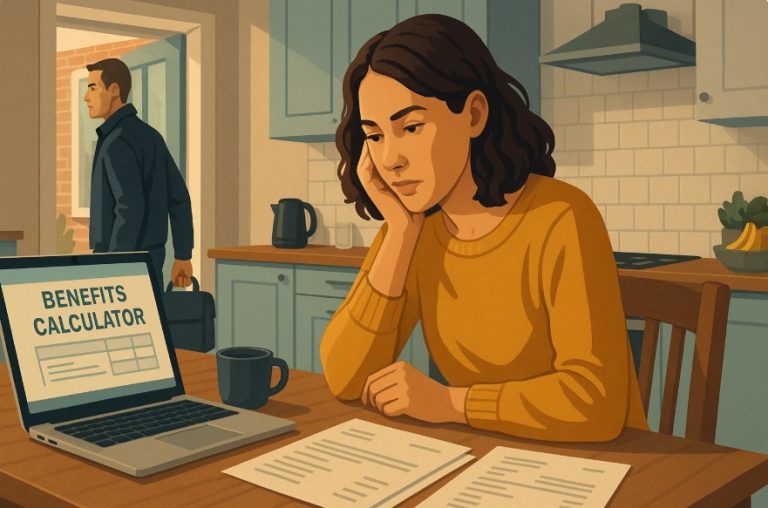
The best way to estimate your Universal Credit is to use an online benefits calculator. General examples can be helpful, but they are not always accurate for your personal circumstances.
You should have the following information ready:
- Your monthly take-home pay
- Rent or mortgage details
- Savings amount
- Childcare costs
- Information about children or disabilities
Trusted calculators include Turn2us, entitledto and Policy in Practice. You can also check your Universal Credit journal for a detailed breakdown of how your payment has been calculated.
Conclusion
How much Universal Credit you get if you earn £1,500 per month depends entirely on your circumstances. A single person with no children is unlikely to receive anything because their earnings reduce the claim to £0.
However, claimants with children, housing costs or a health condition may still qualify for several hundred pounds each month.
The key rule is that Universal Credit falls by 55p for every £1 you earn above any work allowance. The larger your maximum award, the more likely you are to continue receiving support.
Before making assumptions, use an online benefits calculator or check directly with the DWP to get an accurate figure.
Frequently Asked Questions
Does earning £1,500 a month stop Universal Credit completely?
No. Some people will still receive Universal Credit, particularly if they have children, housing costs or limited capability for work.
Is Universal Credit based on gross pay or take-home pay?
Universal Credit normally uses your take-home pay after tax, National Insurance and pension contributions.
Can a couple still claim Universal Credit if one partner earns £1,500?
Yes. Couples are assessed together, and if the household has children or rent costs, they may still qualify.
Will paying rent increase the amount of Universal Credit I receive?
Yes. The housing element can increase your maximum Universal Credit award and help you continue qualifying.
Do I get a work allowance if I do not have children?
Usually no, unless you have a health condition that gives you limited capability for work.
What happens if my earnings go above £1,500 for one month?
Your Universal Credit will reduce for that month, but it may increase again when your wages fall.
Can I receive Universal Credit and childcare support while earning £1,500?
Yes. Universal Credit can cover up to 85% of eligible childcare costs if you qualify.