
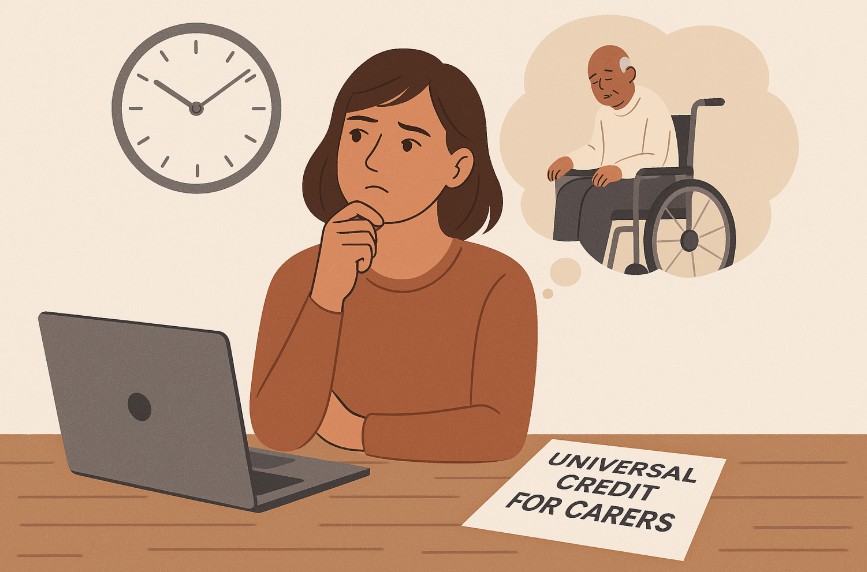
Do I Have to Look for Work if I Am a Carer on Universal Credit?
Caring for a loved one while navigating the complexities of Universal Credit can be challenging. The UK government recognises the critical role carers play and provides tailored support. This blog explores whether carers on Universal Credit need to look for work, breaking down the rules and exemptions to help you better understand your responsibilities.
Whats is the Universal Credit for Carers?

Navigating the benefits system can be complex, especially for carers juggling multiple responsibilities. Universal Credit is designed to simplify financial support for individuals and families in the UK. Here’s an expanded look at what it offers, how it differs from other benefits, and its specific provisions for carers.
Universal Credit Explained: Who Can Claim It?
Universal Credit is a comprehensive financial support system introduced to streamline and consolidate several older benefits. These benefits include:
- Jobseeker’s Allowance: Previously provided to individuals actively seeking employment.
- Income Support: Aimed at people on a low income who were not required to look for work.
- Housing Benefit: Helped individuals with their housing costs.
By replacing these and other benefits, Universal Credit simplifies the process for claimants, providing one single payment to cover various needs.
Carers can claim Universal Credit if they meet specific criteria:
- They have a low household income or are out of work.
- They meet residency and immigration status requirements.
- They agree to a claimant commitment that reflects their caregiving responsibilities.
For carers, Universal Credit provides additional support through elements such as the carer element, making it an essential resource for those who dedicate their time to looking after others.
Carer’s Allowance vs Universal Credit: Key Differences
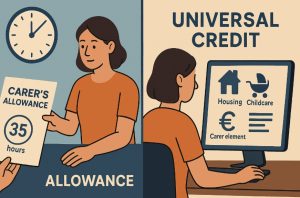
While Carer’s Allowance and Universal Credit both offer financial help, they serve different purposes:
1. Carer’s Allowance:
- Paid to individuals providing at least 35 hours of care per week for someone who receives qualifying disability benefits (e.g., PIP or Attendance Allowance).
- A fixed amount of £76.75 per week (as of 2024), but it has strict earnings and overlap rules with other benefits.
2. Universal Credit:
- Offers broader support for housing, childcare, and living expenses in addition to recognising caregiving responsibilities.
- Allows for the addition of the carer element, which is extra financial help for carers.
Can You Claim Both?
Yes, carers can claim both Carer’s Allowance and Universal Credit simultaneously. However, the amount of Carer’s Allowance you receive may be deducted from your Universal Credit payment due to the way earnings and benefits are calculated under Universal Credit rules.
This interaction highlights the importance of understanding how these benefits work together to ensure you receive the maximum financial support.
What are the Conditionality Groups in Universal Credit?

When you apply for Universal Credit, you are placed into one of several conditionality groups, which determine your responsibilities in return for receiving payments. These groups are based on factors like your ability to work and personal circumstances.
Carers and Conditionality Groups
Carers who meet the necessary requirements are typically placed in the no work-related requirements group. This means:
- They are exempt from actively seeking employment.
- They do not need to attend regular job-related appointments or submit evidence of job searches.
This exemption recognises the valuable role carers play and ensures they can focus on their caregiving duties without additional pressure.
How the Group Is Determined?
Carers are usually assigned to this group if:
- They provide 35 hours or more of care per week to someone with a disability.
- The cared-for individual receives qualifying benefits, such as Disability Living Allowance (DLA) or Personal Independence Payment (PIP).
Other Conditionality Groups
For individuals who are not primary carers or whose circumstances differ, other groups include:
- Work-focused interview group: Requires occasional meetings to discuss work opportunities.
- Work preparation group: Includes activities like updating CVs or attending training.
- All work-related requirements group: Requires actively looking for and applying to jobs.
For carers, being placed in the no work-related requirements group provides peace of mind, allowing them to concentrate on their vital caregiving role without the added stress of meeting job search obligations.
What are the Work Requirements for Carers on Universal Credit?

Do Carers Need to Look for Work?
In most cases, carers are not required to look for work. According to government guidelines:
- Carers providing substantial care for a disabled person for at least 35 hours a week are exempt.
- Parents caring for young children also receive exemptions based on the child’s age.
| Age of Youngest Child | Work Requirements |
| Under 1 | No work-related activities expected. |
| Age 1 | Attend appointments to discuss future work. |
| Age 2 | Engage in work preparation activities like CVs. |
| Age 3 to 12 | Work or prepare for up to 30 hours a week. |
| Age 13+ | Work or prepare for up to 35 hours a week. |
Claimant Commitments for Carers
Carers have personalised claimant commitments based on their circumstances. This may include attending appointments, work preparation activities, or registering for job search platforms if applicable.
Work-Focused Interviews for Carers
Although carers may not need to look for work, they might be asked to attend work-focused interviews. These discussions focus on future employment plans while considering the carer’s current responsibilities.
Carer Element in Universal Credit
The carer element is a vital part of Universal Credit, offering financial support to those who dedicate a significant portion of their time to caring for someone with a disability. It acknowledges the contributions of carers and provides additional funds to help them manage their responsibilities.
What Is the Carer Element and How Do You Qualify?
The carer element is an extra payment added to your Universal Credit award if you provide substantial care for someone in need. Its purpose is to ease the financial burden often associated with caregiving, recognising the essential role carers play in supporting disabled individuals.
Eligibility Criteria
To qualify for the carer element, you must meet the following conditions:
- Caring Hours: You need to provide care for at least 35 hours per week. This care can be physical, emotional, or practical support, such as assisting with daily tasks or providing companionship.
- The Cared-For Person’s Benefits: The person you care for must be receiving certain disability benefits. These include:
- Personal Independence Payment (PIP): Daily living or mobility components.
- Attendance Allowance: Support for individuals aged 65 or over who need help with personal care.
- Disability Living Allowance (DLA): For children under 16 with significant care needs.
Additional Notes
- You don’t have to live with the person you care for to qualify.
- Only one carer can claim the carer element for each person being cared for, even if multiple people share the responsibility.
The carer element can be claimed even if you work, as long as your earnings and other circumstances fall within Universal Credit guidelines.
How to Apply for the Carer Element?
Applying for the carer element is a straightforward process that takes place during your Universal Credit claim. Here’s how it works:
1. Indicate Your Caring Responsibilities
When filling out your Universal Credit application, you will be asked if you provide care for someone. Ensure you answer this question accurately and provide details about:
- The individual you care for.
- The type and hours of care you provide.
- The benefits the cared-for person receives.
2. Verification Process
Once your application is submitted, the Department for Work and Pensions (DWP) may request further information to verify your caring role. This could include:
- Evidence of the cared-for person’s eligibility for qualifying disability benefits.
- Details of your caregiving duties and the time you spend on them.
3. Receiving the Payment
If approved, the carer element is added to your monthly Universal Credit payment. As of 2024, the carer element is worth £185.86 per month. This amount may vary depending on your overall Universal Credit entitlement.
4. Ongoing Reporting
It’s essential to keep the DWP informed about any changes in your circumstances that may affect your eligibility. This includes:
- Changes in the number of hours you care.
- The cared-for person no longer receiving qualifying benefits.
What are the Challenges Carers Face on Universal Credit?

Carers play a crucial role in supporting individuals with disabilities or long-term illnesses, but this responsibility often comes with its own set of challenges.
While Universal Credit aims to provide financial support and flexibility, carers still face difficulties balancing their duties and navigating the benefits system. Below are two significant challenges carers encounter while on Universal Credit.
Balancing Caring Responsibilities and Financial Stability
Caring for someone full-time can have a profound impact on a carer’s financial situation. Many carers find it challenging to maintain a steady income due to the time and energy required for caregiving.
1. Income Limitations
- Carers often have limited opportunities to work due to the intensity of their caregiving duties, particularly when they are providing care for over 35 hours per week.
- Part-time work may not always provide enough income to meet household needs, making financial support through Universal Credit essential.
2. Reliance on Benefits
Universal Credit provides a lifeline by combining financial support for carers’ living costs, housing, and caregiving responsibilities. However, the fluctuating nature of Universal Credit payments, which adjust based on income, can create uncertainty and financial stress.
3. Work-Related Commitments
Even with the financial aid Universal Credit offers, some carers are still subject to minimal work-related activities, such as attending work-focused interviews. Balancing these commitments alongside caregiving can be demanding and emotionally draining.
Carers often need additional resources or support systems to ensure they can manage their financial responsibilities while continuing to provide care for their loved ones.
What are the Work Exemptions and Benefits?
Understanding the exemptions and rules surrounding Universal Credit is critical for carers to access the full range of support available to them. However, the complexity of these rules can be overwhelming, particularly for those new to the system.
1. Work-Related Requirements
Carers are usually placed in the “no work-related requirements” group if they:
- Provide at least 35 hours of care per week.
- Care for someone receiving qualifying benefits like PIP or Attendance Allowance.
This exemption allows carers to focus entirely on their caregiving duties without the added stress of job searching or mandatory work-related activities.
However, understanding and securing this exemption can sometimes require significant effort, including navigating the online Universal Credit system and ensuring all necessary information is provided.
2. Claimant Commitment Adjustments
The claimant commitment outlines the responsibilities a Universal Credit recipient must meet to continue receiving payments.
For carers, ensuring this commitment accurately reflects their caregiving role is essential. Misunderstandings or inaccuracies can result in unnecessary work obligations or delays in payments.
3. Knowledge Gaps
Many carers are unaware of the full range of benefits and exemptions available to them, such as the carer element, which can provide additional financial assistance. Others may not fully understand how to report changes in their circumstances or access further help through work coaches or local advisory services.
4. Stress and Emotional Toll
Navigating the complexities of Universal Credit while managing the daily challenges of caregiving can lead to stress and burnout. Carers may struggle to advocate for their rights or seek clarification on confusing rules when they are already stretched thin by their responsibilities.
Additional Support Resources for Carers
While Universal Credit provides a financial lifeline, carers often need more than just monetary support. Here are helpful services and organisations to support your mental health, provide advice, or offer peer-to-peer assistance:
1. Carers UK
A national charity offering expert advice, online forums, helplines, and guides for carers across the UK.
-
Website: www.carersuk.org
-
Services Include: Benefits advice, rights guidance, and emotional support.
2. Citizen’s Advice
Provides free, confidential, and impartial advice about Universal Credit, Carer’s Allowance, and navigating work requirements.
-
Find your local office: www.citizensadvice.org.uk
3. Turn2Us
Helps individuals in financial hardship access welfare benefits and charitable grants.
-
Website: www.turn2us.org.uk
-
Support Offered: Online benefits calculator, grant finder, and budgeting advice.
4. Your Work Coach
Every Universal Credit claimant is assigned a work coach. If you are a carer, make sure your work coach understands your caregiving duties so that your claimant commitment can be adjusted appropriately.
Tip: Keep written records of your caring hours and responsibilities in case you need to clarify your situation.
5. Online Carer Communities
Joining a support group can be a huge emotional relief. You’ll find carers with similar stories who can provide tips, encouragement, and a safe space to vent.
-
Popular Forums & Groups: Mumsnet Carers board, Facebook Carer Support groups, Reddit’s r/ukcaregivers.
Conclusion
Carers on Universal Credit play an essential role in society, and the government’s provisions aim to support them. While most carers are exempt from job search requirements, it’s important to understand your specific commitments and make use of resources like Gov.uk, nidirect.gov.uk, and Citizens Advice for guidance.
FAQs
What defines a carer for Universal Credit purposes?
A carer provides at least 35 hours of care weekly to someone with a disability who receives qualifying benefits.
Can you claim both Carer’s Allowance and Universal Credit?
Yes, but the Carer’s Allowance amount may reduce your Universal Credit payment.
How many hours of care are required to be exempt from job seeking?
Caring for at least 35 hours a week typically exempts you from work-related requirements.
Are carers subject to sanctions under Universal Credit?
Carers in the no-work-related requirements group are not subject to sanctions for job search activities.
Can you switch conditionality groups as a carer?
Yes, changes in your circumstances, such as reduced caring hours, may affect your group placement.
Does the carer element impact other benefits?
The carer element does not affect benefits like Carer’s Allowance but may interact with other Universal Credit components.
What should carers know about reporting changes in circumstances?
Carers must report changes like reduced care hours or the cared-for person’s benefits status to avoid payment issues.