
Child Benefit Payment Dates 2026: When Will You Be Paid?
Child Benefit remains a vital source of financial support for millions of UK families. In 2026, these payments continue on the standard four-week cycle, typically landing on a Monday or Tuesday.
However, dates will shift around UK bank holidays, especially during Easter, May Day, and the Christmas season, meaning some payments may arrive earlier than usual.
Here’s what you need to know about Child Benefit Payment Dates in 2026:
- Paid every 4 weeks (or weekly for some)
- Bank holidays will cause early payment shifts
- Use your Government Gateway account or bank statement to track your dates
- From April 2026, new benefit rates apply
What Is Child Benefit and How Is It Usually Paid?
Child Benefit is a tax-free payment provided by the UK government to help parents and guardians with the cost of raising children. It is typically paid every four weeks, although under specific circumstances, such as being a single parent or receiving certain benefits, you may be eligible for weekly payments.
Most recipients receive their payments on a Monday or Tuesday, and once your first payment is made, subsequent payments follow every 28 days. The schedule is regular unless disrupted by public holidays, during which HMRC adjusts payment dates to ensure timely access to funds.
These payments are usually deposited directly into your bank account and show up on your bank statement as “HMRC Child Benefit”. While the payment frequency does not change throughout the year, it is important to remember that the amount is calculated weekly and disbursed in four-week blocks.
How Do Bank Holidays Affect Child Benefit Payment Dates in 2026?
Bank holidays can shift the payment schedule for many government benefits, including Child Benefit. In 2026, a number of key dates fall on UK bank holidays, prompting HMRC to bring forward payments to the last working day before the holiday. This approach helps ensure families aren’t left waiting during periods when banks are closed.
These date shifts can affect household cash flow, particularly if you rely on your benefit arriving on a specific date. It’s crucial to be aware of these adjusted dates, especially around New Year, Easter, early May, and Christmas. Let’s explore the confirmed shifts in 2026.
Adjusted Child Benefit Payment Dates – UK and Regional
Original Payment Date New Payment Date Region Affected
1 January 2026 31 December 2025 UK-wide (New Year’s Day)
6 April 2026 2 April 2026 UK-wide (Easter Monday)
4 May 2026 1 May 2026 UK-wide (Early May BH)
25 May 2026 22 May 2026 UK-wide (Spring BH)
28 December 2026 24 December 2026 UK-wide (Boxing Day Sub.)
5 January 2026 6 January 2026 Scotland only
17 March 2026 18 March 2026 Northern Ireland only
13 July 2026 14 July 2026 Northern Ireland only
14 July 2026 15 July 2026 Northern Ireland only
3 August 2026 4 August 2026 Scotland only
4 August 2026 5 August 2026 Scotland only
31 August 2026 28 August 2026 UK-wide (Summer BH)
29 December 2026 30 December 2026 Northern Ireland only
If your scheduled payment date falls on a public holiday, your payment will be processed on the preceding working day.
Local holidays, particularly in Scotland (e.g., Glasgow on 28 Sept, Edinburgh on 21 Sept, Dundee on 5 Oct), may also result in delays. Always check with your bank to confirm the exact deposit date.
What Are the Confirmed Child Benefit Payment Changes for 2026?
HMRC’s approach to benefit payments ensures minimal disruption during the year, but some shifts are unavoidable. In 2026, several adjustments will ensure that payments avoid falling on national and regional holidays.
Full Year Overview of 2026 Adjustments
Here’s a simplified view of some of the key changes to help you plan ahead:
Holiday Scheduled Date Actual Payment Date Applies To
New Year’s Day 1 Jan 2026 31 Dec 2025 All UK
Easter Monday 6 Apr 2026 2 Apr 2026 All UK
Early May BH 4 May 2026 1 May 2026 All UK
Boxing Day BH 28 Dec 2026 24 Dec 2026 All UK
These earlier payment dates are critical for budgeting and financial planning. For example, if you’re typically paid on Mondays and your payment date lands on Monday, 6 April, your Child Benefit will arrive instead on Friday, 2 April, potentially extending the gap to your next payment by a few extra days.
How to Check Your Child Benefit Payment Schedule?
Staying up to date with your payment schedule is essential to avoid any surprises. Fortunately, HMRC provides a number of simple ways to help you track your benefits:
- Bank Statement Check: The easiest method is reviewing your bank account for payments marked as “HMRC Child Benefit”.
- Use Government Gateway: Sign in to your HMRC account to view your full Child Benefit payment history and check future scheduled dates.
- Calculate Manually: If your last payment was on a Monday or Tuesday, simply add 28 days to estimate your next. However, this does not account for holiday changes, so be sure to adjust accordingly.
Real-Time Example:
Consider the case of Emma, a single mother from Manchester who received her last Child Benefit payment on Monday, 8 December 2025. Following the standard four-week cycle, her next payment would be scheduled for Monday, 5 January 2026.
Continuing the pattern, the next payment after that would fall on Monday, 2 February 2026, and then Monday, 2 March 2026. Now, if 2 March 2026 were to fall on a bank holiday (hypothetically), Emma would receive her payment earlier, typically on Friday, 27 February 2026.
This example shows how important it is to stay aware of both your individual payment cycle and the national or regional bank holidays that may affect it. Emma avoids surprises by checking her Government Gateway account, reviewing her bank statements, and marking any upcoming holiday adjustments in her calendar.
What Are the Updated Child Benefit Rates in 2026?
From April 2026, the Child Benefit rates have been revised to reflect inflation and changes in the cost of living. These updated rates help families better meet their growing financial responsibilities.
Category Weekly Rate 4-Weekly Equivalent
Eldest or only child £27.05 £108.20
Additional children £17.90 £71.60
Guardian’s Allowance £22.95 £91.80
While payments are made every four weeks, it’s important to understand that they are calculated weekly. These new rates represent a modest increase from 2025, helping families partially offset higher household expenses.
Can You Receive Child Benefit Weekly in 2026?
Yes, you can receive Child Benefit weekly in 2026, but this option is only available if you meet certain eligibility conditions. Weekly payments are intended to help families who need more regular income to manage everyday household costs.
You may qualify if you are a single parent, receive Income Support, income-based Jobseeker’s Allowance, or other similar means-tested benefits, or if you have been assessed by HMRC as facing financial hardship. If you want to change from the standard four-weekly payment to weekly payments, you must contact HMRC directly.
The change is not automatic and must be requested through the HMRC app, online account, or by calling their helpline.
What to Do If Your Child Benefit Payment Is Late?
A delayed Child Benefit payment can be stressful, especially if you rely on it for essential expenses. Most delays are minor and often due to banking issues rather than problems with HMRC. However, here’s what you should do:
When a Payment Is Missing?
- Check the Payment Date: Confirm that the expected date has passed and wasn’t adjusted for a holiday.
- Speak to Your Bank: Some banks process payments at different times of the day, even if sent by HMRC overnight.
- Contact HMRC: If the payment is still missing, get in touch with HMRC Child Benefit Office. Have your details and National Insurance number ready to verify your identity.
Common Reasons for Delays
- Change in bank account details not updated with HMRC
- Child has turned 16 and education details not provided
- You failed to respond to a letter from HMRC
- Your eligibility status has changed
Tips to Avoid Payment Confusion in 2026
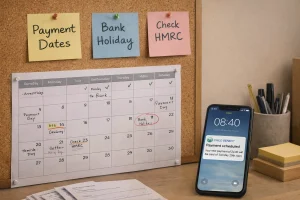
Staying proactive can help ensure that your Child Benefit payments are consistent and on time. Here are some practical ways to stay on top of your schedule:
- Set up calendar reminders for expected payment dates
- Keep your personal and banking details up to date in your HMRC account
- Use the Government Gateway portal regularly to track payment history
- Review local holiday calendars, especially if you live in Scotland or Northern Ireland
Conclusion
Knowing when your Child Benefit will be paid in 2026, and understanding how bank holidays affect these dates, is essential for household financial planning.
By staying informed, using HMRC tools like the Government Gateway, and being proactive with your payment records, you can avoid unexpected disruptions.
With updated rates from April 2026, regional holiday adjustments, and options for weekly payments, it’s more important than ever to stay on top of your benefit schedule. Take time to review your payment pattern and make sure your details are accurate to ensure a smooth year ahead.
Frequently Asked Questions
What day is Child Benefit usually paid in 2026?
Child Benefit is typically paid on a Monday or Tuesday, every 4 weeks. Weekly payments are available for those eligible.
Can I get weekly Child Benefit payments?
Yes, if you’re a single parent or receive certain benefits like Income Support, you can request weekly payments directly from HMRC.
What happens if a payment date falls on a bank holiday?
HMRC will issue payments early, typically on the last working day before the holiday.
How can I find out my next Child Benefit payment date?
You can calculate it by counting 28 days from your last payment or by checking your HMRC online account.
What are the new Child Benefit rates for 2026?
From April 2026, the weekly rate is £27.05 for the eldest child and £17.90 for each additional child.
Why hasn’t my Child Benefit arrived yet?
Check your expected payment date, bank account, and HMRC correspondence. Delays may result from bank holidays, updated details, or eligibility changes.
How do I contact HMRC about my Child Benefit?
Use the HMRC app, sign in to your Government Gateway, or call 0300 200 3100 for assistance.