How Much Universal Credit Will I Get If I Earn £2,000 a Month?
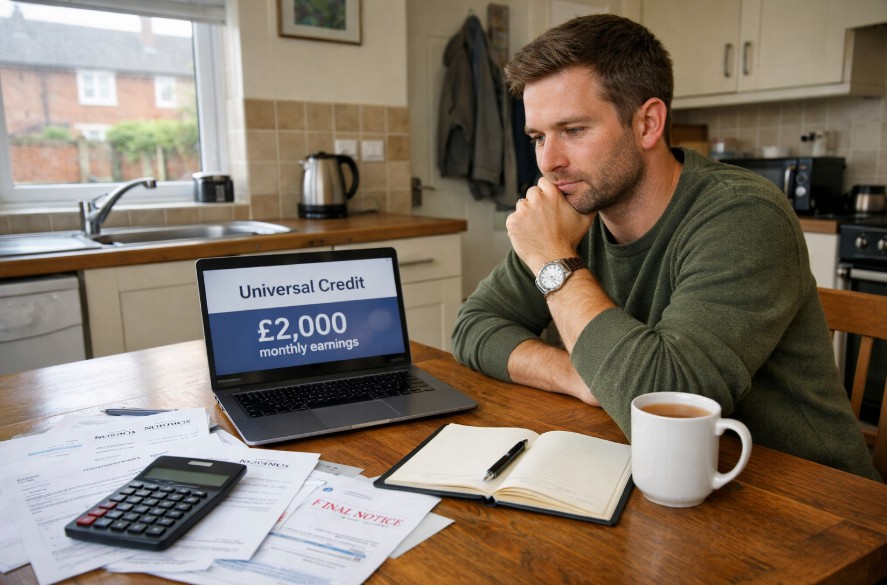
If you earn £2,000 a month, you may still get Universal Credit, but the amount depends on your circumstances.
If you are single with no children or housing costs, you will usually receive little or nothing because your earnings reduce your payment.
However, if you have children, pay rent, or qualify for a work allowance, you could still receive some support each month.
Universal Credit is reduced by 55p for every £1 you earn above your work allowance. Because of this, two people earning the same £2,000 can receive very different amounts depending on their household.
Key points you need to know:
- You may get no Universal Credit if you are single with no children
- You could still qualify if you have children or rent
- Self-employed earnings are worked out differently
- Your payment is based on take-home pay after tax and National Insurance
Can You Still Get Universal Credit if You Earn £2,000 a Month?
Yes, you can still get Universal Credit if you earn £2,000 a month, but not everyone will qualify. The amount you receive depends on your household circumstances rather than your income alone.
If you are single, over 25, and have no children or housing costs, your earnings will usually reduce your Universal Credit to £0. The standard allowance for a single claimant is far lower than the reduction created by £2,000 monthly earnings.
By contrast, if you have children, pay rent or receive help with childcare, your maximum Universal Credit amount is higher. That means you may still receive a small payment even after the earnings deduction has been applied.
How Does Universal Credit Change When Your Earnings Reach £2,000 a Month?

Universal Credit is worked out by starting with your maximum entitlement and then reducing it based on your earnings.
For most people, the key rule is simple: your Universal Credit falls by 55p for every £1 of earnings above any work allowance.
You only receive a work allowance if you either:
- Have responsibility for a child
- Have limited capability for work because of illness or disability
If you do not qualify for a work allowance, the 55% reduction applies to your full take-home pay after tax and National Insurance.
What Is the Work Allowance?
If you receive housing support, your work allowance is lower. If you do not receive help with rent, it is higher. Current monthly work allowances are usually around:
| Situation | Monthly Work Allowance |
|---|---|
| You receive housing costs in UC | £427 |
| You do not receive housing costs | £704 |
How the 55p Taper Works?
Suppose you are a single parent with housing costs and you earn £2,000 a month. The first £427 is ignored. The remaining £1,573 is reduced at 55%.
That creates a deduction of roughly £865 from your Universal Credit. If your total entitlement is more than that because of rent and children, you could still receive some money.
Why Take-Home Pay Matters?
Universal Credit uses your earnings after tax and National Insurance, not your gross salary before deductions. That means if your payslip shows £2,000 take-home pay, the calculation will be based on that figure.
As Citizens Advice explains:
“The amount you’ll get changes if your earnings change, because Universal Credit is worked out separately for each monthly assessment period.”
What Factors Decide How Much Universal Credit You Will Get?
Several factors influence your payment. Your age and whether you live alone or with a partner affect the standard allowance. Children can add child elements, while rent can add a housing element.
You may also receive extra support if you pay for childcare or if you are unable to work due to a health condition.
The table below shows how different situations can change your likely entitlement if you earn £2,000 a month:
| Household Type | Likely UC Outcome on £2,000 a Month |
|---|---|
| Single person, no children, no rent help | Usually £0 |
| Couple, no children | Usually £0 or very low |
| Single parent with one child | Possible small payment |
| Couple with children and rent | Moderate payment possible |
| Self-employed with children or rent | Small to moderate payment possible |
Your Universal Credit payment depends on your household setup, income, housing costs, children, and health, with support ranging from nothing to moderate amounts based on your circumstances.
Will You Get Universal Credit if You Are Single and Earn £2,000 a Month?
If you are single, over 25 and have no children, the answer is usually no.
The standard allowance for a single claimant is around £425 per month. If you earn £2,000 a month and have no work allowance, your Universal Credit is reduced by 55% of your earnings. That reduction is around £1,100, which is far more than the standard allowance.
Even if you rent your home, you may still receive no payment unless your rent is particularly high.
For example, if you receive a £500 housing element and a £425 standard allowance, your maximum Universal Credit would be around £925. The £1,100 earnings reduction would still wipe it out.
How Much Universal Credit Will a Couple Get if They Earn £2,000 a Month?

A couple’s earnings are combined when Universal Credit is calculated. If you and your partner together earn £2,000 a month and do not have children, you are unlikely to receive anything.
The standard allowance for a couple where one or both partners are over 25 is around £667 per month. If there is no work allowance, the deduction from £2,000 earnings is roughly £1,100, leaving no Universal Credit payable.
However, the result changes if you have children or pay rent.
Couple With Children
If you have one or two children, you may receive child elements on top of the standard allowance. This increases the amount before deductions are made.
Couple With Rent
Rent support can add several hundred pounds to your monthly entitlement. A family renting privately may therefore still receive some Universal Credit even on £2,000 a month.
Example From a Claimant
One claimant I spoke to described how this worked in practice:
“My partner and I earn just under £2,000 between us. We thought we would lose Universal Credit completely, but because we have two children and pay £750 rent, we still get around £280 a month.”
That shows why there is no single answer for every couple.
How Much Universal Credit Will You Get if You Are a Single Parent Earning £2,000 a Month?

Single parents are much more likely to receive Universal Credit on £2,000 a month because they usually qualify for:
- a work allowance
- child elements
- help with rent
- help with childcare costs
A single parent with one child and rent may still receive a modest monthly payment. With two children and higher rent, the amount could be larger.
For example, you might receive:
- standard allowance
- child element of around £304 per child
- housing element
- up to 85% of childcare costs
Even after the 55% deduction, there may still be some Universal Credit left.
A Turn2us adviser has said:
“Many single parents assume they earn too much for Universal Credit, but housing and childcare costs can make a significant difference.”
Childcare Can Increase Your Payment
If you work and pay for childcare, Universal Credit can cover up to 85% of those costs. This can be worth hundreds of pounds every month.
Example From a Single Parent:
A claimant shared her experience after returning to work:
“I earn around £2,000 a month and was sure my Universal Credit would stop. Because I’m a single mum with two children and nursery costs, I still receive about £460 a month.”
What Happens if You Are Self-Employed and Earn £2,000 a Month?
If you are self-employed, Universal Credit uses your monthly profit after allowable business expenses, tax and National Insurance.
You may still qualify if you have children or housing costs. However, there is an extra rule known as the Minimum Income Floor.
After your first 12 months of self-employment, the DWP may assume you earn a minimum amount, even if your actual income is lower.
Minimum Income Floor
The Minimum Income Floor is based on what you would earn if you worked full-time on the National Minimum Wage. If your real earnings fall below this level, your Universal Credit may still be calculated as though you earned more.
Start-Up Period
For the first 12 months of a new business, the Minimum Income Floor usually does not apply. That means your actual earnings are used instead.
When Self-Employed Claimants Still Qualify?
You may still receive Universal Credit if:
- you have children
- you pay rent
- your business profits vary each month
- you are still within the 12-month start-up period
For a self-employed person with no children or housing costs, earning £2,000 a month will usually mean no Universal Credit.
Will You Still Get Universal Credit if You Pay Rent or Have Housing Costs?
Housing costs are one of the biggest reasons people continue to receive Universal Credit even on a higher income.
If you rent your home, Universal Credit may include a housing element based on your rent and where you live. The amount is usually limited by Local Housing Allowance if you rent privately.
Someone paying £800 a month in rent could have a much larger maximum Universal Credit award than someone who owns their home. This is why renters often continue to qualify when others do not.
If you live in council or housing association accommodation, most of your rent may be included. If you rent privately, the amount may be lower depending on your local area.
When Does Universal Credit Stop Completely if You Earn More?

There is no fixed income level where Universal Credit stops completely, as it depends on your personal circumstances.
A single person with no children or housing costs may lose entitlement at a much lower income, often below £2,000 a month. In contrast, families with children, rent, or childcare costs may continue to receive support even if they earn £2,500 or more.
This is because Universal Credit is gradually reduced as your earnings increase, rather than stopping suddenly.
The more help you receive through elements like housing or children, the higher your income can be before payments reduce to zero.
Conclusion
In summary, how much Universal Credit you receive on a £2,000 monthly income depends on your situation.
Single individuals without children typically receive nothing, while couples may get limited support. However, parents, renters, or those with childcare costs may still qualify.
Payments reduce by 55p per £1 earned above the allowance, but extra elements can help. For an accurate estimate, use an official calculator on GOV.UK.
Frequently Asked Questions
Can I get Universal Credit if I earn £2,000 a month after tax?
Yes, but only if your circumstances increase your entitlement. Rent, children and childcare costs are the biggest factors.
How much Universal Credit will I get if I earn £2,000 a month and pay rent?
You may still receive a payment because the housing element increases your maximum Universal Credit amount.
How much Universal Credit will a couple get if they earn £2,000 a month?
A couple with no children usually receives nothing. A couple with children or rent may still qualify.
Will I still get Universal Credit if I have two children and earn £2,000 a month?
Possibly. Child elements and a work allowance can mean you still receive some support.
Does self-employed income count differently for Universal Credit?
Yes. Universal Credit uses your profit after expenses and may apply the Minimum Income Floor.
What is the work allowance if I earn £2,000 a month?
The work allowance is usually £427 if you receive housing support or £704 if you do not.
Can I claim Universal Credit while working full-time?
Yes. Universal Credit is available to some people who work full-time if their income is still low enough.