
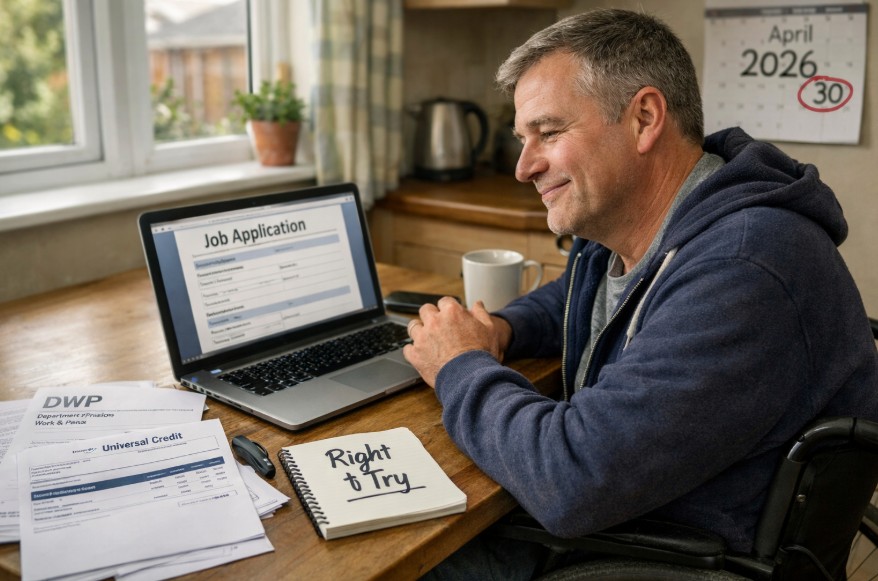
DWP Removes Risk of Losing Benefits When Trying Work – What It Means for Claimants?
For years, many disabled people and those with long-term health conditions have avoided work because they feared losing their benefits.
From 30 April 2026, new DWP legislation aims to change that. Under the new “Right to Try” policy, starting work or volunteering will no longer automatically trigger a reassessment of PIP, ESA or the Universal Credit health element.
This does not mean your benefits are guaranteed forever, but it does give you more protection and confidence to test whether work is right for you.
Key points:
- Starting work will not automatically trigger a benefit reassessment
- The new rule covers PIP, ESA and the Universal Credit health element
- Volunteering is also protected under the legislation
- Scheduled reviews and some other reassessments can still happen
What is the DWP’s New Right to Try rule and When Does it Start?

The DWP’s new Right to Try rule comes into force on 30 April 2026. It changes the way certain disability-related benefits are reviewed when you begin work or voluntary activity.
Before now, many claimants worried that accepting a job, even for a few hours a week, could immediately lead to a reassessment of their claim.
That fear stopped many people from exploring whether they could work alongside their health condition.
Under the new law, paid work or volunteering is no longer treated as an automatic “change of circumstances” for:
- Personal Independence Payment (PIP)
- Employment and Support Allowance (ESA)
- Universal Credit health element
The change is intended to create a safety net. You can test whether work suits your health and lifestyle without feeling that one wrong move will instantly put your income at risk.
Sir Stephen Timms, Minister for Social Security and Disability, said:
“Giving sick and disabled people legal protection to try work without fear is vital for their futures and for growing our economy.”
Why Are Disabled Claimants Worried About Losing Benefits if They Start Work?
The concern is not just about money. For many, benefits provide stability when health conditions are unpredictable. If a job becomes too difficult, there is often fear that support could stop and be hard to restore.
According to DWP research, 37% of disabled people want to work but are held back by fear of losing benefits. Around 2.8 million people are currently out of work due to long-term sickness.
Many feel caught between wanting to work and worrying it could worsen their financial situation, especially with fluctuating conditions.
Brian Dow, Chief Executive of Mental Health UK, explained:
“People often tell us that fear of reassessment, or even losing essential support if things don’t work out, is a significant barrier to taking those first steps back into work.”
The Right to Try policy is designed to reduce that fear and encourage more people to test work gradually and safely.
Which Benefits Are Protected Under the New DWP Rules?
The new legislation applies to three main benefits, but the protection works slightly differently depending on what you claim.
Personal Independence Payment (PIP)
PIP is based on how your condition affects your daily living and mobility, rather than whether you have a job. That means having employment should not automatically stop your PIP.
Under the new rules, starting work cannot by itself trigger a reassessment. However, if the type of work appears very different from the difficulties described in your claim, the DWP could still ask questions later.
Will ESA and the Universal Credit Health Element Still Be Affected by Work?
ESA and the Universal Credit health element are more closely linked to your ability to work, which is why claimants have often been especially nervous about trying employment.
The Right to Try policy means that simply taking a job or volunteering should not automatically lead to your claim being reviewed.
| Benefit | What Changes From 30 April 2026? | Automatic Reassessment? |
|---|---|---|
| PIP | Starting work no longer counts as an automatic trigger | No |
| ESA | Trying work or volunteering is not automatically treated as a change of circumstances | No |
| Universal Credit health element | Starting work will not immediately trigger a health reassessment | No |
However, the new law does not stop all reviews. Existing reassessment dates and other concerns can still affect these benefits.
Does Trying Work Still Put Your Benefits at Risk in Some Situations?

Yes, and this is an important detail often missed. The Right to Try rule prevents work itself from automatically triggering a reassessment, but it does not guarantee that your benefits will never be reviewed.
If a reassessment is already scheduled, it can still go ahead. Reviews may also happen if the DWP believes your health has improved or your circumstances have changed.
Campaign group Benefits and Work argues the change is limited, noting existing guidance already discouraged reassessments based solely on starting work.
Decision-makers still have discretion, meaning cases may be reviewed if work appears inconsistent with a claimant’s condition.
What Does the New Law Not Protect You From?
The legislation removes one major barrier, but it does not remove every possible risk. Understanding those limits is important before deciding whether to try work.
Scheduled Reassessments Can Still Happen
If you already have a review planned for your PIP, ESA or Universal Credit claim, that reassessment will still take place as normal.
The government has made it clear that the Right to Try policy does not pause or cancel existing review dates. It only means that work itself is not the reason for the reassessment.
Could the Type of Work You Do Still Raise Questions?
The DWP still has the power to review a claim if the work you do appears to suggest an improvement in your condition or ability.
For example, if someone receives support because they struggle to walk long distances but then starts a physically demanding delivery job, the DWP may question whether their condition has changed.
| Protected Under the New Rule | Not Protected Under the New Rule |
|---|---|
| Starting work or volunteering alone | Scheduled reassessments |
| Trying a part-time or trial job | Reviews linked to changes in condition |
| Testing whether work suits your health | Cases where work appears inconsistent with your claim |
Minesh Patel from Mind said:
“These reforms are a step in the right direction to help disabled people build up their confidence and skills to move into sustained and meaningful employment.”
Even so, charities and campaigners have argued that stronger protection may still be needed.
Can Volunteering Now Help You Move Towards Work Without Losing Support?
One of the biggest changes in the new rules is that volunteering is now protected alongside paid work. This matters because volunteering is often the first step back into a routine, helping you rebuild confidence, gain experience, and test what you can realistically manage.
The DWP has confirmed that volunteering will not automatically trigger a reassessment of PIP, ESA, or the Universal Credit health element.
For example, David, a 46-year-old ESA claimant with a long-term back condition, had been hesitant to volunteer due to fears about losing support.
“I’ve wanted to try volunteering for a while, but I was worried it might affect my benefits. Now I feel more confident taking that first step,” he said.
Under the Right to Try policy, David can volunteer without that activity alone triggering a reassessment. For him, that creates the confidence to test whether he can manage a regular routine again.
How Do the Latest Universal Credit Changes Affect This New Safety Net?

The Right to Try policy is positive, but it arrives at the same time as wider changes to Universal Credit. That means the overall picture is more complicated than it first appears.
What Has Changed for New Claimants?
From April 2026, many new claimants receive a lower Universal Credit health element than people already on the benefit. The new rate is around £217.26 a month for many claimants.
Who Keeps the Higher Level of Support?
If you already receive the Universal Credit health element, your current support is usually protected. Some people with the most severe conditions may also qualify for higher support under the Severe Conditions Criteria.
Why Does This Matter if You Are Considering Work?
For existing claimants, the Right to Try rule may feel like a genuine safety net because they still receive the higher rate of support.
For new claimants, the lower payment could make trying work feel more like a financial necessity than a genuine choice.
- Existing claimants usually keep their current support level
- New claimants may receive a lower health element
- Some people with severe conditions can still qualify for extra help
The result is that two people with similar health conditions may face very different financial situations.
What Should You Do Before Trying Work While Claiming Benefits?
Trying work is still a big decision, even with these new protections in place. The best approach is to prepare carefully and make sure you understand how the rules apply to your own claim.
Before accepting a job or starting voluntary work, check the latest guidance for your benefit. PIP, ESA and Universal Credit work differently, so the impact may not be exactly the same.
You should also keep your medical evidence up to date. If you later need to explain why work did not suit your condition, recent evidence from your GP or specialist can be helpful.
There is also support available through schemes such as:
- Access to Work
- WorkWell
- Connect to Work
These programmes can help with transport, equipment, workplace adjustments and specialist advice.
If possible, it may be wise to start slowly with flexible or part-time work. That can help you understand what you can realistically manage without putting too much pressure on your health.
Is the DWP’s Right to Try Policy Really Good News for Claimants in 2026?

Overall, the Right to Try policy is a significant step forward. It removes one of the biggest fears disabled claimants have had for years: the fear that simply trying work could instantly put their benefits at risk.
For many people, that extra confidence may make the difference between staying out of work and testing whether employment is possible.
However, the policy is not a complete guarantee. Scheduled reassessments can still happen, and the DWP can still review claims in some situations. Wider Universal Credit changes also mean that not everyone will benefit equally.
The new rules make it safer to try work, but they do not remove every possible risk. The best approach is to understand exactly how your own benefits work and get advice before making any changes.
Conclusion
The DWP’s Right to Try policy is a welcome change for disabled claimants who want to explore work without immediately fearing the loss of their benefits.
From 30 April 2026, starting work or volunteering will no longer automatically trigger a reassessment for PIP, ESA or the Universal Credit health element.
However, the protection is not complete. Scheduled reviews and other concerns can still lead to a reassessment.
If you are thinking about trying work, it is important to understand your own benefits, keep evidence up to date and seek advice before making changes.
Frequently Asked Questions
Will I have to tell the DWP if I start a part-time job?
Yes. You should still report any paid work to the DWP, even though it no longer automatically triggers a reassessment.
Can I return to my previous benefits if work does not work out?
In many cases, yes. The Right to Try policy is designed to make it easier to return to your previous support if your health means you cannot continue working.
Does this change apply in Scotland, Wales and England?
Yes. The legislation applies across England, Wales and Scotland for PIP, ESA and the Universal Credit health element.
Will trying work affect my Access to Work support?
No. Access to Work is separate from your benefits and may help you stay in work through equipment, travel support or adjustments.
Are Disability Living Allowance claimants included in the new rules?
No. The new legislation does not currently apply to working-age people who still receive Disability Living Allowance.
Can self-employed work count under the Right to Try policy?
Yes. Self-employment should also fall under the new rules, provided it is genuine work or an attempt to test your ability to work.
What evidence should I keep if I try work while on benefits?
Keep copies of fit notes, GP letters, symptom diaries and any details about workplace adjustments. These can help if your claim is reviewed later.