
Attendance Allowance Pitfalls – How to Avoid Delays and Rejections?
Applying for Attendance Allowance should be a straightforward way to receive support if you’re of State Pension age and require help with daily living due to a disability or illness.
However, the reality is quite different for many applicants. In fact, around 60% of Attendance Allowance applications are initially rejected, often due to common, avoidable errors.
This article will guide you through the most frequent pitfalls when applying for Attendance Allowance and offer clear, practical advice on how to avoid delays or rejections.
Whether you’re applying for yourself or assisting a loved one, understanding these key details could make all the difference to a successful claim.
What Is Attendance Allowance, and Who Can Apply?
Attendance Allowance is a non-means-tested, tax-free benefit available to people over State Pension age who need help with personal care or supervision due to physical or mental disabilities. The benefit is intended to support independent living and help cover the additional costs of care.
To be eligible, you must:
- Be of State Pension age (66 or older in 2026)
- Have a disability or health condition requiring regular help or supervision
- Have had these needs for at least six months (unless terminally ill)
- Be ordinarily resident in England, Scotland or Wales
Importantly, Attendance Allowance is not based on your income, savings or whether someone already helps you. The focus is entirely on your care needs.
Attendance Allowance Rates for 2026:
| Rate | Weekly Amount | Who Qualifies |
| Lower Rate | £73.90 | Those needing help either during the day or at night |
| Higher Rate | £110.40 | Those needing help both during the day and at night, or terminally ill |
These figures may change annually, so it’s worth checking the latest figures at the time of your application.
Why Are Attendance Allowance Claims Frequently Rejected by the DWP?
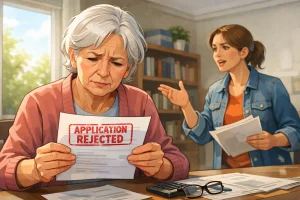
Despite the wide eligibility, many applications fail due to insufficient detail, misunderstanding the criteria, or poorly completed forms. The Department for Work and Pensions (DWP) relies heavily on the application form to assess eligibility, meaning that vague or incomplete answers often lead to rejections.
Other common reasons for rejections include:
- Failing to clearly link medical conditions to care needs
- Not providing enough examples of help required
- Overlooking day or night-time care needs
- Believing financial status affects eligibility
- Missing sections or leaving blank answers
Understanding the core reason for each rejection is vital. Often, applicants simply don’t explain the impact of their condition in a way the DWP can measure. This can be avoided with more precise, honest, and thorough information.
What Are the Most Common Mistakes Made on the Attendance Allowance Application Form?
The form is lengthy and detailed, which often leads to rushed or inconsistent answers. Some of the most common mistakes include:
- Withholding information: Downplaying your needs can hurt your claim.
- Over-explaining or exaggerating: Exaggeration or unclear statements may create inconsistencies.
- Not distinguishing day/night needs: Failing to separate them can lower your rate.
- Not providing examples: General statements need context and frequency.
- Leaving sections blank: Incomplete sections weaken your application.
These missteps may seem small, but collectively they contribute to thousands of avoidable rejections each year.
How Can You Avoid the Most Common Mistakes on the Application Form?

Avoiding pitfalls begins with being prepared and honest. Here’s how to complete the form more effectively:
Take Your Time
Rushing through the form increases the chance of errors. Set aside time to complete it in stages, especially if you’re dealing with fatigue or cognitive challenges.
Use the Notes Provided
Each form includes a set of guidance notes that explain what the DWP is looking for in every section. Don’t skim over these, use them as a checklist while completing the application.
Be Clear, Honest and Specific
Instead of vague responses like “I struggle to dress,” write: “I cannot fasten buttons or tie shoelaces due to arthritis. I need help every morning and evening with dressing.”
Don’t Leave Out Fluctuating Needs
If your condition varies daily, explain this. The DWP considers how often help is needed, not just on your best or worst days.
Ask for Help Completing the Form
An advisor or even a family member can help you better articulate your needs. This can significantly improve your claim’s clarity and strength.
What Specific Details Should You Include About Your Care Needs?
A successful Attendance Allowance claim hinges on explaining how your condition affects your daily life, rather than the condition itself. That’s because the benefit is awarded based on your need for care or supervision, not a specific diagnosis.
This is where many applicants fall short. To avoid this, focus on the following:
- What you need help with: For example, washing, dressing, eating, using the toilet, taking medication, or avoiding falls.
- When and how often you need help: State whether it’s morning, evening, or overnight, and how frequently.
- Why you need help: Explain how symptoms such as pain, memory loss, dizziness, or anxiety make certain activities difficult or unsafe.
Here’s a helpful comparison:
| Unclear Statement | Improved Version |
| “I need help getting out of bed.” | “I need help every morning to sit up and get out of bed due to back pain and poor balance.” |
| “I get tired easily.” | “After 10 minutes of light activity like washing dishes, I become breathless and need to sit.” |
The more specific your answers, the easier it is for a decision-maker to understand and assess your claim.
How Does a Care Diary Strengthen Your Application?

Keeping a care diary is one of the most effective yet often overlooked tools when applying for Attendance Allowance. It provides clear, day-by-day evidence of your care needs and how frequently support is required.
A well-maintained diary helps demonstrate how your condition impacts your daily life, including both daytime and night-time support.
It’s particularly useful if your needs vary, showing that, even with fluctuations, your overall need for care remains consistent. Many applicants find it helpful to keep a diary for two to four weeks before filling in their form.
This not only helps identify patterns in your care but also allows you to provide specific, accurate examples that strengthen your case when completing the application.
What Supporting Evidence Should You Include with Your Claim?
While the DWP does not always require medical evidence, including relevant documentation can significantly increase the strength of your application.
Suggested Supporting Documents:
- Recent GP letters or hospital discharge summaries
- List of prescribed medications
- Care plans from social services or support workers
- Letters from family or carers explaining the help they provide
- The optional ‘statement from someone who knows you’ section on the form
Be sure all documentation is consistent with the form. Discrepancies can delay or jeopardise your claim.
What Should You Do If Your Circumstances Change After Applying?

It’s essential to keep the DWP informed of any changes to your condition or living situation, even after your application is approved.
This includes:
- Needing more frequent or intensive care
- Developing new symptoms or limitations
- Starting to receive night-time care
- Moving into a care home or hospital
Failing to update the DWP could result in being underpaid or, worse, facing overpayments you may be required to return.
If your care needs increase, you may be eligible for the higher rate of Attendance Allowance. You can request a reassessment at any time.
Can You Still Claim Attendance Allowance If You Have a Carer or Savings?
A common misconception about Attendance Allowance is that having a carer, particularly a family member, or having savings will make you ineligible. In reality, this is not the case. Attendance Allowance is a non-means-tested benefit, meaning your income or savings have no impact on your eligibility.
You also do not need to have a professional carer in place to qualify. The key factor the Department for Work and Pensions considers is your actual need for care or supervision, regardless of who provides it or whether you’re receiving that support formally.
Sadly, this myth prevents many people from applying for financial help they genuinely qualify for. Understanding the true criteria ensures that more eligible individuals access the support they deserve.
How Can You Apply for Attendance Allowance the Right Way in 2026?

The application process for Attendance Allowance in 2026 will remain similar to current methods, though minor updates may occur. You’ll need to obtain the AA1 form, complete it in full, and return it by post.
Here’s how to proceed:
- Request the form by calling the Attendance Allowance helpline or downloading it online
- Fill in the form carefully, using notes and support if needed
- Attach relevant evidence, such as GP letters or care diaries
- Post the form to the DWP using the Freepost address provided
If someone else is completing the form on your behalf, they should answer in your voice (first person) and include your signature unless legally authorised to sign on your behalf.
Conclusion
Applying for Attendance Allowance can be complex, but understanding and avoiding common pitfalls dramatically improves your chances of success.
Be clear about how your condition affects your daily life, use specific examples, track your care needs with a diary, and provide supporting documentation.
Most importantly, remember that Attendance Allowance is about your care needs, not your financial status or who helps you. Whether you need assistance during the day, at night, or both, ensuring your form reflects your reality is key to receiving the right support.
Frequently Asked Questions
Is there an interview or assessment process for Attendance Allowance?
No formal interviews occur, but supporting evidence must clearly reflect care needs. In rare cases, follow-up calls may be made.
How long does it take to process an Attendance Allowance claim in 2026?
Typically 6–8 weeks, though it can vary. Providing full and accurate information helps speed it up.
What happens if I make a mistake on my Attendance Allowance form?
You can request a new form or clarify in a cover letter. Small errors may delay processing but won’t always lead to rejection.
Can Attendance Allowance affect my other benefits?
It can increase entitlements like Pension Credit or Housing Benefit but doesn’t reduce other benefits.
Will Attendance Allowance stop if I move into a care home?
It usually stops after 28 days if your care is funded by the local authority, but not if you’re self-funding.
What should I do if my application is rejected?
Request a Mandatory Reconsideration within one month. You may also appeal to a tribunal with new evidence.
Is Attendance Allowance available to people with mental health conditions?
Yes, if the condition impacts personal care or supervision needs, especially in conditions like dementia or severe anxiety.