WASPI Compensation DWP £2950 – Why Is the Government Rethinking Its Rejection?
The issue of WASPI compensation DWP £2950 has returned to the political spotlight after the government confirmed it will reconsider its earlier rejection of compensation for women affected by state pension age changes.
The move follows concerns that key evidence was not fully considered when ministers previously ruled out payouts. For many women born in the 1950s, the decision raises fresh hopes of financial redress after years of campaigning.
While compensation is not guaranteed, the review signals a shift from outright rejection to renewed scrutiny of the case.
What Was the Basis for the Initial Government Rejection of WASPI Compensation?
When the government initially rejected calls for WASPI compensation, it adopted a firm stance against making any financial payments. Although ministers acknowledged failures in communication, they argued that compensation was neither a legal requirement nor a justified response.
The Department for Work and Pensions (DWP) admitted there had been a 28-month delay in notifying affected women about changes to the state pension age and issued a formal apology. However, it maintained that there was no clear evidence of direct financial loss caused solely by this delay.
The government’s reasoning focused on two key points:
- Proportionality: With around 3.6 million women affected, even modest payouts would cost billions
- Fairness: A flat-rate scheme would not reflect individual circumstances and could be unfair to taxpayers
Politically, the decision proved divisive, with campaigners accusing ministers of accepting fault without responsibility.
Why Is New Evidence Forcing a Government Re-evaluation?

The government’s decision to reconsider its position did not arise in isolation. It followed the revelation that key evidence had been overlooked when the original rejection of compensation was made, prompting concerns about the integrity of the process.
Central to the review is a previously undisclosed 2007 survey on public awareness of state pension age changes, which was not shown to Liz Kendall during her time as Work and Pensions Secretary.
Current Pensions Secretary Pat McFadden confirmed to Parliament that this omission warranted a fresh review. He stressed that the process would involve checking whether other documents or surveys had also been overlooked, ensuring that the government’s position is genuinely evidence-based and rational, as required by law.
“Retaking this decision should not be taken as an indication that government will necessarily decide that it should award financial redress.”
— Pat McFadden, Secretary of State for Work and Pensions
While this statement tempered expectations, the acknowledgement of procedural gaps has significantly strengthened the WASPI campaign’s argument. Even without a promise of payouts, the act of reconsideration itself represents a meaningful shift.
How Did the Delay in State Pension Notification Affect 1950s‑Born Women?
For many women born in the 1950s, the issue was not simply that the state pension age increased, but how and when they were informed.
Many had planned their retirement based on the long-standing expectation that they would receive their state pension at 60, only to discover, often too late, that this was no longer the case.
Communication Failures and Real‑World Impact
The delayed letters and inconsistent messaging created widespread confusion. Some women continued working under the assumption that retirement was imminent, while others left the workforce prematurely, expecting pension income that did not arrive.
The effects went beyond finances. Many women reported stress, anxiety, and a loss of trust in official communications. The sudden need to bridge unexpected income gaps led to difficult choices, including reliance on savings, family support, or benefits.
Common Consequences Experienced by Affected Women
- Reduced retirement savings due to unplanned early exits from work
- Increased reliance on short-term or insecure employment
- Emotional strain caused by uncertainty and perceived injustice
Although individual circumstances varied, the shared experience of late notification became the foundation of the WASPI campaign’s argument that maladministration, not policy change alone, caused harm.
What Role Did Liz Kendall and Pat McFadden Play in the Recent Developments?
The renewed review of WASPI compensation has placed fresh attention on ministerial responsibility and how evidence is handled within government decision-making. Liz Kendall, who was Work and Pensions Secretary when compensation was first rejected, was not shown a key 2007 survey that is now central to the issue.
The government has since admitted this evidence should have been considered, raising questions about transparency and internal oversight.
Her successor, Pat McFadden, has adopted a more cautious and process-led stance. Speaking in Parliament, he stressed the importance of reviewing all relevant documents thoroughly, acknowledging public frustration while avoiding any assumption of compensation.
Although the government’s position has not changed, the shift from outright rejection to formal reassessment has reopened debate and renewed hope among campaigners.
What Are the Implications of Reopening the WASPI Compensation Case?

Revisiting the WASPI compensation decision carries implications that extend well beyond this single campaign. It touches on how governments respond to findings of maladministration, the weight given to ombudsman recommendations, and the precedent set for future cases.
Potential Consequences of Reconsideration:
- Increased scrutiny of past pension policy decisions
- Greater emphasis on transparency and record‑keeping within departments
- Renewed public debate about accountability and redress
From a legal perspective, the reassessment strengthens the principle that government decisions must be demonstrably rational and evidence-based. Politically, it places pressure on ministers to explain not only what decision is made, but how and why.
For WASPI women, the implications are deeply personal. Even without guaranteed compensation, the acknowledgement that the process may have been flawed offers a sense of validation after years of campaigning.
What Does the Judicial Review Mean for the WASPI Campaign’s Progress?
Alongside political developments, the WASPI campaign has pursued a judicial review of the government’s refusal to compensate affected women. This legal challenge argues that the decision was unlawful because it failed to properly consider relevant evidence and the ombudsman’s findings.
The case was scheduled to be heard in the High Court, with campaigners raising funds to support the legal action. Importantly, the court capped potential liability for the government’s legal costs, reducing the financial risk to campaigners if the case were unsuccessful.
The government has now informed the court of its decision to reconsider the rejection, a move that could influence how the judicial review proceeds. While this does not automatically resolve the case, it may affect the court’s assessment of whether the government has acted reasonably.
How Are Advocacy Groups Like WASPI Influencing Government Action?

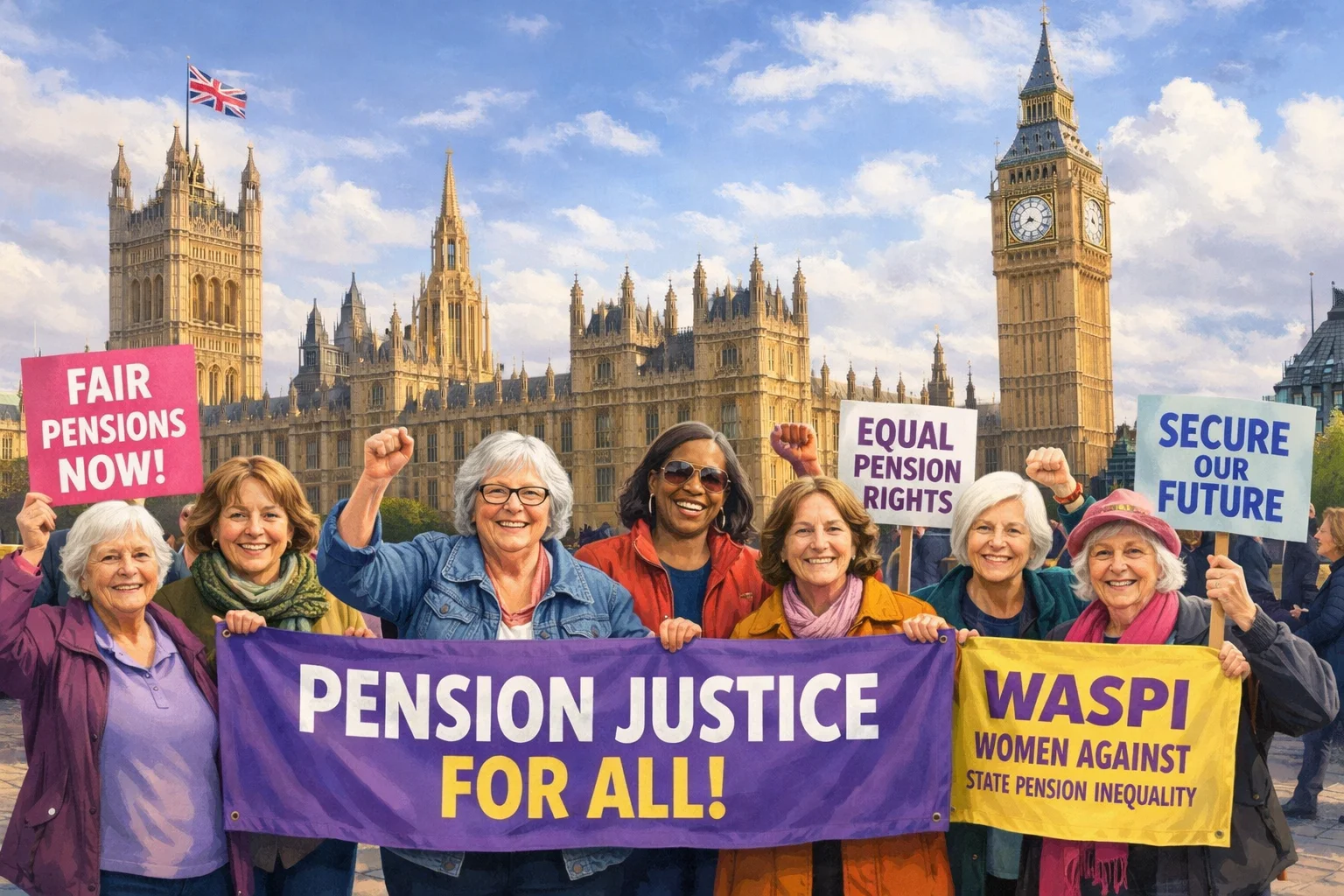
The persistence of advocacy groups has been central to keeping the issue alive. Women Against State Pension Inequality (WASPI), led by chair Angela Madden, has consistently challenged the government’s narrative and mobilised public support.
Key Strategies Used by WASPI
- Sustained media engagement to maintain public awareness
- Grassroots fundraising to support legal challenges
- Direct engagement with MPs and parliamentary committees
Angela Madden has spoken openly about her own experience, describing how official documents repeatedly assured her she would receive her pension at 60. Such personal accounts have helped humanise what might otherwise be viewed as an abstract policy dispute.
Over time, this sustained pressure has contributed to the current reassessment, demonstrating the influence that organised advocacy can have on government decision-making.
Could the £2,950 Compensation Recommendation Set a National Precedent?
One of the most closely watched aspects of the debate is the £1,000 to £2,950 compensation range recommended by the Parliamentary and Health Service Ombudsman (PHSO). Although not legally binding, this recommendation carries significant moral and political weight.
Understanding the Ombudsman’s Recommendation:
| Aspect | Details |
|---|---|
| Recommended amount | £1,000 – £2,950 per affected woman |
| Basis | Maladministration and poor communication |
| Legal status | Advisory, not enforceable |
| Estimated total cost | Up to £10.5 billion |
If accepted, even partially, this recommendation could set a powerful precedent for how the government responds to large-scale administrative failures. It would signal that apologies alone are insufficient when systemic issues cause widespread harm.
However, ministers remain concerned about fairness and proportionality, particularly given the scale of potential payouts.
How Is Public and Political Opinion Shaping the Government’s Direction?

Public reaction to the WASPI issue has been mixed but persistent. Many sympathise with the affected women, viewing their treatment as emblematic of broader issues around communication and fairness in public policy. Others worry about the cost implications and the potential impact on future pension reforms.
Politically, the issue has cut across party lines. While Labour expressed support for WASPI in opposition, its stance in government has been more cautious, reflecting the tension between campaign promises and fiscal responsibility.
Shifting Political Dynamics:
| Factor | Influence on Decision |
|---|---|
| Media coverage | Keeps issue in public spotlight |
| Parliamentary debates | Maintains political pressure |
| Fiscal constraints | Limits willingness to commit funds |
| Legal scrutiny | Encourages procedural caution |
As public trust in institutions becomes an increasingly prominent concern, how the government handles this reassessment may have lasting implications for its credibility.
Conclusion
The renewed examination of WASPI compensation DWP £2950 marks a significant moment in a long-running dispute between campaigners and the government. While there is still no certainty that compensation will be awarded, the decision to reconsider the rejection acknowledges that the original process may have been incomplete.
For WASPI women, this development offers cautious optimism after years of frustration. For the government, it represents a test of its commitment to evidence-based decision-making and accountability.
Whatever the outcome, the reassessment underscores the importance of clear communication, transparency, and fairness in policies that shape people’s lives.
Frequently Asked Questions
How was the pension age change communicated to women affected?
Communication relied mainly on letters and general awareness campaigns, but many women report receiving information too late to adjust their plans.
What is the difference between compensation and financial redress in this case?
Compensation refers to direct monetary payments, while financial redress could include other remedies acknowledging harm caused by maladministration.
Did the 2011 Pensions Act significantly accelerate changes for women?
Yes, it brought forward the equalisation of pension age, reducing the adjustment period for many women born in the 1950s.
How binding are the Parliamentary Ombudsman’s recommendations?
They are not legally enforceable, but the government must consider them rationally and explain any decision to reject them.
Are discussions about WASPI ongoing in Parliament?
Yes, MPs continue to raise the issue through debates and questions, particularly in light of the recent reassessment.
Could compensation be structured differently rather than as a flat rate?
Some proposals suggest tiered payments based on impact, though no official framework has been confirmed.
What are the main obstacles to resolving the WASPI compensation issue?
Key challenges include cost, determining fair eligibility criteria, and balancing legal, political, and public expectations.