Universal Credit Hardship Payment | What It Is and Who Can Claim?
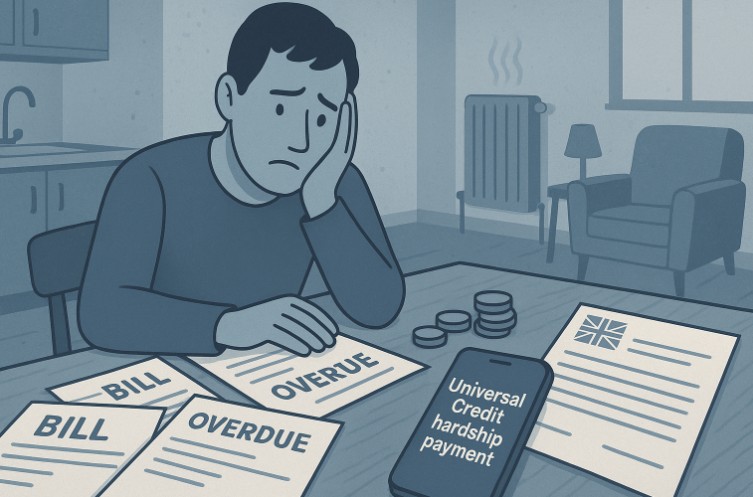
A Universal Credit hardship payment is a financial lifeline for those who find themselves struggling due to sanctions or fraud penalties applied to their Universal Credit payments.
Designed to cover critical living expenses such as food, heating and rent, this payment functions as a loan and must be repaid. Claimants who qualify for this support often experience immediate financial distress and need emergency help to maintain basic living standards.
Understanding what it is, who qualifies, and how to apply is essential for those navigating hardship while receiving Universal Credit.
What Is a Universal Credit Hardship Payment and How Does It Work?
A Universal Credit hardship payment is a temporary, reduced loan offered to claimants whose benefits have been cut due to sanctions or fraud penalties. It is designed to help cover essential living costs such as food, heating, hygiene, and housing during the sanction period.
This payment is not a grant and must be repaid, typically through deductions from future Universal Credit payments.
The Department for Work and Pensions (DWP) assesses eligibility, which requires proving financial hardship and agreeing to repay the amount.
The payment aims to maintain a minimum standard of living while a claimant’s full benefit is suspended. It does not replace the full Universal Credit amount but helps bridge the gap in critical times.
Repayments begin once the sanction ends or the individual’s financial circumstances improve, ensuring continued access to essential support.
Why Might Someone Need a Universal Credit Hardship Payment?
Hardship payments are designed for those facing extreme financial difficulty due to a sanction or penalty. There are several real-life circumstances where this support becomes essential.
Sanctions or Fraud Reductions
When the DWP applies a sanction due to missed appointments or other non-compliance, the claimant’s Universal Credit may be reduced or stopped.
If the payment reduction makes it impossible to afford basic necessities, a hardship payment can offer a temporary financial cushion.
Basic Needs Are at Risk
Applicants who struggle to cover basic needs, such as paying for food, heating, housing, and personal hygiene, are often considered for hardship support. The DWP evaluates how a sanction affects a claimant’s ability to maintain minimum living standards.
No Other Financial Resources Available
Those unable to secure help from friends, family, charities or other government aid may turn to hardship payments as a last resort. The DWP expects that all other avenues should be explored first, but also understands that not all claimants have a support network.
Hardship payments serve as a temporary measure to alleviate immediate need, but applicants must commit to repaying the amount and may need to reapply in future assessment periods if the hardship continues.
Who Is Eligible for a Hardship Payment on Universal Credit?
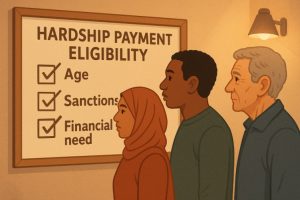
To qualify for a Universal Credit hardship payment, specific criteria must be met. The DWP applies strict eligibility rules to ensure the support is granted only to those in genuine financial distress. The eligibility criteria include:
Age Requirement:
- You must be aged 18 or over.
- In cases of fraud-related penalties, those aged 16–17 may qualify.
Sanction or Penalty Applied:
- You or your partner must have had Universal Credit reduced due to a sanction or a benefit offence.
Work Activity Compliance:
- You must have met all work-related requirements in the 7 days before applying.
Facing Financial Hardship:
You must be unable to meet essential living needs such as:
- Accommodation
- Food
- Heating
- Hygiene
- Child-related costs
Attempted Alternative Support:
You should have explored other sources of help like:
- Asking family or friends
- Applying to charities or councils
- Cutting down non-essential expenses
Commitment to Repay:
- You must agree to repay the hardship payment over time.
The DWP assesses applications based on these criteria, and those who fail to meet any requirement are likely to be refused. It’s important that claimants provide complete and honest information during the application process.
How Do You Apply for a Hardship Payment?
Applying for a hardship payment involves contacting the Department for Work and Pensions and providing the necessary evidence to prove financial hardship. Applications are not automatic and must be initiated by the claimant.
Steps to Apply Online
Claimants can apply online using their Universal Credit account. The process involves updating their journal with a hardship payment request and explaining why they are facing financial difficulties.
Steps to apply online:
- Log in to your Universal Credit online account
- Navigate to your journal
- Add a new entry explaining your situation and request a hardship payment
- Include details about your inability to meet essential living needs
- Await a response from your work coach or case manager
Online applications are often the fastest way to submit a request, as it creates a digital record and allows quick communication with the DWP.
Steps to Apply Offline
If you cannot apply online, you can apply by calling the Universal Credit helpline or visiting your local Jobcentre. Here are the offline application options include:
Calling the helpline:
- Universal Credit helpline: 0800 328 5644
- Textphone: 0800 328 1344
- Welsh language line: 0800 328 1744
- Relay UK (for speech/hearing impaired): 18001 then 0800 328 5644
Visiting a Jobcentre:
- Attend an appointment
- Speak directly with a work coach
- Provide required evidence at the office
Applications submitted offline still require supporting evidence and a commitment to repayment.
What Information and Evidence Do You Need When Applying?
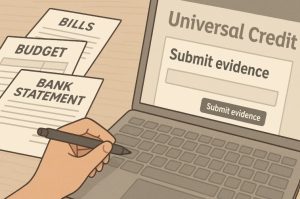
When applying for a Universal Credit hardship payment, it’s essential to provide clear and detailed evidence that shows you’re facing genuine financial difficulty.
The Department for Work and Pensions (DWP) will assess your application based on the documentation you provide, so accuracy and completeness are crucial.
Key Supporting Documents to Include:
- Proof of income: Recent payslips or bank statements showing reduced earnings.
- Budget breakdown: Monthly costs for rent, food, and essentials.
- Statement of need: A short note explaining why you can’t afford basic needs.
- Work compliance: Evidence you met job-seeking requirements in the past 7 days.
Providing strong evidence can significantly improve your chances of approval and speed up the processing time for your hardship payment.
How Much Is a Universal Credit Hardship Payment?
The amount you receive through a hardship payment is not fixed and depends on the sanction amount and duration. The payment is calculated to cover essential needs but is significantly lower than the standard Universal Credit amount.
The hardship payment typically amounts to about 60% of the sanctioned amount. This is intended to help with basic survival needs while encouraging claimants to meet their responsibilities under Universal Credit.
Payments are only made for a set number of days and must be reapplied for if the hardship continues beyond that period.
How Is the Hardship Payment Calculated?
The Department for Work and Pensions calculates the hardship payment using a daily rate formula.
Key calculation factors:
- The hardship payment is approximately 60% of the sanction amount
- It is then multiplied by the number of days the sanction is active
| Sanction Type | Sanction Amount | Hardship Payment (Approx. 60%) |
| Light Sanction (14 days) | £200 | £120 |
| Medium Sanction (28 days) | £350 | £210 |
| Long Sanction (91 days) | £800 | £480 |
If you remain sanctioned after this period, you will need to reapply for another hardship payment in the next Universal Credit assessment period.
Is the Payment Enough to Cover Basic Needs?
The hardship payment is designed to help meet immediate living costs, but it may not fully cover all your basic needs. Many claimants use it as a supplement while seeking help through food banks or family assistance.
It is intended to prevent serious harm such as eviction or hunger but not to maintain a full lifestyle or cover every household bill. Claimants must still manage their budget carefully, reduce non-essential expenses and prioritise critical costs during this time.
How Long Does It Take to Receive a Hardship Payment?
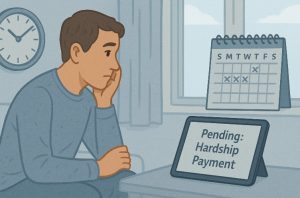
Once a claim is submitted, the DWP usually processes hardship payment applications quickly due to the urgent nature of the request. In most cases, you can expect a decision and potential payment within 7 to 14 days.
The time may vary depending on how quickly you provide the required evidence and whether there are any issues with your application.
Some cases may be approved faster, especially if the claimant has applied before and has an existing hardship history on record.
What Can Delay the Processing of a Hardship Payment?
Delays in receiving a Universal Credit hardship payment can create added stress during an already difficult time. To avoid unnecessary waiting, it’s important to understand what might slow down your application.
Common Reasons for Delay:
- Missing documentation: Key evidence like budget details or hardship proof not provided.
- Non-compliance: Not completing job-seeking tasks in the 7 days before applying.
- Incomplete application: Gaps or unclear information in your Universal Credit journal.
- Technical issues: Online account problems or missed verification calls.
Review your application carefully before submitting to ensure all information is complete and accurate.
Do You Have to Repay a Universal Credit Hardship Payment?
Yes, a Universal Credit hardship payment is a loan and must be repaid. The Department for Work and Pensions (DWP) will automatically recover the payment by reducing your future Universal Credit amounts.
Typically, this deduction is taken from your standard allowance, which is the basic amount you receive before any extra elements.
The repayment is capped at 15% of your standard allowance unless you negotiate a lower rate due to financial hardship.
If the repayment affects your ability to meet basic needs, you can contact the DWP or speak with an advisor to request a slower recovery rate or even apply for a temporary pause on repayments.
In some cases, if your income increases and you earn over the DWP’s earnings threshold for six assessment periods in a row, your hardship loan repayments may be cancelled altogether. However, this is subject to DWP confirmation and proper reporting.
What Happens After You Receive a Hardship Payment?
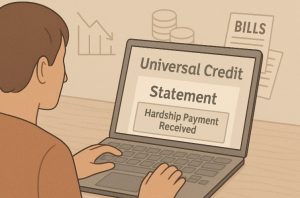
Once you receive the hardship payment, your financial situation may temporarily stabilise, but it comes with responsibilities and potential implications for future payments.
Here’s what typically happens next:
- Repayments begin promptly each month: Up to 15% of your Universal Credit is deducted monthly.
- Reapply if needed next period: You must reapply if sanctions continue in the next assessment period.
- UC stays reduced during repayment: Your payments remain lower due to both sanctions and loan recovery.
- Update your journal with changes: Report any changes in your circumstances to the DWP.
Remaining compliant with your commitments and regularly checking your UC journal will help you stay on top of any additional steps needed after receiving the payment.
What Can You Do If Your Hardship Payment Is Refused?
If your Universal Credit hardship payment is refused, don’t panic, there are steps you can take to challenge the decision. Understanding the reason for refusal is the first step toward resolving the issue.
Understanding the Reason for Refusal
If your application is refused, it may be due to not meeting eligibility requirements or failing to provide adequate evidence. The most common reason is not fulfilling all work-related requirements in the seven days before applying.
Request a Mandatory Reconsideration
If you believe the decision was incorrect, you can request a mandatory reconsideration. This is a formal process where the DWP reviews your claim again. Include any new or updated information that supports your hardship.
Prepare for an Appeal
If the reconsideration fails, you can lodge an appeal through a benefits tribunal. However, this process takes longer, so ensure your situation is well-documented.
Get Advice and Support
Charities and advice organisations can help you prepare a strong case or request DWP to reassess your repayment terms. If your financial situation has worsened, it’s important to let the DWP know immediately.
Conclusion
Universal Credit hardship payments exist to provide essential financial relief during difficult times caused by sanctions or benefit penalties.
They are designed to protect individuals and families from severe deprivation and ensure that basic needs such as food, shelter, and heating are met.
However, as these payments are loans, they carry the responsibility of repayment. Understanding how to qualify, apply, and follow up is critical for those relying on this form of support.
By staying compliant with work-related activities and providing clear evidence of hardship, claimants can access this vital resource when they need it most.
FAQs About Universal Credit Hardship Payment
Can I still claim housing benefit while receiving a hardship payment?
Yes, hardship payments do not affect your eligibility for housing benefit or other passported benefits such as free prescriptions or school meals.
What counts as ‘basic needs’ when applying?
Basic needs include accommodation, food, heating, and hygiene. The DWP assesses whether these cannot be met due to the sanction.
Are there any age restrictions for recoverable hardship payments?
Applicants must usually be over 18. However, those aged 16–17 can qualify if their payment is reduced due to fraud rather than a sanction.
Can I reapply for another hardship payment?
Yes, you must reapply if the hardship continues into the next Universal Credit assessment period.
What happens if I earn over the threshold while repaying?
If your earnings exceed the DWP’s threshold for six consecutive periods, your hardship loan repayments may be paused or cancelled.
What if I’m unable to repay without financial harm?
You can request the DWP to lower your repayment rate or pause recovery if it causes financial distress.
Will not meeting my work requirements affect my application?
Yes, if you haven’t fulfilled your work-related commitments in the 7 days prior to applying, the DWP may reject your application.