If My Partner Moves in With Me – What Benefits Will I Lose?
When I first thought about my partner moving in, I was excited, until the financial fear kicked in. “Will I lose my benefits?” was the question keeping me up at night. The truth is, moving in with a partner changes everything when it comes to means-tested benefits.
After going through endless government pages, online forums, and speaking to advisers, I’ve put together everything I wish I’d known before making that decision.
Yes, you could lose some benefits when your partner moves in. Why? Because the Department for Work and Pensions (DWP) will assess you as a couple, not as two individuals. This affects how much you’re entitled to, especially for income-based benefits.
Let me break down what I found out and what you need to consider:
- Your partner’s income and savings will be considered.
- Single-person discounts, like Council Tax Reduction, could stop.
- Benefits like Universal Credit, Housing Benefit, and Income Support may reduce or stop.
- Some benefits, like PIP, are unaffected.
Now let’s walk through this, step by step.
What Does “Living Together” Mean in the Eyes of the DWP?

“Living together” isn’t just about where you sleep. According to the DWP, you’re considered a couple if you live together in the same home and act like a married couple, regardless of whether you’re actually married or in a civil partnership.
This means sharing bills, responsibilities, meals, or appearing publicly as a couple may lead the benefits office to reassess you. Even if your partner only stays over a few nights per week, it can raise questions. It’s not about how many nights, but about the nature of your relationship and household setup.
If you’re not sure whether you count as cohabiting, keep documentation that proves your separate living situations.
For example:
- Separate utility bills, bank statements, or tenancy agreements
- Different registered addresses on driving licences or vehicle registration
- Letters or official documents addressed to different homes
Important: Even if you’re not officially living together but are perceived to be, your benefits may be affected.
How Does Moving in With a Partner Affect My Benefit Entitlement?
When you live alone, most income-based benefits are assessed solely on your income and savings. However, once you move in with a partner, the Department for Work and Pensions (DWP) generally considers you a “couple.” This reclassification changes the rules significantly.
Even if you’re not married, living together as if you were, sharing bills, meals, or bedrooms, means your benefits will be calculated jointly. This applies whether your partner earns a full-time salary or receives benefits themselves.
Crucially, your partner’s income, capital (savings above £6,000), and work hours will all impact your eligibility for certain support. If their earnings or savings exceed certain limits, you could see reductions or complete loss of benefits.
Which Benefits Are Most Likely to Be Reduced or Stopped?
Here’s where things become clearer, and more concerning. Several key benefits are means-tested and highly sensitive to household changes.
Commonly Affected Benefits:
- Universal Credit (UC): You’ll need to make a joint claim. If your partner earns or has savings, your UC could be significantly reduced. Savings over £16,000? You won’t be eligible at all.
- Housing Benefit: Assessed jointly. Your partner’s income could reduce or end your housing support.
- Council Tax Reduction: You lose the 25% single-person discount. The overall reduction may decrease depending on your joint income.
- Income Support / Jobseeker’s Allowance / ESA (Income-Based): These are re-evaluated for couples. If your partner works 24+ hours a week, many of these benefits will end entirely.
- Severe Disability Premium (SDP): You’ll likely lose this if you start living with a non-disabled adult, even if they aren’t your carer.
A Reddit user wrote:
“I want to live with him but I can’t afford to lose all my money… it feels like everything else will get taken away.”
Unfortunately, this isn’t an uncommon sentiment. Let’s now look at Universal Credit in more depth.
Will I Need to Make a Joint Universal Credit Claim?
Yes. If either of you is already claiming Universal Credit and your partner moves in, the DWP will require a joint claim. This happens even if your partner isn’t claiming UC at all.
Joint Claim Process:
- Each of you needs to create a UC account online.
- The first person gets a partner code to share with the second person.
- You must complete the claim within 28 days.
- Once submitted, your entire household income is assessed.
Here’s an example from KRK1235 (Scope Forum):
“I currently get PIP and UC LCWRA. My partner earns £24K. If we move in, I need to start a joint UC claim. Will I lose my LCWRA status? Will we even get anything as a couple?”
Your Limited Capability for Work element can carry over, but only if your joint claim is successful and your medical status is unchanged. However, the joint income could reduce your overall award, especially with earnings above work allowance thresholds.
What Happens to Your Housing Benefit and Council Tax Support?
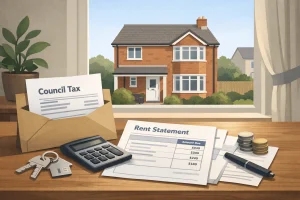
When a partner moves into your home, your Housing Benefit and Council Tax Support are reassessed based on your new household circumstances. This is one of the biggest changes you’ll feel when someone new joins your household.
Housing Benefit
- If you’re in private or council housing, the local authority will recalculate your entitlement based on your joint income and savings.
- If your partner earns even a moderate wage (e.g., £16K+), you may lose most or all of your housing benefit.
Council Tax Reduction
- You’ll lose the 25% single-person discount as you’re no longer the only adult.
- Your total Council Tax bill may increase.
- Council Tax Reduction is recalculated based on your household income.
Here’s a comparison table for quick clarity:
Before Partner Moves In After Partner Moves In
Single-person discount (25%) applies Discount removed
Housing Benefit based on your income Housing Benefit assessed jointly
Likely to qualify for full CTR CTR may reduce or stop
Less scrutiny on expenses More DWP scrutiny on finances
This is why it’s crucial to understand the financial impact before your partner moves in, as your household income will be treated very differently.
Can You Still Keep My ESA, PIP, or Disability Benefits?
Yes, you can still keep some disability benefits after a partner moves in, but it depends on the type of benefit. Employment and Support Allowance (ESA) is treated differently based on how it’s awarded. Contribution-based ESA is not means-tested, so it is not affected by your partner moving in.
However, income-related ESA is assessed on household income and savings. If your partner works or has savings, your ESA may reduce or stop altogether, and if they work 24 hours or more per week, income-related ESA usually ends.
Personal Independence Payment (PIP) is not means-tested, so your partner’s income or living arrangements do not affect it. You can continue receiving the daily living and mobility components if you remain eligible.
However, the Severe Disability Premium (SDP) is often lost when a non-disabled partner moves in, even on legacy benefits.
What If My Partner Only Stays Over Sometimes – Does That Count?

This is where many people get caught out. The DWP doesn’t use a set number of nights to define cohabitation. Instead, they assess the nature of your relationship.
Factors considered include:
- Do you share finances or bank accounts?
- Does your partner keep belongings at your home?
- Do you refer to each other as living together in public?
- Does your partner contribute to bills or rent?
If you maintain separate addresses, with proof (bank statements, ID, bills), and don’t share finances or responsibilities, then they may not count as living with you.
However, beware: neighbours or acquaintances can report suspicions, triggering investigations. Evidence and transparency matter.
What Should You Do Before Reporting This Change?
If your partner is planning to move in with you, the decision isn’t just emotional or practical, it comes with serious financial implications.
Before you officially notify the Department for Work and Pensions (DWP) or your local council, it’s important to prepare thoroughly to understand what you’re stepping into. Here are the key steps to take:
Use a Benefits Calculator
Start with trusted tools to model different scenarios. Enter your current income, savings, and then estimate your joint income with your partner. This gives you a clearer picture of how your benefits could change.
Document Your Financial Position
Make a clear list of:
- Your personal income (benefits, part-time work, etc.)
- Your partner’s income and savings
- Monthly living expenses (e.g. rent, utilities, food, transport)
Gather Evidence
It helps to prepare supporting documents that may be needed when updating your benefit records:
- Recent payslips from your partner
- Bank statements
- Tenancy agreements or council tax bills
- Any medical letters or carer evidence (if relevant)
Get Independent Advice
Contact services such as:
- Citizens Advice
- Scope (for disability-related queries)
- AdviceLocal (postcode-based search for free support)
Moving in with a partner might seem like a personal matter, but for benefit purposes, it’s a legal change in status. Some decisions, like switching from legacy benefits to Universal Credit, cannot be reversed, and may result in permanent loss of entitlements such as the Severe Disability Premium.
Take your time. Ensure you fully understand the implications before acting.
What If You Don’t Report the Change – Could You Be Penalised?
Yes, failing to inform the DWP or your local authority that your partner has moved in can be classed as benefit fraud. Even if the omission is unintentional, the consequences can be significant.
Penalties You May Face
- Repayment of overpaid benefits: The DWP will demand you repay any amount they believe was wrongly received. This can run into thousands of pounds.
- Fines: Depending on the severity, you may receive a civil penalty or administrative fine.
- Benefit sanctions: Your current benefits could be reduced or stopped altogether for a set period of time.
- Prosecution: In more serious cases, particularly if the DWP believes there was deliberate deception, you could be taken to court and receive a criminal record, or even a custodial sentence.
The DWP has robust powers to investigate potential fraud, including:
- Accessing bank and credit card records
- Visiting your home
- Interviewing neighbours or acquaintances
- Reviewing social media and online activity
Even if your partner only stays over a few nights per week, it can raise red flags. Be proactive. If your situation has changed, or might be interpreted as such by someone else (like a neighbour), it’s always better to report it and explain, rather than face penalties later.
When submitting information:
- Get a receipt at the Jobcentre if you report in person
- Take a screenshot when submitting online through your Universal Credit journal
- Request confirmation of receipt when posting documents
Always keep records for your own protection.
Can You Get Help or Other Support If You Lose Some Benefits?
Losing some benefits when your partner moves in can feel overwhelming, but it doesn’t mean all support disappears. In many cases, a change in circumstances can open the door to different types of help, especially if your household now has caring responsibilities, housing shortfalls, or temporary financial pressure.
Eligibility overview:
Support Type Who May Qualify
Carer’s Element (UC) Partner provides 35+ hours of care per week
Discretionary Housing Payments (DHP) Households facing rent shortfalls or hardship
Transitional Protection (UC) Moved from legacy benefits due to DWP instruction
Budgeting Loans / UC Advances Help needed for emergency or essential expenses
While some benefits may reduce or stop, alternative support options can help soften the financial impact during the transition.
The key is to review your new household situation early, contact your local council or the DWP where relevant, and apply promptly so you don’t miss out on support you may now be entitled to.
Real-Life Concerns: A Case from the Community

Let’s revisit PolkaBirdie’s situation from a benefits forum:
She currently receives:
- Enhanced PIP (daily living & mobility)
- Income-based ESA (support group)
- Housing Benefit (including for a second bedroom)
Her partner earns £16,000/year and is a part-time student. If he moves in, she fears:
- Losing her Severe Disability Premium
- Being forced to switch to Universal Credit
- Having reduced housing support despite health-related bedroom needs
She rightly worries about becoming financially dependent on someone who might not earn enough to cover shared expenses.
“I want to live with him but I can’t afford to lose all my money. I don’t want to depend on him financially.”
This highlights the emotional and financial dilemma many face, balancing personal relationships with economic survival.
Conclusion
Moving in with a partner is an emotional and practical decision. But when you rely on means-tested benefits, it comes with legal and financial strings attached.
My journey taught me:
- Always report changes promptly to DWP or your council
- Get advice from experts if your situation is complex
- Don’t assume your benefits will stay the same, they likely won’t
- Have open conversations with your partner about finances
Despite the potential losses, it’s not all doom and gloom. With the right planning, support, and understanding, you can navigate this life change without unnecessary hardship.
Frequently Asked Questions
Will I automatically lose all benefits if my partner moves in?
Not all. Means-tested benefits like Universal Credit and Housing Benefit are affected, but non-means-tested benefits like PIP usually remain unchanged.
Can I keep my housing benefit if my partner earns less than £16,000?
It depends on total joint income and savings. Use a benefit calculator to see how it affects your eligibility.
If I have a disability, will I lose PIP?
No. PIP is assessed individually and doesn’t consider your partner’s income or living status.
Do I need to inform the DWP if my partner just stays over sometimes?
Only if they’re officially moving in. However, frequent stays could be flagged, so it’s best to be transparent and keep documentation.
Can I get separate Universal Credit payments if my partner is controlling?
Yes. You can request split payments in situations involving financial abuse or coercion.
Does moving in together affect Child Benefit?
It might, especially if your partner has a high income. They could be liable for the High Income Child Benefit Tax Charge.
Will I have to reapply for everything?
You will need to make joint claims for UC and Council Tax Reduction, and inform relevant departments about your change in living status.