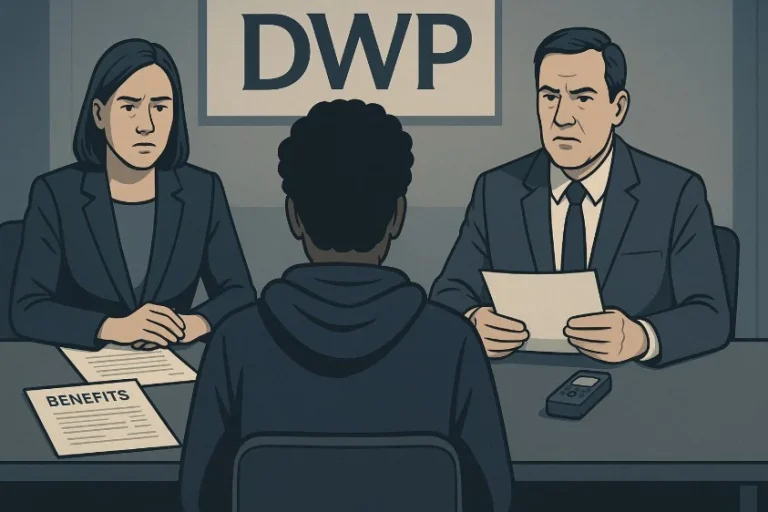

DWP Pre Recorded Interview Questions: What to Expect and How to Answer?
A DWP pre recorded interview can feel very different from a traditional job interview. Instead of speaking directly to an interview panel, candidates are shown questions through an online platform and record their answers using a webcam and microphone.
Pre-recorded video interviews are one of the assessment methods that can be used in Civil Service recruitment. Civil Service Careers explains that candidates may be asked to record answers to interview questions presented through an online platform.
The exact DWP pre recorded interview questions are not the same for every vacancy. They depend on the job, grade and criteria listed in the advert.
Candidates should therefore use the vacancy description as their main preparation guide rather than trying to memorise a fixed set of questions.
What Is a DWP Pre Recorded Interview?
A pre-recorded interview is an online assessment in which questions appear on screen and the candidate records a video response to each one.
Unlike a live interview, there may not be an interviewer present while the answers are being recorded. The completed responses can then be reviewed as part of the recruitment process.
Civil Service recruitment uses the Success Profiles framework.
Depending on the position, candidates can potentially be assessed on:
- Behaviours
- Strengths
- Experience
- Ability
- Technical skills
Not every vacancy assesses all five areas. The elements selected depend on what is required for the particular role.
This makes the original DWP job advert particularly important because it should indicate which areas candidates need to demonstrate.
What DWP Pre Recorded Interview Questions Could You Be Asked?
There is no single published list of questions guaranteed to appear in every DWP interview. However, questions are likely to relate directly to the behaviours, strengths, experience or essential criteria identified in the vacancy.
Examples of the types of questions candidates could prepare for include:
| Possible question | What it may assess |
|---|---|
| Tell us about a time you provided excellent customer service. | Managing a Quality Service |
| Describe a situation where you had to explain something complicated. | Communicating and Influencing |
| Tell us about a time you worked with others to achieve a goal. | Working Together |
| Give an example of when you had to manage competing priorities. | Delivering at Pace |
| Tell us about a time you improved a process or way of working. | Changing and Improving |
| How do you deal with a customer who is upset or frustrated? | Customer service, communication and judgement |
| Do you enjoy working towards challenging targets? Why? | Strengths |
| How do you organise your workload when you have several deadlines? | Organisation and delivery |
These should be treated as practice questions rather than confirmed DWP questions. Candidates should tailor their preparation to the behaviours and criteria specified in their own vacancy.
How Should You Answer DWP Behaviour Questions?
Behaviour questions normally ask for evidence of something the candidate has previously done.
Civil Service guidance states that candidates may be asked to provide examples showing when they demonstrated a particular behaviour.
The examples do not necessarily have to come from paid employment; relevant examples may also come from volunteering, work experience or other activities.
One of the clearest ways to organise a behavioural answer is the STAR method.
Situation
Briefly explain the context.
For example:
A customer contacted the organisation because an important application had been delayed.
Task
Explain what responsibility or objective was involved.
I needed to identify what had happened, explain the situation clearly and make sure the customer knew what would happen next.
Action
This should normally form the largest part of the answer.
Explain specifically what you did rather than spending most of the response describing the team.
For example:
I checked the customer’s record, identified the missing information, explained what was required in straightforward language and contacted the relevant team to confirm the next steps.
Result
Finish by explaining what happened because of the actions taken.
The required information was obtained, the application progressed and the customer understood both the outcome and the timescale.
DWP Digital’s recruitment guidance also recommends using STAR to make interview examples focused and clearly explain what the candidate personally did and achieved.
What Civil Service Behaviours Could Appear?
Candidates should check their vacancy rather than preparing every Civil Service behaviour. Recruiting managers select behaviours according to the requirements and grade of the position.
Some behaviours commonly relevant to customer-facing and operational positions include:
Communicating and Influencing
This can involve communicating clearly, adapting the way information is presented and helping other people understand important information.
A practice question might be:
“Tell us about a time you had to explain difficult information to someone.”
A strong example could show how the candidate:
- Listened carefully.
- Used clear language.
- Adapted communication to the other person’s needs.
- Checked that the information had been understood.
- Achieved a useful outcome.
Managing a Quality Service
This focuses on delivering an effective service while recognising customer needs.
A practice question could be:
“Describe a time you improved the service provided to a customer.”
The response should explain the problem, what the candidate personally did and what improved as a result.
Delivering at Pace
Candidates may need to demonstrate that they can remain productive while handling deadlines or changing priorities.
A possible practice question is:
“Tell us about a time you had several important tasks to complete at once.”
Good evidence could include prioritising workloads, reviewing deadlines, communicating problems early and maintaining accuracy.
Working Together
Many DWP roles involve dealing with colleagues, customers and other teams.
A candidate could therefore practise:
“Give an example of when you worked with other people to achieve an important outcome.”
The strongest answers normally explain the candidate’s individual contribution rather than repeatedly referring to what “we” did.
Changing and Improving
This behaviour can involve identifying better ways of working and responding positively to change.
A practice question might be:
“Describe an occasion when you suggested an improvement to a process.”
The candidate should explain why the change was needed, what they suggested and whether it produced a measurable improvement.
What Are DWP Strength-Based Questions?
Strength questions work differently from behaviour questions.
Civil Service guidance defines strengths as things people do regularly, perform well and are motivated by. Strengths may also be assessed through recorded video interviews.
Possible practice questions could include:
- Do you enjoy helping people solve problems?
- How do you feel about working with different types of people?
- Do you enjoy completing tasks quickly?
- How do you respond when priorities suddenly change?
- Do you like explaining information to other people?
- How do you feel about working towards targets?
- What motivates you to provide good customer service?
- Do you enjoy finding solutions to difficult problems?
Strength answers are generally more natural than long STAR examples.
Candidates should demonstrate genuine enthusiasm where appropriate and briefly explain why the activity suits them.
For example, if asked whether they enjoy solving customer problems, an answer might explain that they enjoy understanding what someone needs, identifying possible solutions and seeing the issue resolved.
How Long Should DWP Pre Recorded Interview Answers Be?
Candidates should follow the timing instructions given by the interview platform because preparation and recording limits can differ between recruitment exercises.
Where a limited recording window is provided, the objective should not be to fill every available second. A concise, relevant answer is usually more useful than a long response containing unnecessary detail.
For behaviour questions, candidates should spend relatively little time describing the background and more time explaining:
What they did → Why they did it → What happened.
Civil Service guidance similarly recommends being specific and succinct when answering interview questions.
Can You Have Notes During a DWP Pre Recorded Interview?

Candidates should check the instructions provided with their assessment because rules may differ.
Even where brief notes are permitted, reading a complete prepared answer word-for-word can make a recorded response appear unnatural.
A better preparation method is to create short prompts such as:
Customer complaint → checked records → explained issue → contacted team → resolved problem → positive feedback
This gives the candidate a structure while allowing them to speak naturally to the camera.
How Can You Prepare for DWP Video Interview Questions?
Preparation should start with the actual vacancy advert.
Identify the behaviours, experience requirements and essential criteria and prepare evidence for each one.
A useful preparation table might look like this:
| Requirement | Example to prepare |
|---|---|
| Communicating and Influencing | Explaining complicated information to a customer |
| Managing a Quality Service | Resolving a service problem |
| Working Together | Completing a project with colleagues |
| Delivering at Pace | Managing competing deadlines |
| Customer service experience | Helping a difficult or vulnerable customer |
Candidates should ideally prepare more than one example because similar questions may require slightly different evidence.
What Should You Do Before Starting the Recording?
Technical preparation is particularly important in a pre-recorded interview because there may be no interviewer available to resolve a problem immediately.
Before beginning:
- Check the internet connection.
- Test the webcam.
- Test the microphone.
- Use a quiet location.
- Position the camera around eye level.
- Make sure the candidate’s face is clearly visible.
- Remove distracting notifications.
- Read the assessment instructions carefully.
- Keep water nearby.
- Have brief preparation notes available where permitted.
Civil Service interview guidance specifically recommends checking technology, including Wi-Fi, sound and the room setting, before a video interview.
What Mistakes Should Candidates Avoid?
One common mistake is giving a general answer without providing evidence.
For example:
Weak:
“I am very good at dealing with difficult customers.”
Better:
“In my previous position, a customer contacted us after experiencing repeated delays. I first allowed them to explain the problem fully, checked their account and discovered…”
The second version provides evidence that can actually be assessed.
Another mistake is spending too much of the answer describing other people.
Instead of saying:
“We contacted the customer and we decided to change the process.”
Explain:
“I reviewed the customer’s case, identified the problem and recommended that the team change the way the request was recorded.”
Other avoidable problems include rushing through the answer, failing to answer the question directly and using one memorised example regardless of what has actually been asked.
What If You Have Never Worked for DWP Before?
Previous DWP or Civil Service experience is not automatically required unless the vacancy specifically states that particular experience or qualifications are essential.
Transferable examples may come from areas such as:
- Retail
- Hospitality
- Call centres
- Administration
- Banking
- Healthcare
- Education
- Volunteering
- University
- Community organisations
- Previous public-sector employment
Someone working in retail, for example, could potentially demonstrate Communicating and Influencing by describing how they handled a complicated customer complaint.
A candidate with university experience might demonstrate Delivering at Pace by explaining how they prioritised several deadlines while maintaining the quality of their work.
The important point is whether the example demonstrates the requirement being assessed.
How Are DWP Interview Questions Scored?
The exact assessment criteria depend on the vacancy and recruitment exercise.
Civil Service recruitment is structured around the requirements identified for the particular role through Success Profiles. Candidates should therefore avoid assuming there is one universal scoring formula covering every DWP pre-recorded interview.
The job advert should be treated as the definitive guide to what is being assessed.
For behavioural questions, stronger answers generally provide clear evidence of:
- The situation or challenge.
- The candidate’s responsibility.
- The specific actions they personally took.
- The reasoning behind important decisions.
- A clear result or impact.
Where possible, results can also be made more concrete.
Instead of:
“The service improved.”
A candidate might explain:
“The new procedure reduced the number of repeat enquiries and helped the team process requests more quickly.”
Is a DWP Pre Recorded Interview Difficult?
The format can initially feel unusual because candidates cannot rely on normal conversation with an interviewer.
However, it also gives candidates a clear opportunity to prepare.
The most useful preparation is not memorising supposed leaked questions. It is understanding the vacancy’s assessment criteria and building several strong examples that can be adapted to different questions.
A candidate who knows their examples thoroughly can concentrate on the question instead of attempting to remember a scripted response.
Final Tips for a DWP Pre Recorded Interview
Before completing the assessment, candidates should read the job advert again and identify exactly what the recruitment team says it will assess.
Prepare several strong STAR examples covering the most important behaviours or essential criteria, but avoid memorising entire scripts. Strength questions should normally sound natural and demonstrate what genuinely motivates the candidate.
Most importantly, candidates should listen to or read each question carefully and answer the question actually being asked.
There is no guaranteed universal list of DWP pre recorded interview questions.
The strongest preparation therefore combines an understanding of Civil Service Success Profiles, knowledge of the specific DWP vacancy and clear evidence from the candidate’s own experience.
Frequently Asked Questions
Are DWP pre recorded interview questions the same for everyone?
Questions depend on the vacancy, role and assessment criteria. Candidates applying for the same recruitment campaign may face a structured assessment, but they should not assume questions will be identical across different DWP vacancies.
Does DWP use the STAR method?
Civil Service and DWP Digital recruitment guidance recommends STAR as a useful way of structuring examples around the Situation, Task, Action and Result.
What questions are asked in a DWP video interview?
Questions may assess behaviours, strengths, experience or other criteria specified in the job advert. Typical preparation areas include customer service, communication, teamwork, prioritisation and problem-solving.
Can DWP ask strength questions?
Yes. Strengths are one of the five elements of the Civil Service Success Profiles framework, and official Civil Service guidance confirms that strengths can be assessed through recorded video interviews.
Should DWP interview answers use STAR?
STAR is particularly useful for behaviour and experience questions because it keeps the response focused on the situation, the candidate’s responsibility, their actions and the outcome.