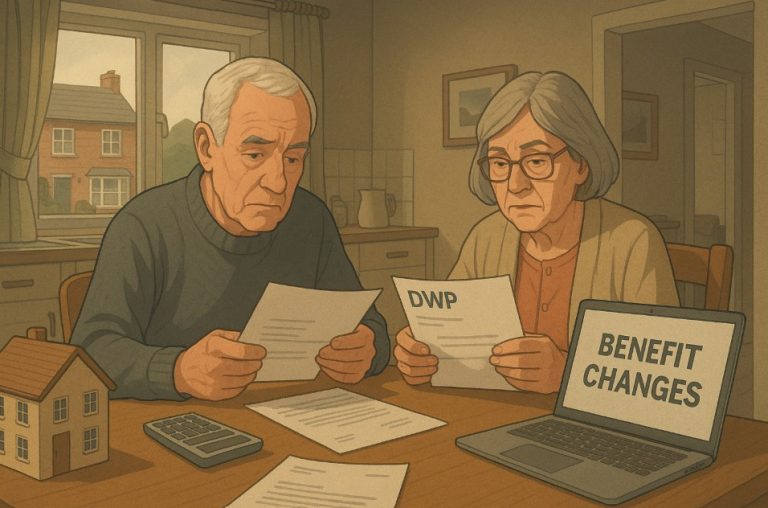

DWP Moving House Grant: What It Is and How to Apply in the UK?
Moving home can be both a logistical and financial challenge especially for individuals and families on low incomes or those receiving benefits. The cost of rent in advance, deposits, removal services, and setup fees can add up quickly.
For those who rely on Housing Benefit or Universal Credit, these additional expenses can be overwhelming. That’s where the DWP Moving House Grant, more formally known as the Discretionary Housing Payment (DHP), becomes an essential source of support.
This guide explores everything you need to know about the DWP Moving House Grant in the UK: what it is, how it works, who qualifies, how to apply, and what to do if you are not eligible.
What Is the DWP Moving House Grant?
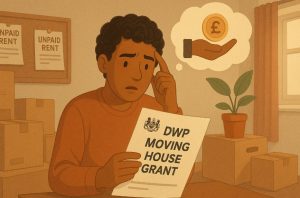
The DWP Moving House Grant is an informal term commonly used to refer to the Discretionary Housing Payment (DHP) scheme.
Administered by local councils across the UK, this scheme provides temporary financial support to individuals and families who need help with housing-related costs that are not fully covered by their benefits.
Although there is no standalone benefit titled “DWP Moving House Grant,” the DHP is a practical solution for claimants experiencing a shortfall between their housing benefit entitlements and their actual housing costs especially when facing circumstances such as moving house, homelessness risk, or a sudden rent increase.
The DHP is considered a top-up benefit, meaning it supplements your existing Housing Benefit or Universal Credit housing element to help cover certain costs that arise from housing instability or transition.
How Does the DWP Moving House Grant Help with Relocation?
The DWP Moving House Grant, through the DHP scheme, provides a safety net for those facing genuine financial hardship when relocating.
The grant is designed to bridge the financial gap when the cost of moving is not affordable despite receiving benefits. In practical terms, this support can make the difference between securing safe housing and becoming vulnerable to housing insecurity or homelessness.
The financial relief offered can include:
- Payment of rent in advance for a new tenancy when the claimant has no means of affording it upfront.
- Assistance with deposit payments to secure new accommodation.
- Help with removal costs, such as hiring a moving van or professional removers.
- Partial payment of rent arrears, if those arrears were caused by benefit shortfalls rather than financial mismanagement.
This kind of assistance is particularly valuable for tenants needing to move due to issues such as overcrowding, domestic violence, medical needs, or eviction notices.
Who Is Eligible to Receive a DWP Moving House Grant in the UK?
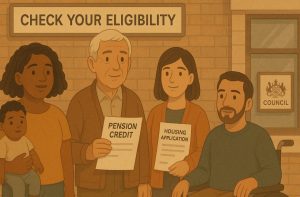
To apply for a DHP, applicants must meet certain eligibility requirements. Firstly, you must be currently receiving either Housing Benefit or the housing costs element of Universal Credit. Without one of these in place, you are automatically ineligible for a DHP.
Eligibility also depends on your housing circumstances. You may be considered if:
- Your rent is higher than your benefit payments due to Local Housing Allowance (LHA) caps or a recent rent increase.
- You are affected by the benefit cap, which limits the total amount of benefit you can receive.
- You are affected by the removal of the spare room subsidy, often called the “bedroom tax.”
- You are in temporary accommodation and trying to move to a more permanent or affordable home.
Even with eligibility, DHPs are not guaranteed. Councils consider a range of factors before approving an application, such as income, savings, household makeup, and any special circumstances like ill health or disability. It is a discretionary benefit, meaning councils are not obligated to award it, even if you qualify.
How Can You Apply for the DWP Moving House Grant?
The application process is straightforward but varies slightly between local authorities. Generally, it involves the following steps:
- Visit your local council’s website or contact their housing support office.
- Complete the Discretionary Housing Payment application form. This form typically asks for detailed information about your financial situation, current housing circumstances, and reasons for applying.
- Provide supporting documents, which may include:
- Proof of Housing Benefit or Universal Credit
- Tenancy agreement or notice to quit
- Evidence of removal costs, such as quotes from moving companies
- Medical documentation (if the move is due to disability or health issues)
- Submit the application by the method specified by your council either online, by post, or in person.
Once submitted, the council will assess your application and make a decision based on their budget and your need. If approved, the payment is typically made directly to your landlord or to you, depending on the nature of the support.
What Is a Discretionary Housing Payment and Can It Cover Moving Costs?
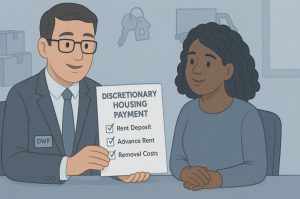
The Discretionary Housing Payment is a form of temporary financial assistance provided by local councils. It is specifically designed to help individuals who are experiencing housing-related financial hardship.
DHP can be used to cover:
- Shortfalls between rent and Housing Benefit or Universal Credit
- Rent in advance to secure a new tenancy
- Deposits required by landlords
- Moving or removal costs
- Rent arrears in specific, justified circumstances
However, DHP cannot be used to cover:
- Council tax (even if you receive Council Tax Support)
- General household items or furniture
- Non-housing related debts or bills
- Rent arrears caused by mismanagement or non-payment when sufficient benefit was available
Because DHPs are not part of the main benefit system, they do not need to be repaid, and they do not count as taxable income.
Which Moving Expenses Are Covered by the DWP Grant?
The grant, via the DHP, is flexible in nature and allows councils to consider a wide range of housing-related costs. In the context of moving home, common expenses that may be covered include:
- Rent in advance for a new tenancy, especially if private landlords require upfront payments
- Deposit payments for the new accommodation
- Removal costs if you cannot afford to hire a van or movers
- Rent shortfalls if you are moving to a slightly more expensive but suitable home
Local councils will examine whether these costs are essential and reasonable based on your individual situation. If the move is due to necessity such as escaping abuse, downsizing due to the bedroom tax, or needing an accessible property due to disability, the likelihood of approval is higher.
What Other Support Options Exist If You’re Not Eligible for a DWP Grant?
If you are not eligible for a DHP or your application is declined, there are other avenues you can explore for financial support:
- Local Welfare Assistance Schemes (LWAS): Many councils operate emergency support programs to help with housing or essential living costs.
- Support for Mortgage Interest (SMI): For homeowners, SMI can help cover interest payments on your mortgage or loans for essential home improvements.
- Short-Term Benefit Advances: If you’re waiting for your first Universal Credit payment, you may be eligible for an advance that is later deducted from future benefits.
- Disabled Relocation Grants: If you’re disabled and your current home is not suitable, some councils provide grants to help with the cost of moving.
- SSAFA and Armed Forces Charities: These offer moving and housing assistance to serving members and veterans of the armed forces.
- Charities and Benevolent Funds: Organisations such as Turn2Us or Glasspool provide targeted grants for moving expenses.
- Deposit Bond Schemes: Some councils offer guarantee schemes where they act as a guarantor for your deposit rather than providing a cash payment.
These alternatives can be useful if you fall outside the scope of DHP but still need financial help to secure a safe and stable home.
How Can You Improve Your Chances of Getting the Moving House Grant?

Since DHPs are discretionary and competitive, it’s important to submit a strong and clear application. Here’s how to do that:
- Explain in detail why the move is necessary and how it will improve your living situation.
- Be honest and transparent about your income, debts, and savings.
- Provide all supporting documents up front, especially if you are under time pressure to move.
- Describe any exceptional circumstances, such as health problems, domestic abuse, or child welfare concerns that strengthen your case.
- Include any quotes for moving expenses, rent in advance, or deposits.
Each council has a limited budget for DHPs, so applications are assessed on a case-by-case basis. Showing urgency, vulnerability, and a genuine need can significantly improve your chances.
How Has the DWP Moving House Grant Helped Real People in the UK?
In real-world cases across the UK, DHPs have played a critical role in helping low-income households secure safe and stable housing.
For example, a mother fleeing domestic abuse in Birmingham was granted a DHP to cover her deposit and removal costs. This allowed her to relocate with her children to a secure and private property where support services were readily available.
In another case, a man with mobility issues in Glasgow received DHP support to move to an accessible ground-floor flat after a serious injury left him unable to manage stairs. The grant covered both the removal costs and a partial deposit, ensuring he could move without financial distress.
These stories highlight how the grant can serve as a lifeline for individuals in crisis.
DWP Moving House Grant Overview
| Feature | Details |
| Benefit Required | Housing Benefit or Universal Credit (housing element) |
| Administered By | Local Councils |
| Covers | Rent shortfall, deposit, advance rent, removal costs |
| Excludes | Furniture, council tax, non-housing debt |
| Duration | Temporary or ongoing, at council discretion |
| Appeal Process | No formal appeal; review request allowed |
| Payment Type | Discretionary, non-repayable |
Conclusion
The DWP Moving House Grant, administered through the Discretionary Housing Payment system, provides essential support for those in financial need. While not guaranteed, it can cover a range of expenses related to moving home and addressing rent shortfalls.
Understanding the eligibility criteria, applying with the right documentation, and exploring alternatives if rejected can help ensure you get the support you need during a difficult time.
FAQs About the DWP Moving House Grant
Can I apply for the grant if I don’t receive Housing Benefit or Universal Credit?
No. Eligibility is restricted to those currently receiving Housing Benefit or the housing element of Universal Credit.
How long does a DHP payment last?
The duration varies. Some are one-off payments, while others may be ongoing depending on your circumstances and the council’s decision.
Can private renters apply?
Yes, both private tenants and social housing tenants are eligible if they meet the basic criteria.
Can DHPs help with rent arrears?
Possibly, but only if the arrears occurred due to benefit shortfalls. Arrears caused by other reasons may not be covered.
What if my DHP application is denied?
You can request a review of the decision, though there is no formal appeals process.
Do I have to repay DHPs?
No, DHPs are non-repayable.
Can I apply again if my situation changes?
Yes. A change in circumstances allows you to submit a new application, even if you’ve been denied previously.