DWP Announces £3,250 WASPI Compensation – Are Payments Really Coming?
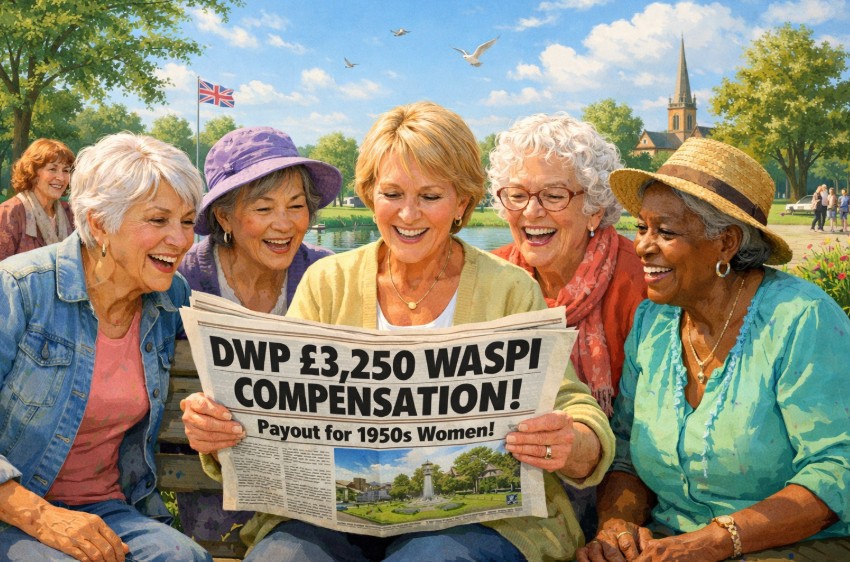
The recent surge in headlines suggesting that the Department for Work and Pensions (DWP) has approved a £3,250 compensation payment for WASPI women has captured national attention.
But are these claims rooted in confirmed government policy, or are they merely speculation riding on political pressure and media hype?
In this blog, we break down the facts behind the rumour, examine the latest updates from official bodies, and explore whether WASPI women should genuinely expect compensation – or remain cautious amidst the growing noise.
What Sparked the £3,250 WASPI Compensation Rumour?

The £3,250 WASPI compensation rumour has its roots in long-running campaigns by the Women Against State Pension Inequality (WASPI) group.
Women born in the 1950s were affected by changes to the state pension age, often with little notice, leaving many financially unprepared for later retirement.
In recent months, online articles and social media posts have claimed the government has agreed to pay a fixed £3,250 compensation amount from January 2026. This figure appears to come from speculative interpretations of recommendations made by the Parliamentary and Health Service Ombudsman, rather than any confirmed policy.
Key points behind the rumour include:
- Ongoing WASPI activism and legal challenges
- Misreading of ombudsman guidance on compensation
- No official DWP announcement or payment confirmation
At present, the £3,250 figure remains unverified and widely misunderstood.
Is There an Official Announcement from the DWP About WASPI Payments?
To date, there has been no official confirmation from the DWP regarding a scheduled £3,250 payment to WASPI women. While the Department has acknowledged the findings of the Parliamentary and Health Service Ombudsman (PHSO), which concluded there was “maladministration” in how changes were communicated, it has not outlined any concrete compensation scheme.
The DWP’s responses have so far been general, indicating that ministers are “considering” the Ombudsman’s findings. A formal policy response is still pending. This uncertainty is likely fuelling ongoing speculation, with advocacy groups and social media further amplifying unverified claims.
Who Are the WASPI Women and Why Are They Seeking Compensation?
WASPI refers to a generation of women who were born in the 1950s and saw their state pension age increase from 60 to 65 and later 66, in line with men. While the policy aimed to address gender inequality in retirement age, the main grievance lies in how the changes were communicated.
Thousands of women were reportedly unaware of the rising age until it was too late to make alternate financial plans. Many had already retired or reduced working hours, expecting to claim their pension at 60. The lack of proper notice from the government led to emotional stress and financial hardship for many.
As a result, WASPI campaigners have long demanded fair compensation, not for the equalisation of the pension age, but for the failure in communication which left women unprepared.
What Did the Parliamentary Ombudsman Say About the State Pension Age Changes?

In 2021, the Parliamentary and Health Service Ombudsman issued a report identifying that the DWP had committed “maladministration” in its handling of the pension age changes. Specifically, the Ombudsman found that between 2005 and 2007, the DWP failed to effectively inform women of the legislative changes impacting their state pension age.
“The women affected lost opportunities to make informed decisions. This is a direct consequence of administrative failings.”
– Parliamentary Ombudsman, Stage 1 Report
The investigation, conducted in three stages, has so far concluded that maladministration did occur. However, the final recommendation, including whether compensation should be paid and how much, remains pending.
Until that final verdict is issued, any exact compensation amount or timeline remains speculative, making the current £3,250 claim more rumour than reality.
Is the £3,250 Compensation Figure Accurate or Speculative?
The £3,250 figure being circulated is, at this stage, speculative. It is not backed by any confirmed policy document or ministerial declaration.
However, this amount is believed to be based on one of the possible “banded compensation levels” mentioned in previous Ombudsman cases, which suggest average sums for moderate financial impacts.
Table: Hypothetical Compensation Levels from Previous Ombudsman Guidelines
| Severity of Injustice | Example Compensation Band | Description |
| Low Impact | £500 – £1,000 | Minor inconvenience or stress |
| Medium Impact | £1,000 – £3,500 | Moderate financial loss or missed opportunity |
| High Impact | £3,500 – £10,000+ | Severe financial hardship or emotional distress |
The £3,250 amount falls into the “medium impact” band, making it a plausible estimation, but still not confirmed. It is possible that compensation, if approved, could vary by individual circumstances and level of impact experienced.
When Could the Alleged WASPI Payments Start – Is January 2026 Confirmed?

The rumour mill has zeroed in on January 2026 as the supposed start date for the £3,250 compensation payments. This date appears in several online reports and social media posts, often presented as definitive. But is it?
Currently, January 2026 is not confirmed by any official source. It may be a tentative projection based on the potential timeline for Parliament to review the Ombudsman’s final report, formulate a compensation scheme, and implement a process for disbursal.
Possible Timeline If Payments Were Approved
- Late 2025: Government responds to final Ombudsman recommendations
- Early to Mid-2026: Legislative or administrative framework set up
- January 2026 onwards: Potential start of compensation disbursement (if approved)
However, this is entirely conditional on government action, which has not yet materialised. As such, any timeline should be treated as speculative.
Who Might Be Eligible If the WASPI Compensation Goes Ahead?
If a compensation scheme is eventually announced, eligibility criteria will be critical. Based on current understanding, the following women are most likely to qualify:
- Born between 6 April 1950 and 5 April 1960
- Experienced a state pension age increase without adequate notification
- Suffered financial or emotional hardship due to the change
Eligibility may also be contingent on proving individual impact, including documentation of how the changes disrupted personal retirement plans.
Potential Eligibility Criteria Overview:
| Criteria | Description |
| Age Range | Born between 1950 and 1960 |
| Pension Delay | Affected by state pension age rise from 60 to 66 |
| Impact Proof | Evidence of hardship, career disruption or lack of notice |
Until a formal scheme is proposed, these criteria remain hypothetical, though based on past campaign and Ombudsman language.
What Is the Government’s Response to the WASPI Campaign So Far?
Over the years, the government’s stance has remained largely non-committal, despite growing pressure. Ministers have acknowledged the Ombudsman’s findings but stopped short of endorsing compensation.
The WASPI campaign continues to attract cross-party support in Parliament, and a number of MPs have called for compensation. Still, government ministers often respond with statements emphasising the legality of pension age equalisation, without addressing the issue of communication failure.
“We must act fairly across generations while recognising past shortcomings.”
– Anonymous MP during Parliamentary debate
This lack of clear direction has left affected women in limbo, unsure whether the battle has been won or merely stalled.
Could This Be a Political Strategy Ahead of the Next General Election?
With a general election expected by late 2024 or early 2025, some political analysts believe the rumoured WASPI compensation could be part of pre-election strategy. The timing of the £3,250 compensation speculation, aligned with campaign season, raises eyebrows.
The WASPI demographic represents a significant voting bloc, and addressing their long-standing grievances could prove advantageous for parties looking to secure marginal seats. This theory is supported by the sudden spike in media coverage and renewed interest from MPs.
However, until an official compensation scheme is tabled in Parliament, this remains speculative, a rumour with potential political roots, rather than policy substance.
Conclusion
The widespread reports about the £3,250 WASPI compensation are, for now, just that, reports. While there is a foundation for compensation claims, and the Ombudsman has acknowledged failings, no formal DWP payment scheme has been confirmed.
For the thousands of women affected, the hope of financial redress is powerful. However, it’s essential to remain cautious and rely only on official channels for updates. The figure of £3,250 may yet become reality, but as of now, it sits firmly in the realm of speculation.
Those impacted are advised to keep pressure on their MPs, stay informed, and avoid falling for unverified online rumours or financial scams claiming early access to compensation.
Frequently Asked Questions
How many women are potentially affected by the pension age changes?
Approximately 3.8 million women across the UK were impacted by the changes in state pension age, particularly those born in the 1950s.
Has the government offered compensation in similar cases before?
Yes, in past cases of maladministration, the government has followed Ombudsman recommendations to provide redress. However, each case is handled individually.
Can women take individual legal action against the DWP?
While class action lawsuits have been attempted, most women must rely on Parliamentary processes and Ombudsman outcomes for resolution.
What is the difference between WASPI and BackTo60 campaigns?
WASPI focuses on fair compensation for lack of notice, while BackTo60 seeks full pension restoration for all affected women.
Are any MPs actively supporting the WASPI compensation claim?
Yes, numerous MPs across party lines have voiced support, with several motions tabled in Parliament urging compensation.
How can affected women check their eligibility status?
Women can use the government’s state pension calculator or seek advice from independent financial advisors or citizens advice services.
Could compensation amounts vary based on personal circumstances?
Possibly. If approved, payments may reflect the degree of impact, with some women receiving more or less than the speculated average.