Child Benefit When Your Child Turns 16: What You Need to Know?
Have you recently received a letter from HMRC about your child turning 16 and wondered what it means for your child benefit?
Are you unsure whether you’ll continue receiving payments once your child finishes Year 11? These are common questions for UK parents whose children are at the transitional age between school years and further education or training.
In the UK, child benefit plays an essential role in helping families manage their finances while raising children. However, once a child reaches 16, the rules around eligibility change significantly. Payments do not automatically continue, and failing to act in time could mean losing this important financial support.
This guide explains everything you need to know about child benefit when your child turns 16, including when payments stop, how to keep them going if your child stays in education or training, which courses qualify, how to notify HMRC, and what to do if your child takes a break or leaves education early.
What Happens to Child Benefit When a Child Turns 16?
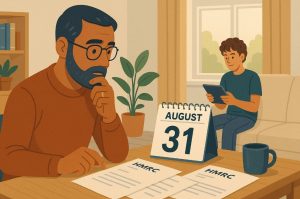
Turning 16 is a key milestone for child benefit eligibility. While most parents assume the benefit continues as long as the child lives at home, the reality is more conditional.
Child benefit automatically ends on 31 August following a child’s 16th birthday, unless the parent or guardian takes action to extend it.
HM Revenue and Customs (HMRC) typically sends out a letter during the child’s final year of school, often just before or after GCSE exams.
This letter requests confirmation of the child’s post-16 plans. To continue receiving payments, the parent must inform HMRC that the child is either:
- Staying in approved full-time education
- Entering into an approved training programme
It is important to understand that only the person claiming the child benefit, not the child, can update HMRC.
If no response is received by the deadline in the letter, HMRC will assume the child is leaving education, and benefit payments will stop at the end of August.
What Is Considered Approved Education After Age 16?
To be eligible for child benefit beyond age 16, the child must enrol in an approved full-time course. This means the programme must include more than 12 hours of supervised study or course-related work per week.
Courses that qualify include:
- A-levels
- T-levels
- International Baccalaureate
- NVQs and vocational qualifications (up to Level 3)
- Scottish Highers
- Study programmes in England
- Pre-apprenticeship schemes
- Home education (if it began before age 16 or continues with a statement of special educational needs)
The child must be accepted onto the course before turning 19 for it to count toward eligibility.
What Counts as Approved Training?
In addition to education, certain unpaid training programmes also qualify for child benefit. These schemes are typically funded or endorsed by local or national governments.
The type of approved training may vary depending on the part of the UK you live in.
Examples include:
| Region | Approved Training Programmes |
| Wales | Foundation Apprenticeships, Traineeships, Jobs Growth Wales+ |
| Scotland | No One Left Behind programme |
| Northern Ireland | PEACEPLUS Youth Programme, Training for Success, Skills for Life and Work |
To maintain eligibility, the training must be unpaid and not part of a contract of employment.
Which Courses and Training Disqualify You from Child Benefit?

Not all education or training routes qualify for child benefit once a child turns 16. HMRC has specific guidelines to determine what is considered non-qualifying or advanced education, and entering any of these pathways will result in the benefit being stopped.
Disqualifying Courses Include:
- University Degrees: If your child begins a degree course (including foundation degrees), they are no longer eligible for child benefit. Higher National Certificates (HNCs) and Higher National Diplomas (HNDs) also fall under this category.
- Advanced Vocational Courses: This includes qualifications that go beyond Level 3, such as BTEC Higher Nationals or professional qualifications required for specific careers.
- Paid Apprenticeships: Most paid apprenticeships are employment contracts, even if part-time study is included. The only exception is Foundation Apprenticeships in Wales, which are unpaid and government-approved.
- Employer-Contracted Training: If the course is provided as part of a job, such as in-house training, apprenticeships tied to employment, or work-based schemes, then it disqualifies the claimant from receiving child benefit.
- Courses Below the Minimum Study Hours: Any course that requires fewer than 12 hours of supervised study or tuition per week is considered part-time and is not eligible for benefits.
Why This Matters:
If your child is enrolled in a non-qualifying programme and you continue to claim child benefit, you could be required to repay the money. HMRC conducts periodic checks, and overpayments can lead to fines or penalties if not reported promptly.
How Do You Tell HMRC That Your Child Is Staying in Education or Training?

When your child turns 16, HMRC will usually send a letter to the child benefit claimant explaining that payments will stop on 31 August unless further action is taken.
To continue receiving child benefits, you must confirm your child is enrolled in approved education or training.
How to Inform HMRC?
- Online Declaration via CH297: The fastest and most convenient method is using the CH297 form available on the Government Gateway website. You’ll need:
- A Government Gateway user ID and password (can be created during login)
- Confirmation of the child’s education or training details (course name, institution, start date)
- By Phone or Post: If you’re unable to access the online service, you can contact HMRC by phone or send the declaration via post. However, this method takes longer, and any delay could risk a lapse in payments.
- Language Options: The service is available in English and Welsh (Cymraeg), and you can request Welsh-language forms if needed.
Important Note:
Only the individual claiming the child benefit, typically a parent or guardian, can notify HMRC. Children cannot self-declare. If you miss the deadline, payments will stop and may not resume until the correct information is received and processed.
What Happens If There’s a Break or Change in Your Child’s Education?
Life is unpredictable, and it’s not uncommon for children to experience a break in their education or training journey. Whether it’s due to illness, a course change, or other personal reasons, HMRC must be informed if there is a disruption.
Breaks That May Still Qualify
If the break is temporary, such as switching colleges or waiting to begin a new course, you may still receive child benefit. However, HMRC will assess:
- The reason for the break
- The length of the interruption
- Whether the child is returning to an approved course or programme
In most cases, child benefit can continue during short gaps, but the claimant must proactively communicate with HMRC.
When Education Ends Permanently?
If your child leaves education altogether, benefit payments will cease at the end of the next benefit quarter:
- 28/29 February
- 31 May
- 31 August
- 30 November
Parents must fill in the CH459 form to formally report the change. If you fail to notify HMRC and continue receiving payments, you risk being overpaid and may have to repay the money.
Can You Extend Child Benefit If Your Child Leaves Education?
Yes, parents may qualify for a 20-week extension of child benefit after a child leaves education or training.
This is especially useful for young people who are still transitioning into the next stage of life, such as entering the job market or military service.
Eligibility Criteria for Extension:
To qualify for the extension:
- The child must be 16 or 17 years old
- Must have recently left approved education or training
- Must work fewer than 24 hours a week
- Cannot claim certain state benefits, such as Income Support
Qualifying Activities:
Child benefit may be extended if the young person is:
- Registered with a careers service (e.g., Connexions, or equivalents in the EU, Norway, Iceland, or Liechtenstein)
- Signed up to join the armed forces
The application must be submitted within 3 months of the child leaving their course using the CH299 online form. Applications submitted after this window will be rejected, and you will not receive the extension.
This extension offers a short-term safety net while the young person transitions into the next phase of education or employment.
What If My Child Is Waiting to Start a Course in September?

After completing their GCSEs, many 16-year-olds plan to enrol in college or sixth form in the autumn. Often, there’s a gap of several weeks or months between the end of the academic year and the start of their new course.
Will You Still Receive Child Benefit During the Gap?
Yes as long as you notify HMRC that your child is accepted and intends to start an approved full-time course in September, you can continue receiving child benefit during the summer gap.
This is considered a transition period and does not disqualify you from payments. However, if you fail to declare your child’s future plans, payments may stop after 31 August and could take time to restart once corrected.
How to Ensure Continuity:
- Submit the CH297 form as soon as your child is accepted onto a qualifying course.
- Provide accurate start dates and the name of the institution.
- Keep HMRC updated if plans change, such as switching colleges or deferring entry.
Ensuring that HMRC is aware of your child’s future education plans can help prevent a break in payments during this critical transition period.
What Are the Main Forms You Need to Know?
Here is a quick summary of the forms and when to use them:
| Form Code | Purpose |
| CH297 | Confirm continuation in education/training |
| CH299 | Apply for a 20-week extension after leaving |
| CH459 | Notify HMRC of child leaving education early |
Only the child benefit claimant can complete and submit these forms.
FAQs
Can child benefit continue if a child is in a pre-apprenticeship?
Yes, if the programme is unpaid and government-recognised, such as a Foundation Apprenticeship in Wales.
Does child benefit stop automatically at 16?
Yes, unless you inform HMRC that your child is staying in approved education or training.
Is part-time study eligible for child benefit?
No, the child must be in full-time education, defined as more than 12 hours of supervised study per week.
Can I claim child benefit if my child is waiting to join college in September?
Yes, provided you declare their intention to begin an approved course with HMRC before the current school year ends.
What if my child drops out halfway through the year?
You must notify HMRC. Payments will stop at the next scheduled cut-off (Feb, May, Aug, or Nov).
How do I access child benefit forms online?
Via the Government Gateway website. You’ll need a user ID and password or an email to receive a login code.
Can I get child benefit if my child joins the military?
Yes, through a 20-week extension, if they are under 18 and you apply within 3 months of them leaving school.
READ MORE:
- Single Parent with Child Going to University? Here’s How Universal Credit Can Help
- Do I Still Get Universal Credit if My Child Is on an Apprenticeship?
- How to Claim Disabled Child Element Universal Credit? | Additional Elements of UC
- DWP £750 Payment Boost June 2025: Who Qualifies and How Are Benefit Dates Changing?
- DWP £450 Cost of Living Payment: Everything You Should Know in 2025